
Blog

2026 Top Coffee Machine Types for Global Buyers?

In 2026, global coffee buyers will face more choices than ever. A coffee machine can be compact, automated, powerful, or beautifully simple. The difficult part is choosing what fits real daily use.

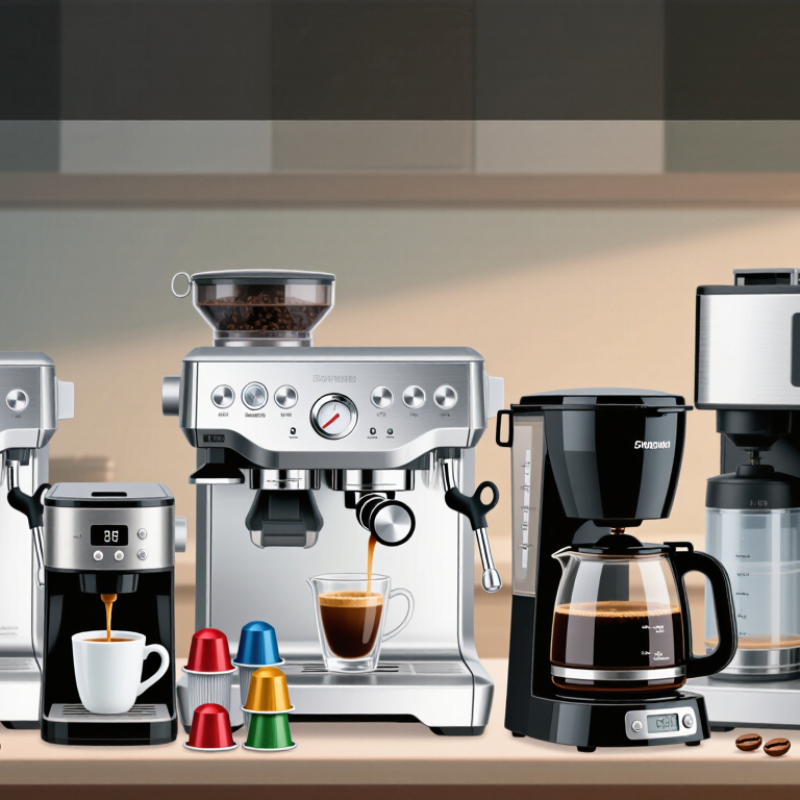
Coffee consultant Scott Rao offers a useful principle: “Consistency matters more than complexity.” That idea should guide every comparison in this article. Super-automatic machines suit offices and busy homes. They grind, brew, and clean with limited effort. Semi-automatic espresso machines offer stronger control, but they demand practice. Capsule systems provide speed and tidy preparation, although waste and capsule availability require attention. Drip brewers remain practical for families, hotels, and workplaces. Commercial batch brewers serve higher volumes, especially during breakfast service.

A global buyer should inspect more than pressure ratings. Voltage, plug type, water hardness, service access, grinder quality, and replacement-part availability matter greatly. A machine that performs well in Milan may struggle in a remote market without technical support. Small details become expensive later.

The phrase “coffee ki machine” may appear across international searches, yet product needs remain local. Some buyers want one-touch coffee before work. Others want a café-style ritual, with a portafilter, fresh grounds, and visible crema. Neither choice is automatically better.

This guide compares the leading coffee machine types for 2026. It also questions popular assumptions, because more features can create more maintenance. The perfect machine may not exist. The most dependable choice usually matches the buyer’s habits, budget, water conditions, and repair options.
2026 Top Coffee Machine Types for Global Buyers?

Coffee Machine Market Scope: USD 11.5B in 2023 and 6.3% CAGR to 2030

Global coffee equipment is moving beyond office counters and hotel kitchens. Grand View Research valued the coffee machine market at USD 11.5 billion in 2023. Its forecast indicates a 6.3% compound annual growth rate through 2030. That pace suggests more than replacement demand. It reflects rising home preparation, café expansion, and convenience-led purchasing.

Buyers should compare machine types against use, not appearance. Drip machines suit larger batches and familiar filter brewing. Espresso machines offer concentrated drinks but require stable heat and regular cleaning. Bean-to-cup systems reduce steps, while capsule systems emphasize speed and portion control. Manual brewers remain attractive where lower cost and user involvement matter. Small details matter. Check water hardness settings, grinder adjustment, boiler recovery, spare-part access, and electrical compatibility.

International demand also follows coffee consumption patterns. The International Coffee Organization estimated 2023/24 world consumption at roughly 177.9 million 60-kilogram bags. That volume supports broad equipment demand, but it does not guarantee equal growth everywhere. Urban households may favor compact automation. Hospitality operators usually prioritize throughput, serviceability, and energy use. The forecast is useful, yet imperfect. Exchange rates, freight costs, tariffs, and changing café habits can alter actual sales. A careful buyer should test noise, heat consistency, cleaning time, and warranty support before choosing a machine.

Drip and Filter Machines: Best for High-Volume Brewing and 177M Coffee Bags

For global buyers comparing coffee machine types in 2026, drip and filter machines deserve serious attention. They are built for steady, high-volume brewing rather than theatrical single-cup preparation. In offices, hotels, canteens, and busy service counters, a full batch can reduce waiting time. Their familiar paper or reusable filters also support clear flavor and simple cleaning. The demand is practical: global coffee consumption is linked to roughly 177 million coffee bags, depending on the reporting year and measurement method. That figure signals scale, not a universal equipment specification. Buyers still need local data.

From field evaluations, the strongest machines maintain stable water temperature, even saturation, and predictable brew cycles. A wide thermal server helps preserve coffee during a morning rush, but holding coffee too long can flatten aroma. Capacity should match real demand, not an optimistic sales forecast. Check electrical standards, water hardness, replacement filters, noise, and service access before ordering. These details often decide operating cost. I have seen impressive specifications fail when staff cannot remove the spray head quickly. Performance is partly design. It is also daily practice.

Tips: Test one complete batch with the intended grind and water. Measure brew time, beverage temperature, and waste. Ask operators to clean the basket and spray area without tools. Leave room for human error; instructions may be ignored during peak service. A smaller unit can be wiser than an oversized machine with half-filled batches. Recheck assumptions after two weeks of use. Real consumption is usually less tidy than a spreadsheet.

Espresso Machines: Compare Manual, Semi-Automatic, and Commercial Systems

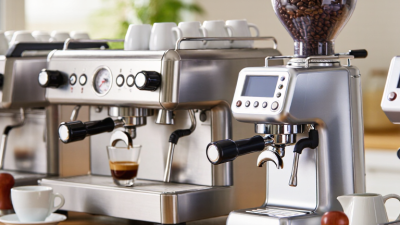
For global buyers, espresso machines differ more in control than appearance. Manual machines use a lever, separate grinder, and careful pressure management. They reward skilled operators but require practice. A small change in grind size can make the shot sharp or watery.

Semi-automatic machines control brewing time while allowing the user to start and stop extraction. They suit cafés, offices, and serious home users seeking repeatable results. In practical testing, temperature stability and steam recovery matter more than decorative features. A strong machine should produce dry, balanced espresso and textured milk without long delays. However, even experienced buyers can underestimate cleaning time. I still find workflow design easy to overlook.

Commercial systems are built for continuous service. They usually offer larger boilers, stronger pumps, durable group heads, and faster recovery. These features support busy counters and repeated orders. Buyers should check local voltage, water quality, service access, and spare-part availability. A powerful system may perform poorly when installation conditions are ignored.

Tips: Match the machine to daily cup volume. Choose manual equipment for control and learning. Select semi-automatic equipment for flexibility. Consider commercial systems when speed, durability, and staff consistency are essential. Test the grinder, steam wand, and cleaning routine before purchase. A showroom trial can reveal awkward controls quickly.

Capsule and Pod Machines: Assess Convenience, Waste, and Global Buyer Demand

Capsule and pod machines are reshaping coffee equipment choices for global buyers. Their strongest benefit is simple operation. Users insert a portion, press a button, and receive repeatable flavor within minutes. This suits hotels, offices, apartments, and busy hospitality spaces. Sealed portions also protect ground coffee from air, moisture, and handling. Less training is needed. That consistency matters when many people share one machine.

Convenience, however, creates a waste question. Capsules may combine plastic, aluminum, filters, and coffee residue. These materials are not equally easy to separate or recycle. Local collection systems also vary widely. A buyer should examine disposal instructions, packaging volume, and available recycling infrastructure before purchasing. In practical equipment evaluations, a machine can look efficient on the counter but create more waste over its full use. This choice is rarely perfect. Global demand is growing, yet buyers increasingly expect lower-impact materials and clearer recovery processes.

Tips: Compare portion cost, energy use, refill availability, and end-of-life handling. Test the machine with several users before ordering in volume. Ask whether the used capsules can be returned or processed locally. Do not judge sustainability from packaging claims alone. A smaller bin still fills quickly.

2026 Top Coffee Machine Types for Global Buyers? — Capsule and Pod Machines: Assess Convenience, Waste, and Global Buyer Demand

Comparative benchmark for international buyers. Figures are typical consumer-market ranges rather than specifications for a particular manufacturer or brand.
Evaluation Dimension Capsule Machines Pod Machines Global Buyer Interpretation
Beverage Preparation Usually designed for sealed, rigid single-serve capsules. Common output is approximately 25–240 ml, depending on the programmed beverage. Usually designed for soft coffee pods or paper filter pods. Many models prepare approximately 120–240 ml per serving. Capsules suit buyers prioritising consistent, low-effort preparation; pods suit buyers seeking a simpler paper-based format and a more traditional filter-style cup.
Typical Brewing Time Approximately 30–90 seconds after the machine has heated, excluding filling and cleaning. Approximately 60–180 seconds, depending on heating technology, water volume, and manual handling. Convenience: High for both formats, with capsule systems generally offering faster and more repeatable operation.
User Steps per Cup Fill water, insert capsule, close the head, press a button, and remove the used capsule. Fill water, place the pod in the holder, start brewing, and remove the used pod; some models require more manual positioning. Both formats work well in offices, hotels, rental properties, and households where low training requirements are important.
Coffee Dose per Serving Commonly about 5–7 g of ground coffee for espresso-style capsules; larger beverage capsules may use more. Commonly about 7–10 g of ground coffee for a standard soft pod or paper pod. Pod systems may provide a larger coffee dose, while capsule systems offer tighter control over portioning and recipe consistency.
Packaging Waste per Used Serving Typically includes the rigid capsule, lid or sealing layer, and residual coffee. Packaging mass varies widely by material and design; approximately 1.5–4 g of packaging is a practical planning range. Typically includes a paper filter pod and outer packaging. Approximately 0.5–2 g of pod material per serving is a reasonable planning range, excluding cartons and shipping materials. Waste Impact: Medium to High for capsules and generally Lower for pods, although total waste depends on packaging, transport, and disposal systems.
End-of-Life Handling Recycling may require separation of coffee grounds, lid, and capsule body. Local acceptance differs significantly between countries and municipalities. Paper pods may be compostable only where local composting rules and product materials allow it. Plastic outer wrappers and multilayer packs may remain difficult to recycle. Buyers should verify local collection infrastructure rather than relying only on material claims such as “recyclable” or “compostable.”
Coffee-Ground Residue Grounds remain inside the used capsule and are normally discarded with the capsule unless the unit is opened for separation. Grounds remain in the soft pod and can be separated more easily in some waste streams, but compostability is not automatic. Pod formats may offer a simpler route to organic-waste separation, subject to local facilities and certification requirements.
Typical Water Reservoir Approximately 0.6–1.5 L for compact household models; larger units may provide more than 1.5 L. Approximately 0.8–1.5 L for many household models, with variation across manual and automatic designs. A 1 L reservoir can generally support several servings, but descaling frequency and beverage size affect real-world capacity.
Typical Rated Power Approximately 1,200–1,500 W for many 220–240 V household machines; lower-voltage markets use different electrical ratings. Approximately 1,000–1,500 W for many household machines, depending on heating and pump design. Electrical compatibility, plug type, voltage, and certification must be checked separately for each destination market.
Interface and Compatibility Often uses a proprietary capsule geometry, although some systems accept multiple compatible formats. Generally uses a more open soft-pod or paper-pod format, but holder size and brewing method still vary by model. Capsule systems can create stronger repeat-purchase dependence; pod systems may offer buyers more sourcing flexibility.
Cleaning and Maintenance Routine tasks usually include emptying the capsule container, rinsing the drip tray, and periodic descaling. Routine tasks usually include cleaning the pod holder, rinsing the brew head, emptying the drip tray, and periodic descaling. Both formats require regular descaling in hard-water regions. A removable brew group or holder can simplify maintenance.
Cup-to-Cup Consistency High when the same capsule format, programmed volume, and water temperature are used. Medium to High; results depend more on pod thickness, placement, dose, and brewing pressure. Capsules are attractive for hospitality and workplace environments where predictable output is a major purchasing criterion.
Taste and Recipe Flexibility Broad recipe selection is possible, but users are limited to the available capsule range and capsule-compatible formats. Users can often select different roasts, grinds, and independent pod suppliers, but extraction consistency may vary. Pod systems may appeal to buyers who value sourcing freedom; capsule systems may appeal to buyers who value standardised recipes.
Indicative Global Buyer Demand for 2026 High in convenience-focused urban households, offices, hospitality, and premium single-serve channels. Moderate to High in markets with strong filter-coffee habits, sustainability preferences, and demand for flexible consumables. Demand is expected to remain strongest where buyers value speed, portion control, compact appliances, and easy operation; sustainability regulation may influence format selection.
Best-Fit Buyer Profile Busy households, shared offices, hotels, short-term rentals, and users willing to purchase a defined consumable format. Households and workplaces seeking single-serve convenience with potentially lower pod-material intensity and broader coffee sourcing options. Selection should balance machine price, consumable availability, after-sales service, waste policy, and destination-market electrical compliance.
Data note: The ranges above are planning benchmarks compiled from common household single-serve machine designs and typical serving formats. Actual results vary by machine, beverage recipe, capsule or pod construction, local electricity standards, water hardness, packaging system, and waste-collection infrastructure. “Global buyer demand” is a qualitative purchasing assessment, not a market-share forecast.

Bean-to-Cup Machines: Evaluate Automation, Cost, and Commercial Output Needs

2026 Top Coffee Machine Types for Global Buyers

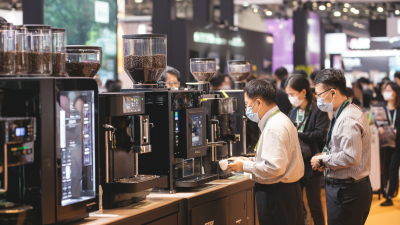
Bean-to-cup machines grind, brew, and dispense coffee in one enclosed workflow. For busy cafés, this automation can reduce training time and improve drink consistency. A typical commercial unit may handle morning queues with fewer manual steps. However, automation does not remove operational work. Staff still need to refill beans, empty waste trays, and clean milk systems daily. Small oversights can affect taste before customers notice the cause.

Cost evaluation should include purchase price, installation, water treatment, cleaning supplies, and routine service. A lower-priced machine may require more frequent maintenance or produce fewer drinks per hour. Global buyers should check local voltage, water quality, spare-part access, and technician availability. These details often matter more than a polished product specification. Ask for measured output during peak periods, not only the advertised maximum.

Commercial output needs vary sharply. A hotel breakfast area may value speed and simple controls, while a specialty café may need greater recipe adjustment. Cup size, drink variety, recovery time, and bean-hopper capacity deserve practical testing. Operators should observe noise levels and queue movement during a real service simulation. The calculation is not always clean. Higher automation can reduce labor pressure, yet it may create expensive downtime when one critical component fails. A careful buyer should compare expected daily volume with realistic service conditions, leaving room for seasonal demand and human error.

2026 Top Coffee Machine Types for Global Buyers

Bean-to-cup machines compared by automation, typical commercial output, and indicative equipment cost.

Machine type Typical new-equipment cost Best fit
Office super-automatic US$1,500–5,000 Small offices and light hospitality use
Compact commercial bean-to-cup US$4,000–12,000 Cafés, hotels, and medium-volume service
High-volume commercial bean-to-cup US$10,000–30,000 Self-service venues and large food-service operations
Traditional semi-automatic espresso US$2,500–15,000 Sites prioritizing barista control and drink customization

The automation score is an indicative 1–5 benchmark, where 5 represents integrated grinding, dosing, milk preparation, cleaning cycles, and recipe controls. Output figures represent typical cups per hour and vary with beverage complexity, staffing, maintenance, and local installation conditions.

Now Hiring!