

Blog
10 Best AI Powered Glasses for Global Buyers in 2026
Ai-Powered Glasses are moving beyond novelty, but choosing a pair in 2026 still requires careful comparison. Meta CEO Mark Zuckerberg has described glasses as “the ideal form factor for AI.” That idea is compelling: a camera, microphone, speakers, and assistant can sit in a familiar frame, ready when needed. Yet convenience depends on more than a polished demo.
This guide compares ten options for global buyers, focusing on practical details: fit during a long commute, battery life through a working day, clear audio on a busy street, and useful features across languages. It also considers phone compatibility, availability, warranty support, and privacy controls. These details can vary by country, retailer, and software version, so buyers should confirm local specifications before ordering. A feature shown in one market may not work the same way elsewhere.
Small differences matter. A slightly heavy frame can feel tiring by lunchtime. A charging case may help, but only if it fits in your pocket. We cannot name one best pair for every face, job, or budget; comparisons also become imperfect when brands publish different test conditions. That deserves attention. The picks ahead aim to make trade-offs visible, not promise a perfect choice. For global shoppers, the smartest buy is often the pair that fits comfortably, works with existing devices, and has dependable support nearby.
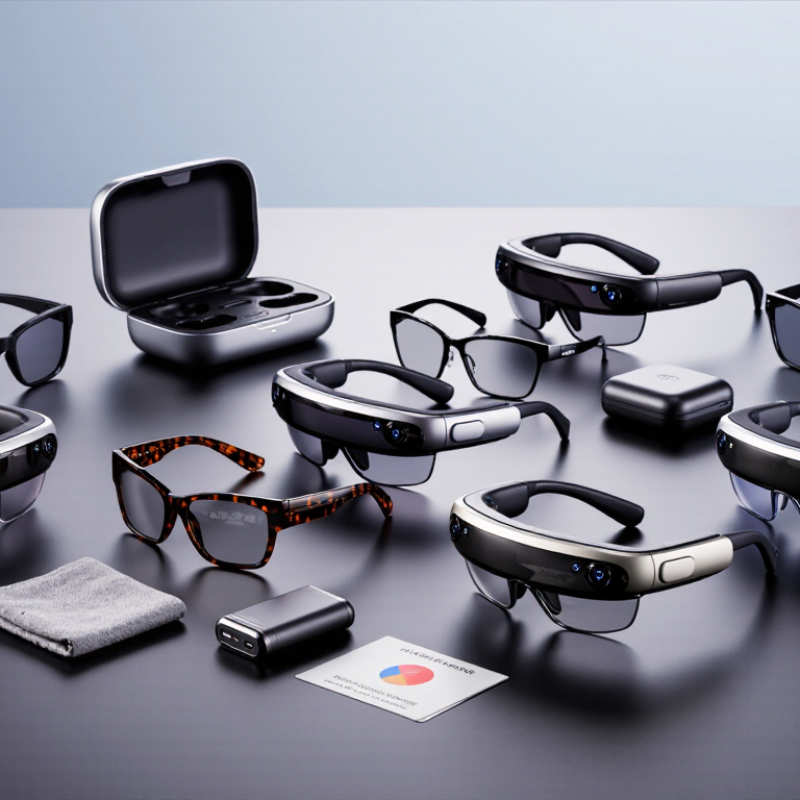
AI Glasses in 2026: Core Technologies, Features, and Use Cases
AI glasses in 2026 combine miniature cameras, microphones, speakers, and, in some models, a small display. Their usefulness depends less on futuristic styling than on clear audio, comfortable fit, battery life, and reliable software. Voice assistants can answer simple questions, summarize spoken notes, or provide turn-by-turn directions. Some devices support live translation, though accuracy can vary with accents, background noise, and language pair. A camera may capture a repair detail or a street sign without reaching for a phone. Small details matter.
Tips: Try the glasses outdoors and indoors before buying. Check prescription options, charging method, storage controls, and whether core features work without a constant internet connection. Look for a visible recording indicator, and ask people before recording them. Keep expectations modest.
For global buyers, compare supported languages, regional service availability, warranty terms, and charging compatibility rather than relying on a feature list alone. A bright display may be difficult to read in direct sun, while a lightweight frame can still feel tiring after several hours. Think about the task: hands-free directions suit walking, while discreet audio prompts may help with cooking or warehouse checks. Not every day. AI glasses can be useful, but they are not a substitute for careful judgment; automated answers may be incomplete, and small screens are poor places for complex decisions.
| Rank | Best-Fit Glasses Type | Core AI Technology | Typical Hardware | Useful Features | Best Use Cases | Global Buyer Considerations |
|---|---|---|---|---|---|---|
| 1 | Everyday voice-assistant glasses | Microphone input with speech recognition and an AI assistant; advanced responses commonly depend on a paired phone or cloud service. | Open-ear speakers, microphones, wireless connection, and a rechargeable battery; usually no built-in display. | Hands-free questions, reminders, calls, audio playback, and voice control, depending on software support. | Commuting, errands, and routine hands-free tasks. | Check supported languages, phone compatibility, regional assistant availability, and whether cloud features require an internet connection. |
| 2 | Camera-equipped AI glasses | Camera capture combined with image recognition or visual question answering; processing may take place on a connected phone or online service. | Small camera, microphones, wireless connectivity, and an indicator or other privacy controls that vary by model. | Capture photos or short video and, on supported systems, ask questions about a scene or object. | Travel snapshots, documenting tasks, and getting contextual information while on the move. | Review recording laws, consent expectations, storage settings, and whether a visible recording indicator is provided. |
| 3 | Display-enabled navigation glasses | Phone-based navigation and contextual prompts presented on a near-eye display; route computation generally uses a connected device or online maps. | Compact optical display, wireless link, motion sensors, and audio output on some designs. | Turn prompts and selected notifications without needing to look down at a phone. | Walking, cycling on suitable routes, and navigating unfamiliar places. | Confirm local map coverage, language support, prescription compatibility, visibility in daylight, and safe-use guidance. |
| 4 | Live-translation glasses | Automatic speech recognition, machine translation, and optional text or audio output; speech services may require a network connection. | Microphones, speakers and, on some designs, a small text display; typically paired with a phone. | Translated captions or spoken translations in supported language pairs. | Basic travel conversations, meetings, and multilingual customer interactions. | Check the exact supported language pairs, offline availability, latency, and suitability for noisy environments. Machine translation can make errors. |
| 5 | Real-time captioning glasses | Speech-to-text recognition converts nearby speech into captions, with accuracy affected by audio quality and speaker conditions. | Near-eye text display or a companion-device display, plus microphones and wireless connectivity. | Readable captions for one-to-one conversations or selected audio, where supported. | Accessibility support, quieter meetings, and conversations in which hearing speech is difficult. | Test with the buyer’s languages, accents, prescription needs, and typical environments; glasses are not a substitute for certified accessibility or medical devices. |
| 6 | AI-assisted work and instruction glasses | Voice or visual prompts linked to task instructions, checklists, or a remote support application. | Audio or near-eye display, microphones, wireless connectivity, and optional camera or motion sensors. | Step-by-step guidance, hands-free reference materials, and task prompts when supported by compatible software. | Training, field service, inventory workflows, and hands-busy tasks. | Check enterprise software integration, device management, data-handling terms, and whether the display remains readable in the work setting. |
| 7 | Camera-based object and scene recognition glasses | Computer vision identifies or describes selected objects and scenes; results depend on camera quality, model capability, and available processing. | Camera, microphones, wireless connection, and audio output; a display is optional. | Spoken descriptions or answers about captured visual information on compatible services. | Exploring unfamiliar environments, finding items, and getting additional context about visible objects. | Do not rely on automated recognition for safety-critical decisions; review privacy controls and service availability in the destination country. |
| 8 | AI audio and meeting-summary glasses | Voice recording or transcription followed by summarization, where recording and AI processing are supported. | Microphones, wireless connectivity, and companion-app integration; recording controls differ across models. | Meeting notes, spoken reminders, or summaries through compatible applications. | Personal note-taking and meetings where all participants have been appropriately informed. | Check consent laws, workplace policies, transcription languages, retention settings, and whether audio is uploaded for processing. |
| 9 | Prescription-friendly AI glasses | Voice-assistant or camera features integrated into eyewear designed to accommodate prescription lenses. | Optical frame, electronic components, and prescription-lens options that depend on the frame and regional lens provider. | Selected hands-free AI functions without requiring separate everyday eyewear. | Daily wear for buyers who need corrective lenses and want smart features in the same frame. | Confirm lens availability, fitting services, frame measurements, warranty coverage, and replacement-part access in the buyer’s country. |
| 10 | Lightweight audio-first smart glasses | Voice interaction and connected audio features, typically relying on a paired phone for internet-based AI tasks. | Eyewear frame with open-ear speakers and microphones; generally no camera or visual display. | Calls, audio directions, voice commands, and spoken assistant responses on supported devices. | Buyers who prioritize simple controls, low visual distraction, and everyday audio use. | Compare fit, comfort, battery endurance, hearing-safety guidance, phone operating-system support, and local service options. |
Buyer note: These are technology and use-case categories rather than specific product models. Features, availability, privacy controls, and AI performance vary by device, software, language, country, and network access. Check current local specifications before purchase.