

Blog
10 Best Dental Implant Torque Wrench Suppliers in 2026
A Dental Implant Torque Wrench may look like a small instrument, yet its accuracy and handling can affect a clinician’s workflow. In 2026, choosing a supplier means looking beyond price or a polished product photo. Buyers should check the wrench’s torque range, measurement units, compatible implant systems, and instructions for cleaning and sterilization. Clear product documentation matters. So does access to replacement parts and technical support.
This guide introduces ten suppliers for dental practices, distributors, and procurement teams to compare. It focuses on practical details: published specifications, calibration information, warranty terms, delivery options, and the clarity of after-sales service. A supplier’s claims should be checked against current product documents, since models and availability can change. Fit matters. A wrench that suits one implant connection may not suit another, and that detail is easy to overlook when ordering quickly. We also recognize that no single supplier is best for every clinic. Regional service, budget, preferred systems, and staff familiarity can shift the decision. Some comparisons remain imperfect because public information is not always equally detailed. That deserves scrutiny, not guesswork. Use the list as a starting point, then confirm compatibility and specifications directly with the supplier before purchase.
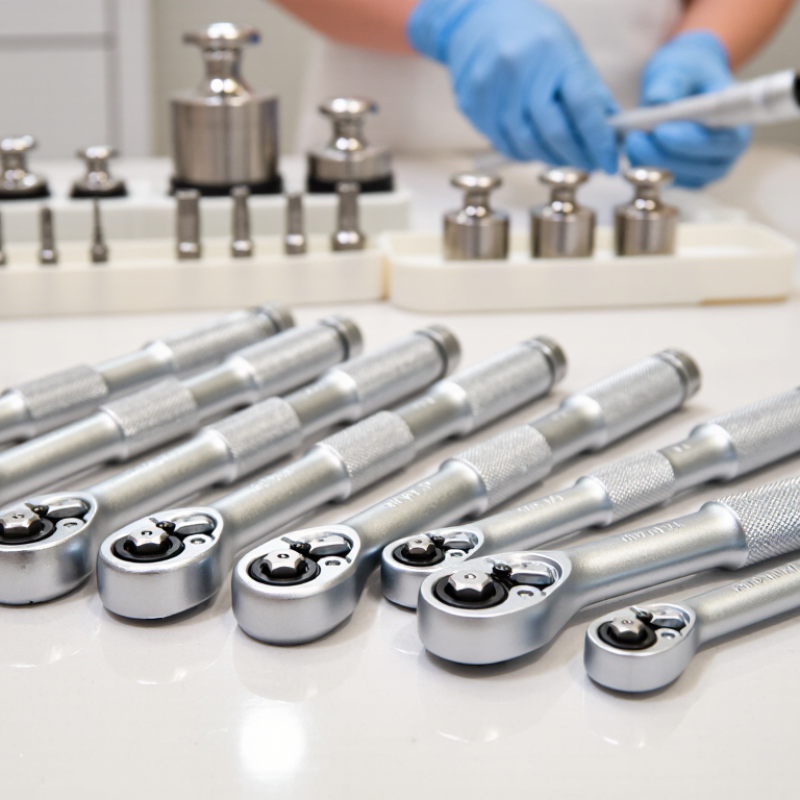
How Dental Implant Torque Wrenches Deliver Settings Across 10–50 N·cm
A dental implant torque wrench must turn a target number into a repeatable feel at the handpiece. Across a 10–50 N·cm scale, the lower end supports gentle component seating; higher settings may be used for specified fixation steps. The correct value depends on the implant system, component, and clinical plan—not on the wrench alone. The 2018 ITI consensus review notes that ≥30 N·cm is a common immediate-loading study threshold, but it is not a universal clinical rule. Bone density matters. So does the surgical protocol.
A calibrated wrench helps reduce guesswork. ISO 6789-2:2017 sets out calibration and measurement-uncertainty requirements for hand torque tools; it does not prescribe one implant torque for every case. In practice, a clinician should check the instrument’s calibration status, select the stated setting, and apply force smoothly. A crisp click is useful, but it is not proof of accuracy. Small details count: a worn ratchet, a dirty connection, or a rushed hand movement can affect delivery. Real clinical handling is messier than a bench test. That deserves more attention. Recheck the wrench according to its service guidance, and follow the implant component’s instructions rather than treating 10–50 N·cm as a universal recipe.
10 Best Dental Implant Torque Wrench Suppliers in 2026 - How Dental Implant Torque Wrenches Deliver Settings Across 10–50 N·cm
Supplier-neutral comparison checklist. Use these criteria to assess current product documentation; torque ranges, compatibility, accuracy, and reprocessing requirements vary by model. The 10–50 N·cm span below is a comparison scope, not a claim that every wrench covers the full range.
| Comparison dimension | What to verify with the supplier | Why it matters |
|---|---|---|
| 1. Stated torque range | Check the model’s documented minimum and maximum torque settings. Confirm whether the required settings fall within its published range, including any limits on attachments. | A 10–50 N·cm comparison range does not mean every wrench can deliver every value in that span. |
| 2. Setting increments | Request the available settings or adjustment increment in N·cm, and confirm how the selected value is displayed or indicated. | Increment size determines which torque values can be selected; do not assume all intermediate values are available. |
| 3. Accuracy and tolerance | Ask for the manufacturer’s stated accuracy or tolerance, the conditions under which it applies, and any supporting test documentation. | A nominal setting is not, by itself, evidence of delivered-torque accuracy. |
| 4. Calibration and verification | Confirm whether calibration or torque verification is available, what records are supplied, and what inspection interval the manufacturer recommends. | Service recommendations and calibration arrangements are model-specific; follow the applicable instructions for use. |
| 5. Implant-system compatibility | Check the compatible driver interfaces, implant systems, and restorative components listed in the product documentation. | A wrench’s torque range alone does not establish compatibility with a particular implant connection. |
| 6. Direction and mechanism | Verify whether the wrench is ratcheting, non-ratcheting, or reversible, and review how the torque limit or release mechanism operates. | Operating method and permitted direction of use differ between designs. |
| 7. Reprocessing instructions | Obtain the model-specific cleaning, disassembly, packaging, and sterilization instructions, including any validated cycle parameters. | Reusable dental instruments require reprocessing according to their instructions for use; do not infer cycle compatibility. |
| 8. Materials and construction | Review documented materials, corrosion-resistance information, and whether the instrument is intended for repeated clinical reprocessing. | Material and construction details can inform durability and care requirements but should be confirmed for the specific model. |
| 9. Instructions and traceability | Request current instructions for use, model identification, lot or serial traceability details, and applicable regulatory documentation for the market. | Clear documentation helps confirm intended use, identify the exact device, and support compliant purchasing. |
| 10. Support and replacement parts | Confirm warranty terms, service contact availability, repair options, and access to compatible drivers or replacement components. | Support and parts availability are supplier- and model-specific; obtain terms in writing before purchase. |
Clinical note: Select and apply torque according to the implant or component manufacturer’s instructions for use. The settings shown in product documentation should not be replaced by a generic 10–50 N·cm recommendation.