
In 2026, choosing the best Hdpe Tarpaulin starts with the job, not the color or lowest price. A cover for stacked timber needs different features from a sheet used over garden equipment or a temporary work area. Most HDPE tarpaulins use a woven polyethylene base with a protective coating, but fabric weight, weave density, and edge finishing can differ widely. Small details matter. Check the stated GSM, eyelet spacing, seam quality, and whether UV protection is specified. These features affect handling, sun exposure, and how securely the sheet can be tied down. A heavier tarp may suit rougher use, yet it can be harder to fold or carry. There is a trade-off.
This guide examines common choices, including standard woven, UV-stabilized, laminated, reinforced, and mesh options. Each serves a different purpose. A laminated surface may help shed rain, while reinforced edges can reduce tearing around tie points. Mesh allows airflow but is not a substitute for a waterproof cover. Climate, expected wear, and storage conditions all matter. Compare product specifications rather than relying on labels such as “heavy duty” alone. Ask for a technical sheet when details are unclear, and inspect a sample if the purchase is important. I would not treat a printed lifespan as a guarantee; installation, abrasion, and prolonged sunlight can change real-world performance. The best choice is the one whose measurable features match the task, even if it is not the most impressive-looking option.
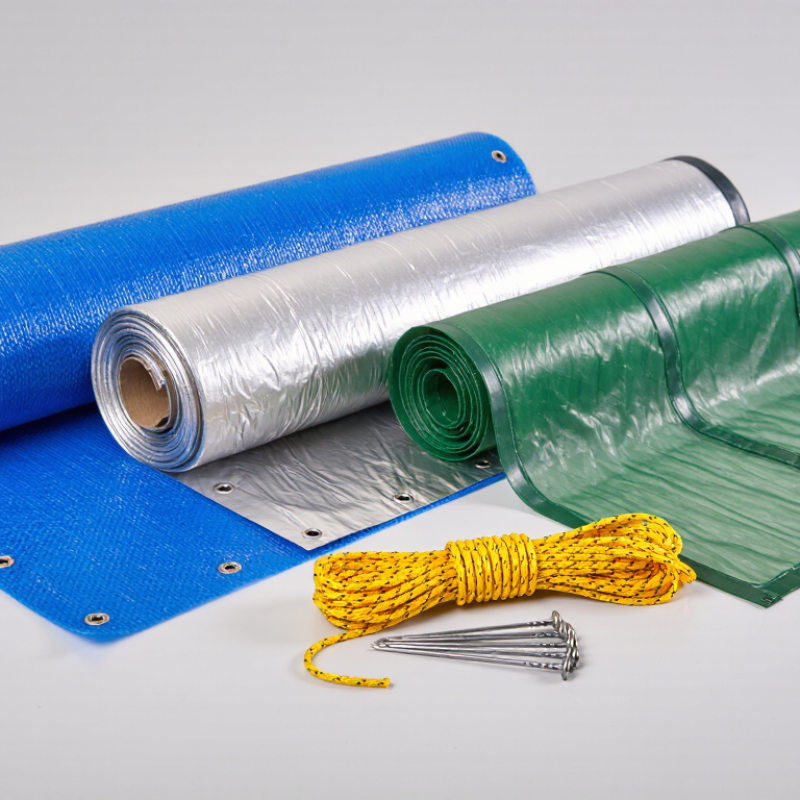
HDPE tarpaulins are flexible covers built around a woven high-density polyethylene (HDPE) mesh. Manufacturers typically extrude polymer into a thin film, slit it into narrow tapes, stretch those tapes, then weave them into a grid. That grid gives the sheet strength without making it rigid. It is a practical balance. PlasticsEurope’s Plastics – the Fast Facts 2024 reports 413.8 million tonnes of global plastics production in 2023. That figure describes the wider plastics industry, not tarpaulin output, but it shows the scale of the material supply behind products like these.
A typical tarp receives a polyethylene coating on both sides to help resist moisture and abrasion. UV stabilizers may slow sunlight damage, while reinforced hems and metal eyelets help distribute pulling force. Details vary: tape thickness, weave density, coating weight, and workmanship all affect service life. Look closely at the edge. Loose stitching or poorly fixed eyelets can fail before the sheet itself. For coated-fabric evaluation, ASTM D751 includes test methods for properties such as breaking strength, tear resistance, and coating adhesion. These tests help compare materials under defined conditions; they cannot predict every outdoor setting. Wind, sharp corners, and prolonged sun exposure still matter. That part is often underestimated.
HDPE tarpaulins in 2026 are available in several practical forms. Most use woven high-density polyethylene fabric with a protective coating. Laminated woven tarps suit everyday cover needs, such as shielding building materials or garden equipment from rain and dust. Their smooth surface is easy to wipe clean. Check the stated thickness and edge finish, since these affect durability.
Mesh HDPE tarpaulins have open spaces that let air and some light pass through. They can reduce wind pressure around fences, outdoor storage, or shaded work areas, but they do not provide full rain protection. Solid, UV-stabilized tarps are a better fit for longer outdoor exposure. UV resistance varies by product, so ask for test information rather than relying on color alone. A dark tarp can still fade.
Heavy-duty reinforced types use stronger fabric, reinforced edges, or closer-set eyelets for repeated handling. They may work well over bulky loads or equipment, though added weight can make setup harder. Some tarps combine these features with lamination or UV treatment; the categories overlap. That detail is easy to miss. Match the tarp to its exposure, required airflow, and fastening points, then inspect seams and eyelets before use. A thicker sheet is not automatically the better choice.
HDPE tarpaulins differ mainly in weave, coating, weight, and resistance to sunlight. A standard woven sheet is light and easy to fold, making it practical for covering garden supplies or equipment during short periods of rain. Its performance depends on the weave density and the quality of the surface coating. A thin sheet may feel sturdy in hand but still wear quickly where it rubs against a sharp corner.
Laminated tarpaulins add a coating that helps limit water penetration and slows fraying at the edges. Heavier versions usually tolerate more handling, though extra weight can make them awkward to tie down in wind. UV-stabilized types are designed to resist sunlight damage for longer. That matters outdoors. Yet UV resistance does not mean the sheet will remain flexible forever; heat, dust, and repeated folding still cause wear.
Reinforced tarpaulins use stronger hems, extra layers, or reinforced corners to handle tension around tie points. For a woodpile, reinforced corners can reduce tearing when ropes pull unevenly. Mesh HDPE sheets allow airflow and shade, but they are not substitutes for waterproof covers. Check the stated thickness or weight, inspect stitching and eyelets, and match the sheet to the exposure. I would not choose by weight alone. A heavier tarp can still fail early if its coating is weak or its edges are poorly finished.
The best HDPE tarpaulin depends on exposure, load, and how often it will be moved. For farm produce or soil cover, choose a UV-stabilized, waterproof woven sheet with reinforced eyelets; a loose corner can flap hard in wind. For truck loads and repeated handling, use a heavier, laminated tarp with reinforced hems to resist abrasion and tearing. For shade over greenhouses or outdoor work areas, choose HDPE shade mesh instead. It allows airflow, but it is not a rain cover.
Check test results, not just product weight. ASTM D751 sets test methods for coated fabrics, including breaking strength, tear resistance, and water resistance. These checks help compare performance, though they do not guarantee service life in every climate. A practical limitation remains: GSM alone can mislead. Weave quality, lamination, UV treatment, and stitching all matter.
Tip: Match the tarp to the weakest point in use. For a windy truck bed, inspect the hems and eyelet spacing; for long sun exposure, request UV-stability test data. Buy only the coverage you need. Oversized sheets can catch wind, and thicker sheets may add handling weight.
| Tarpaulin type | Typical construction and weight | Main characteristics | Suitable applications | What to check before choosing |
|---|---|---|---|---|
| Light-duty woven HDPE | Woven HDPE fabric laminated with polyethylene; commonly about 70–100 g/m². | Lightweight and easy to handle; usually water-resistant when the lamination and seams are intact. | Short-term covering of garden items, small loads, equipment, and materials stored in sheltered locations. | For repeated outdoor use, check UV stabilization, edge reinforcement, and grommet spacing. |
| Medium-duty laminated HDPE | Woven HDPE scrim with polyethylene coating on one or both sides; commonly about 100–160 g/m². | A practical balance of weight and handling strength; coated surfaces help limit water penetration. | General outdoor storage, landscaping, construction materials, and seasonal equipment covers. | Confirm the intended exposure period and whether the stated water resistance applies to seams as well as fabric. |
| Heavy-duty reinforced HDPE | Heavier woven scrim with laminated faces and reinforced hems; commonly about 180–250 g/m² or more. | More substantial fabric for demanding handling; overall performance depends on weave, coating, hems, and fastening points. | Repeated covering of building supplies, machinery, agricultural materials, and loads during transport or storage. | Check tear and tensile test data, reinforcement details, and securement requirements; weight alone does not determine strength. |
| UV-stabilized HDPE | Woven HDPE, often polyethylene-laminated; available in a range of fabric weights with UV-protective additives. | Designed to slow sun-related degradation; service life varies with formulation, climate, exposure, and care. | Outdoor covers, agricultural storage, construction sites, and other uses with regular sunlight exposure. | Ask for UV test information or a stated exposure rating; UV stabilization does not make fabric immune to weathering. |
| HDPE mesh or shade netting | Open-weave HDPE mesh; often specified by shade percentage, mesh construction, or weight rather than as a solid laminated tarp. | Allows airflow and some light through; reduces direct sun or wind exposure depending on mesh design. | Shade structures, greenhouse screening, privacy screening, and windbreaks where airflow is useful. | Mesh is not a waterproof substitute for a solid laminated tarp; choose shade rating and openness for the site. |
| Fire-retardant HDPE tarp | HDPE-based woven and coated construction treated or formulated to meet a specified fire-performance requirement. | Fire performance is standard- and test-specific; it does not mean the material is fireproof. | Temporary covers or screens where project rules require documented flame-retardant performance. | Verify the applicable test standard, certificate, and intended use with the project authority; keep away from ignition sources. |
Weight ranges are typical market examples, not universal grades. Actual performance depends on fabric construction, coating, UV additives, seams, reinforcement, and installation.
Choosing the best HDPE tarpaulin starts with the job, not the color or lowest price. A cover for stacked firewood needs different features from one protecting equipment in an open yard. Measure the area, then allow extra material for folds and tie-downs. Too little overlap can leave edges exposed during driving rain. Check the product’s stated weight, often given in grams per square meter, but do not treat weight alone as proof of quality.
Look closely at the weave, lamination, seams, and reinforced edges. A tightly woven HDPE base with a sound coating can resist moisture, while UV treatment helps slow sun-related deterioration. Ask how the fabric is rated for outdoor exposure; “UV resistant” can mean different things between products. Inspect grommets and corner patches, too. They take concentrated strain when the tarp is pulled tight. Small detail. Big difference. If the cover will face wind, avoid sizing it so loosely that it billows like a sail.
Consider ventilation as well as waterproofing. A fully coated tarp may trap condensation over stored items, so a breathable mesh style can suit shade or airflow needs better. For frequent handling, prioritize reinforced hems and manageable weight; a very heavy sheet can be awkward to secure safely. Compare the warranty and care instructions, and check whether the stated dimensions include finished edges. One thing is easy to miss: even a well-made tarp can fail early when sharp corners rub against it.
Compare representative fabric weights to find an HDPE tarpaulin suited to your needs.
Lightweight tarpaulins are easier to handle for short-term, general cover. Medium-weight options offer a balance for routine outdoor use, while heavy and extra-heavy options are typically chosen for demanding or longer-term applications. Values shown are representative nominal fabric weights; actual specifications and performance vary by product construction, coating, and manufacturer. Check UV protection, waterproofing, reinforcement, and warranty before choosing.