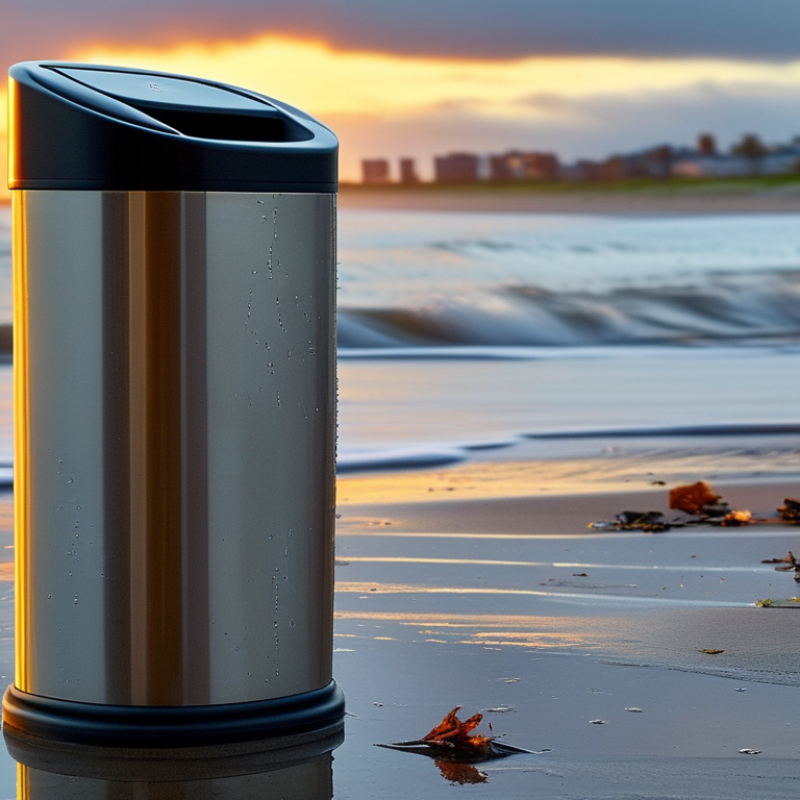
| Product classification | EN 840 is the relevant European standards series for mobile waste containers, including container dimensions, construction, testing, safety and compatible lifting interfaces. The applicable part depends on the container type and capacity. | EN 13071 applies to stationary waste containers, including containers designed for mechanical emptying and lifting equipment. It is separate from the mobile-container scope of EN 840. | Local authorities may classify a public litter bin as street furniture, a waste receptacle, or part of a site fire-risk assessment. Classification can affect placement, anchoring and access requirements. | Define whether the product is mobile, permanently installed, mechanically lifted, or manually emptied before requesting compliance documents. |
| Typical capacity selection | EN 840 covers several mobile container formats and capacities. The exact permitted dimensions and lifting geometry depend on the relevant part of the standard. | EN 13071 covers stationary containers with nominal volumes up to 5,000 litres, subject to the applicable part and configuration. | Capacity should be matched to pedestrian density, collection frequency, wind exposure and the quantity of combustible litter likely to accumulate. | Request the nominal volume, usable volume, external dimensions and collection frequency. Do not compare capacity by appearance alone. |
| Recommended outdoor capacity bands | 30–60 L pedestrian streets, entrances and small transit points; these are usually manually serviced rather than EN 840-lifted containers. | Usually outside the practical scope of large stationary lifting containers unless integrated into a larger fixed waste system. | Smaller receptacles can reduce the amount of combustible material stored at one point, but they may require more frequent emptying. | Use a capacity study based on peak-day waste generation, not only average daily volume. |
| Large public-realm capacity | Mobile containers in the EN 840 family may be suitable where compatible wheels, body geometry and lifting interfaces are required. | Stationary containers can be considered where mechanical collection, fixed positioning or higher capacity is required. | Large units may require greater separation from buildings, emergency routes, combustible façades, exits and vehicle access lanes. | Confirm the collection vehicle interface, lifting method, turning space and maximum filled weight before purchase. |
| Mechanical lifting interface | Relevant EN 840 parts specify dimensions and performance requirements for compatible lifting arrangements on covered container types. | EN 13071 addresses stationary containers and their lifting-related requirements, including design interaction with lifting equipment. | Fire authorities may require containers to remain accessible for emergency response and not obstruct hydrants, fire lanes or evacuation paths. | Obtain dimensional drawings of the lifting bar, trunnions, pockets or other interfaces, and compare them with the collection contractor’s equipment. |
| Body material | Steel, aluminium and polymer bodies can be used when the finished container meets the applicable performance and safety requirements. | Material selection must support the structural, corrosion and operational requirements of a stationary container and its lifting system. | Material reaction-to-fire classifications, smoke performance and fire-resistance expectations are determined by local building, public-space or fire regulations. EN 840 and EN 13071 do not by themselves create a universal fire-resistance rating for every bin. | Ask for the exact material specification, coating system, polymer fire classification where applicable, and any fire-test report relevant to the intended installation. |
| Fire-retardant design | EN 840 compliance should not be interpreted as proof that a bin is fireproof or resistant to deliberate ignition. | EN 13071 compliance should not be interpreted as proof of fire resistance or suitability for every high-risk location. | Some jurisdictions or property owners may require self-closing lids, non-combustible construction, fire-retardant liners, restricted openings, thermal shielding or defined separation distances. | Obtain written confirmation of the tested configuration. Check whether the test covers the complete assembled bin, including liner, lid, ashtray and mounting accessories. |
| Lid and opening design | The lid, hinges, openings and user-contact areas should be evaluated for safe operation, durability and compatibility with the relevant container type. | For stationary containers, lid geometry must not interfere with lifting, emptying, access control or safe maintenance. | Small openings, self-closing lids and protected apertures can help limit insertion of burning objects, but the required design is location-specific. An ash receptacle should be separately assessed. | Check pinch-point protection, lid retention, opening dimensions, water ingress control and whether the lid remains secure in strong wind. |
| Wind and vandal resistance | Mobile containers should remain stable during normal handling and use; anchoring may be needed for exposed public locations. | Stationary units should be designed for their foundation, fixing arrangement, wind exposure and expected misuse. | Local planning or public-realm rules may specify anchoring, anti-tipping measures and minimum clearances from doors, façades and escape routes. | Request wind-load assumptions, overturning resistance, fixing details and installation instructions for the actual site conditions. |
| Drainage and cleaning | Construction should support hygienic emptying, cleaning and maintenance without creating unsafe sharp edges or inaccessible residues. | Stationary units should allow safe cleaning and drainage while maintaining structural integrity and lifting performance. | Drainage must not contaminate stormwater systems. Some sites require sealed bases, controlled wash-down procedures or a dedicated drainage connection. | Verify base construction, drain plugs, clean-out access, wash-down compatibility and the required wastewater disposal method. |
| Corrosion protection | Outdoor mobile containers should be specified for rain, salt, de-icing chemicals, ultraviolet exposure and repeated washing. | Stationary containers require protection appropriate to permanent outdoor exposure, foundations, fasteners and lifting points. | Coating failure can expose sharp edges and increase maintenance-related fire loading if combustible liners or residues accumulate. | Specify corrosion category or environmental exposure, coating thickness, stainless-steel grade where relevant, and warranty conditions without relying on brand names. |
| Safety and ergonomics | Relevant EN 840 requirements address user and operator safety, including construction, handling and functional performance for covered container types. | EN 13071 requirements should be considered together with safe access, lifting, emptying and maintenance procedures. | Placement must preserve accessible routes, emergency access and safe pedestrian movement. Requirements may differ for schools, transport facilities and healthcare sites. | Check edge radii, handle height, opening force, wheel brakes, lid movement, manual handling limits and accessibility needs. |
| Noise and public comfort | Noise performance may depend on lid dampers, wheel material, impact points and collection procedures rather than the standard designation alone. | Stationary systems should be assessed for noise during opening, lifting, emptying and cleaning. | Local environmental rules or site policies may restrict collection hours, particularly near housing, hospitals and hotels. | Request measured or stated operating noise data and define acceptable collection times in the purchase specification. |
| Accessibility and inclusive use | EN 840 is not a complete accessibility standard for every public litter-bin installation. | EN 13071 is not a substitute for local accessibility, public-realm or inclusive-design requirements. | Local rules may address reach range, opening force, contrast, clear ground space and obstruction-free pedestrian routes. | Review the complete installation, not only the bin. Confirm reach height, opening usability, surrounding clear space and contrast requirements. |
| Markings and identification | Look for durable identification of capacity, safe working information, applicable standard reference and relevant operating limits. | Stationary containers should have identification suitable for lifting, inspection, maintenance and safe operating procedures. | Municipal waste signage, fire-warning labels, smoking-related warnings and local recycling instructions may be mandatory or strongly recommended. | Require permanent, weather-resistant labels and multilingual instructions where the product will be used internationally. |
| Testing and documentation | Request a declaration or test documentation identifying the exact EN 840 part, container model, capacity, configuration and test basis. | Request documentation identifying the exact EN 13071 part, container type, volume, lifting system and tested configuration. | Fire documentation must identify the test method, specimen configuration, ignition scenario and limitations. A generic “fireproof” statement is insufficient. | Verify that certificates and reports are traceable to the supplied product and have not been issued only for a visually similar prototype. |
| Installation and separation | Mobile containers may still need defined parking locations, wheel locks or ground anchors in exposed areas. | Stationary containers require suitable foundations, fixing points, access clearances and safe lifting zones. | Check local rules for distance from buildings, combustible storage, windows, exits, electrical equipment, cooking facilities, gas installations and fire-service access. | Obtain a site layout review from the responsible local authority, fire-safety professional or property manager before final placement. |
| Waste stream separation | Colour, aperture and signage can support separation, but EN 840 does not determine every local recycling colour code. | Stationary systems may use separate compartments or containers, subject to collection equipment and local waste regulations. | Combining general waste with hot ash, batteries, aerosols or chemicals can create a significant fire risk and should be prohibited where appropriate. | Match openings, labels and internal liners to the local waste contract and publish clear “no hot ash or burning material” instructions where needed. |
| Climate suitability | Consider low-temperature impact resistance, ultraviolet exposure, snow, rain, salt and freeze-thaw cycles in addition to standard testing. | Permanent installations should account for local temperature range, foundation movement, wind, flooding and coastal corrosion. | Extreme heat, wildfire exposure, arson risk and flood conditions may trigger additional local design measures beyond EN 840 or EN 13071. | Specify the climate zone, minimum and maximum operating temperature, UV exposure, flood level and coastal or de-icing salt exposure. |
| Maintenance and lifecycle cost | Replaceable wheels, lids, hinges, liners and identification panels can reduce whole-life cost when compatible parts are available. | Stationary systems should include inspection points for lifting equipment, foundations, hinges, corrosion and structural damage. | Fire-risk inspections may require more frequent emptying, removal of combustible residue, inspection of ash receptacles and documented corrective action. | Compare cleaning frequency, spare-part availability, expected service life, inspection intervals and disposal costs for damaged components. |
| International purchasing decision | EN conformity can simplify procurement in Europe, but it does not automatically satisfy every non-European national regulation or municipal specification. | EN 13071 can help define stationary-container performance, but collection compatibility and local approvals remain essential. | Fire-safety rules are jurisdiction-specific. The importing country, city, site owner, insurer and fire authority may impose additional requirements. | Use a country-by-country compliance checklist covering waste regulations, fire safety, accessibility, electrical separation, installation permits and collection compatibility. |