

A China price for 99% Pure Sodium Ascorbyl Phosphate Powder cannot be judged by the quoted figure alone. The final cost may depend on order volume, packaging, production batch, shipping terms, and destination. A small sample order often has a different unit price from a bulk shipment. Details matter. Buyers should ask what the stated 99% purity measures and request a current certificate of analysis. Check the assay method, batch number, test date, and relevant storage guidance. A polished quotation is useful, but it does not replace batch-level documents.
Sodium ascorbyl phosphate is a vitamin C derivative used in cosmetic formulations, yet the powder’s quality and suitability should be assessed against the intended application. Ask suppliers about minimum order quantity, sample availability, lead time, payment terms, and whether the quoted price includes freight or other charges. Compare like with like. It is easy to mistake a low ex-works price for the lowest delivered cost. I would be cautious here: supplier claims can vary, and a brief product description may leave important specifications unclear. Request written details before comparing offers, and confirm that the paperwork matches the product and batch being sold. This guide introduces the main factors behind China’s quoted prices and practical questions buyers can use when evaluating suppliers. No single price tells the whole story.
Sodium ascorbyl phosphate, often abbreviated SAP, is a vitamin C derivative identified by CAS 66170-10-3. Its stated formula is C₆H₆Na₃O₉P, and its molecular weight is 322.05 g/mol. These details help buyers check whether a specification sheet matches the material being offered. They do not confirm purity, moisture content, or physical form. Check each value against a current certificate of analysis. Small differences matter.
For China-sourced 99% pure powder, price depends on more than the purity claim. Order quantity, analytical method, packaging, and shipping terms can all affect a quotation. Ask whether “99%” refers to assay on an as-is basis or a dry basis. Request the test method and batch-specific results, rather than relying on a listing headline. Prices can change, so a dated written quote is more useful than an unsupported online figure. I would still verify the formula and molecular weight together; neither alone proves batch quality.
Tips: Compare quotes using the same grade and order size. Request CAS, assay, moisture, and batch number. Keep the specification sheet with the sample record.
China Top 99% Pure Sodium Ascorbyl Phosphate Powder Price?
A “99%” claim needs context: ask whether the assay is reported as received or on a dry basis. For example, a powder with 1.0% moisture and a 99.0% dry-basis assay works out to about 98.0% assay as received. That difference can affect price comparisons. Request the analytical method, reference standard, results, and specification limits. A number without its method is hard to assess.
For verification, review the batch COA for assay, moisture, batch number, test date, and laboratory identification. HPLC can help separate the target compound from related substances, but the method should be validated for its intended use. ICH Q2(R2) (2023) outlines validation characteristics including specificity, accuracy, and precision. For water testing, USP–NF General Chapter <921> describes recognized determination approaches, including Karl Fischer methods. Neither reference sets a universal acceptance limit for every supplier’s powder; compare results with the agreed specification.
Tips: Match the COA lot number to the package label, and check whether moisture was measured by Karl Fischer or loss on drying. Ask for a recent representative batch report. Small detail, big difference. A COA is useful evidence, not a substitute for independent testing when the purchase risk warrants it.
99% Purity Verification: Assay Method, Moisture, and Batch COA
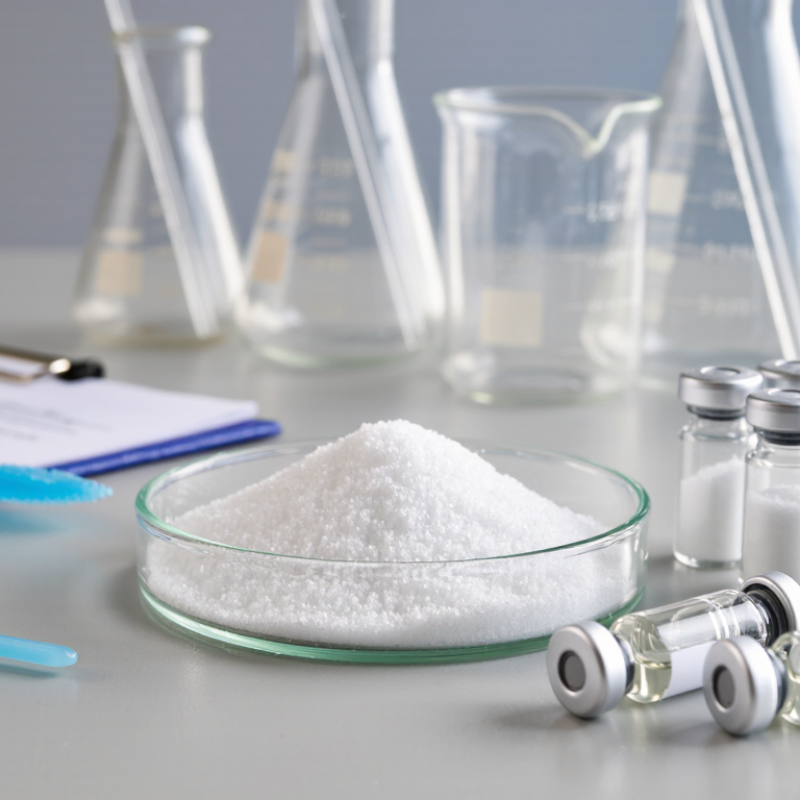
Illustrative example only—not supplier, market-price, or batch COA data. Confirm assay results using a validated method and check moisture against the method and limits stated in the batch COA. The 99% figure is a reference threshold, not a claim about these samples; price depends on grade, order quantity, packaging, and delivery terms.
For China-made sodium ascorbyl phosphate powder at 99% purity, a quoted price is meaningful only when the assay basis is clear. Ask whether the result is reported as received or on a dry basis, and request a recent certificate of analysis with test methods, moisture, and batch number. Higher assay and tighter impurity limits can raise testing and production costs, but suppliers may define “99%” differently. Small lots cost more. A neat quote can still mislead.
Order volume affects unit price through production runs, testing, and packing; compare the same grade and specification across quantities. Packaging matters too: a sealed 1 kg inner bag in a fiber drum is not equivalent to a larger bulk pack, especially after repacking and handling costs. Incoterms change which party pays freight, insurance, and import-side charges. Under ICC Incoterms 2020, the named rule and place determine these responsibilities, so compare like-for-like delivered costs rather than just the ex-works figure. Logistics can move quickly: UNCTAD’s Review of Maritime Transport 2024 reported Shanghai–Europe container spot rates more than tripled between early December 2023 and late June 2024. Request price validity, lead time, currency, shipment terms, and whether freight is included; then check the landed cost against your own route. I would not treat one supplier quote as a market benchmark.
Sodium ascorbyl phosphate (SAP) does not have a universal public price. The figures below are quote-planning guidance, not live supplier offers; request a dated quotation with the agreed specification, quantity, destination, and Incoterm.
| Price factor | Typical quote details to confirm | Likely effect on price per kg | Buyer check |
|---|---|---|---|
| Assay and specification | Specify the required assay (for example, a minimum of 99%), test method, reporting basis, and limits for moisture, related substances, and residual solvents where applicable. | A tighter assay or impurity specification can increase testing and production costs. “99%” alone is not enough to compare offers unless the test method and basis match. | Review the current specification and batch Certificate of Analysis (CoA); confirm that the assay basis is stated consistently. |
| Order volume | Request separate quotations for the intended quantity and any larger volume break. Minimum order quantities and break points vary by supplier and product configuration. | Larger orders may reduce the product cost per kg, but freight, import charges, storage, and working-capital costs can offset the saving. | Compare the total landed cost at each quantity, not only the quoted product price per kg. |
| Packaging | Confirm net weight per pack, inner liner, outer container, sealing, labeling, and whether custom packaging is required. Pack formats are supplier-specific. | Small packs or custom labels can raise packaging and handling costs per kg; larger packs may reduce them but must suit the buyer’s handling and storage needs. | Ask for the packing list and confirm the packaging protects the powder from moisture during transport and storage. |
| Incoterms® 2020 | Compare quotations using the same named place or port, such as FCA, FOB, or CIF, and state the applicable Incoterms® rule and version. | EXW or FCA prices generally exclude more transport costs than CIF prices. A CIF quote includes specified freight and insurance to the named destination port, but not necessarily import clearance, duties, or delivery beyond that port. | For containerized cargo, consider asking for an FCA quote as well as FOB. FOB is intended for sea and inland-waterway transport; clarify who pays each transport and handling charge. |
| Delivery schedule and destination | Provide the destination, required delivery date, shipment mode, and any special documentation or inspection requirements. | Urgent production or transport, remote destinations, and additional compliance or inspection requirements may increase the total cost. | Request a separate breakdown for product, packing, inland transport, export handling, freight, insurance, and destination charges. |
| Commercial comparison | Use a written quotation stating currency, price validity, quantity, specification, packaging, payment terms, lead time, and Incoterm. | Offers are comparable only when the product specification and commercial terms are aligned. | Treat an unqualified “price per kg” as incomplete; confirm whether taxes, freight, insurance, and import costs are included. |
Practical comparison: Compare the same assay specification and pack size, then calculate landed cost per kg using the same destination and Incoterm. All price and delivery terms should be confirmed in a current written quotation.
For 99% pure sodium ascorbyl phosphate powder, a USD/kg quote is meaningful only when the buying basis matches. Check the assay method, batch-specific certificate of analysis, packaging, and minimum order quantity. A 25 kg quote may not apply to a 500 kg order. Ask whether the price covers samples, testing, or special packing. Small details change the landed cost.
Compare FOB and CIF separately. Under FOB, the buyer arranges main carriage and insurance; under CIF, the seller pays freight and insurance to the named destination port. CIF does not automatically include destination handling, customs charges, or delivery to your warehouse. UNCTAD’s Review of Maritime Transport 2024 reports maritime trade grew 2.4% in 2023 and forecasts 2.0% growth for 2024. Freight conditions can shift, so request the route, quote validity, and insurance scope in writing.
A simple comparison sheet helps: list MOQ, order quantity, unit price, total goods value, freight, insurance, and excluded charges. Convert everything to the same currency and delivered basis. One awkward point: the lowest USD/kg figure may still cost more after port fees. Don’t compare unlike terms. Ask suppliers to price the same quantity and named port, then review the supporting documents before deciding.
For cosmetic formulation, sodium ascorbyl phosphate is commonly considered at 0.2–5% of the finished product. The right level depends on the product’s purpose, texture, pH, and stability results—not purity alone. A 99% assay describes ingredient strength; it does not guarantee a particular skin benefit or finished-product performance. Price also depends on factors such as order quantity, test documentation, and packaging. Request a current specification and quotation before comparing suppliers.
The Cosmetic Ingredient Review Expert Panel’s 2017 safety assessment examined sodium ascorbyl phosphate among several vitamin C ingredients and concluded they were safe as used. This is a safety review, not a recommended-use-level study, so it does not establish that every formula should contain 5%. Start with a modest concentration, then assess appearance, pH, and stability in the actual formula. Small changes can matter.
Tips: Add the powder to the water phase and mix until uniform. Check for grit, color change, and pH drift during stability testing. Keep clear batch records. A neat lab sample can still behave differently after several weeks.