

Blog

China Top Organic Socks Manufacturers for Global Buyers

China has become a significant sourcing base for global Organic Socks buyers. Its manufacturers offer cotton spinning, knitting, dyeing, finishing, and packaging within one supply chain. This structure can shorten lead times and support competitive order quantities. Yet factory size alone does not prove responsible production.

La Rhea Pepper, a respected organic textile advocate and former Textile Exchange leader, has said that organic agriculture should build “healthy soils, healthy people, and a healthy planet.” This principle gives buyers a practical evaluation framework. They should examine GOTS or OCS certification, transaction certificates, fiber percentages, dyeing controls, and social compliance records. A useful factory visit may reveal details that brochures omit. Look closely at yarn storage, labeling systems, machine cleanliness, and batch separation.

Small details matter.

The strongest Chinese Organic Socks manufacturers combine stable quality with traceable documentation. They can explain where organic cotton originates and how each production stage is controlled. Buyers should also request shrinkage tests, colorfastness results, odor assessments, and samples after washing. No supplier is perfect. Even a certified facility may experience inconsistent sizing, delayed paperwork, or communication gaps. That is why independent verification remains valuable. This guide introduces leading Chinese manufacturers through practical criteria, including production capability, certification transparency, customization experience, export readiness, and buyer feedback. It also recognizes an uncomfortable truth: a low price can hide environmental costs or weak quality controls. Careful sourcing requires patience, evidence, and occasional skepticism.
China Top Organic Socks Manufacturers for Global Buyers

What Defines Organic Socks and Why Global Buyers Choose Them

Organic socks begin with verified organic fibers, often cotton grown without prohibited synthetic pesticides or genetically modified seeds. However, fiber origin alone does not make a finished sock organic. Buyers should check processing records, transaction certificates, and the certified supply chain.

In factory evaluations, details matter. A reliable manufacturer can explain yarn sources, dyeing controls, knitting settings, and wastewater handling. The sock should feel breathable, not merely soft. Examine the toe seam, elastic recovery, and fabric after repeated washing. A practical wash test often reveals more than a polished sample. Organic does not automatically mean chemical-free, plastic-free, or ethically produced. The label can mislead.

Global buyers choose organic socks for several connected reasons. Customers increasingly ask where fibers come from and how products are made. Verified materials can support clearer product claims and stronger retail documentation. Organic cotton may also provide a comfortable hand feel for everyday wear, especially in warm climates. Responsible production can reduce avoidable environmental pressure, although results depend on farming, dyeing, packaging, and transport. The imperfect part is easy to overlook: organic yarn can still become wasteful merchandise if sizing, durability, or demand planning is poor. Buyers should review test reports, certification scope, production consistency, and communication quality before placing large orders. Reliable sourcing is not about a promising label. It is about evidence.

How China’s Organic Sock Manufacturing Industry Is Organized

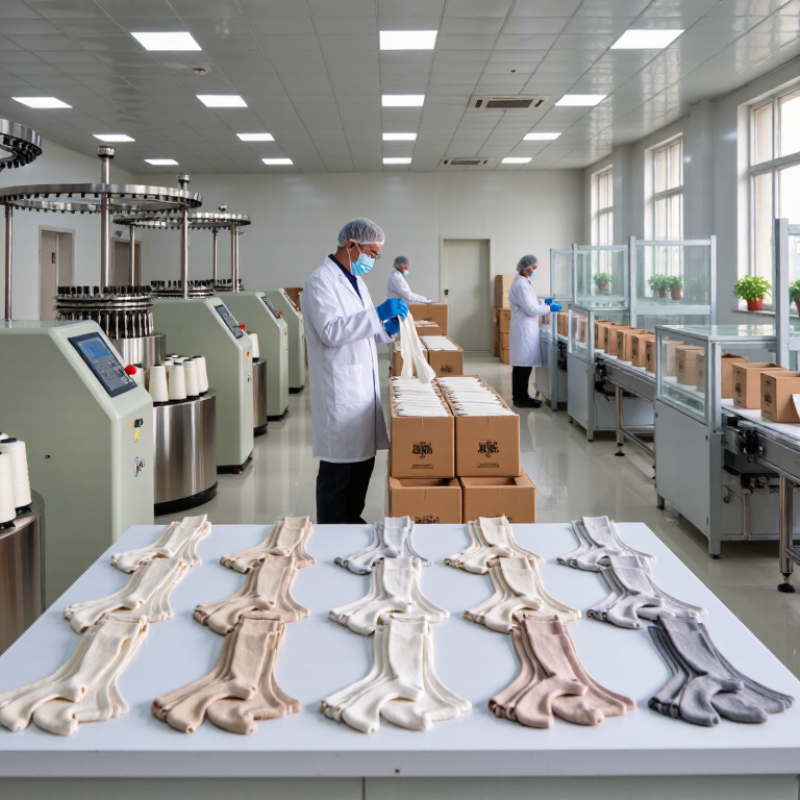
China’s organic sock manufacturing industry is organized around a coordinated supply chain. Organic cotton or other approved fibers usually enter through certified textile suppliers. Spinning mills turn them into yarn, while knitting factories shape the socks on circular machines. Different specialists often handle dyeing, washing, boarding, and packaging.

The factory floor is practical and tightly scheduled. A technician checks yarn tension before knitting begins. Inspectors then examine toe seams, fabric density, sizing, and loose threads. Certified production requires documented material movement, chemical controls, and regular audits. Buyers should request current certificates, transaction records, and test reports, not only product photographs.

The system is efficient, but not flawless. Delays can occur when organic yarn supplies change or laboratory testing takes longer. Color matching also needs patience, especially with low-impact dyes and natural fiber variations. Experienced exporters normally confirm shrinkage, wash performance, carton details, and labeling before shipment. Small sample orders reveal more than polished presentations. A useful factory visit includes production records, storage areas, and rejected goods. These details show whether quality control is practiced daily or described only during negotiations. Suppliers with clear subcontracting disclosures are easier to assess, although transparency can still vary between production seasons.

Key Regions and Production Strengths of Chinese Sock Manufacturers

China’s organic sock manufacturing is concentrated in several specialized regions. Zhejiang, especially the Zhuji area, is known for dense clusters of sock workshops and integrated supply chains. Buyers can find knitting, linking, packaging, and export services nearby. This shortens development time and supports flexible order quantities.

Jiangsu offers strong textile engineering and dyeing capabilities. Its factories often handle organic cotton blends, recycled fibers, and refined finishing processes. Guangdong provides practical support for overseas trade, product development, and fast sample communication. Production strengths differ by factory, not only by province. A supplier may have modern knitting machines but limited experience with certified organic materials. Factory visits and sample testing remain useful.

Tips: Ask for valid fiber certificates, recent audit records, and batch-level traceability. Check shrinkage after washing. Review seam strength, toe comfort, and color consistency. Do not rely on catalogue photos alone. Some manufacturers use the word “organic” too loosely, which can create compliance problems. I have found that clear specifications prevent more mistakes than attractive promises. Still, even careful buyers may miss packaging details or seasonal capacity limits. Confirm these points before placing a larger order.

Certifications, Materials, and Quality Standards Buyers Should Check

For global buyers, organic socks require more than a green label. Textile Exchange’s 2024 Organic Cotton Market Report recorded 342,265 metric tonnes of organic cotton lint from 222,134 farmers. The figure shows supply is growing, but traceability remains essential. Ask manufacturers for a current GOTS or OCS scope certificate, not only a logo. GOTS requires at least 70% certified organic fibers for “made with organic” claims and 95% for “organic” textile claims. OCS verifies organic fiber content, while GOTS also addresses processing and social criteria.

Materials should be checked against the purchase specification. Request fiber percentages, yarn count, recycled content, and elastane details. A practical sample should show even stitching, firm cuffs, clean toe seams, and no chemical odor. Test shrinkage under ISO 6330 washing conditions, colorfastness under ISO 105 methods, and pilling or abrasion through agreed laboratory procedures. OEKO-TEX Standard 100 can support chemical-safety verification, but it does not prove organic farming.

A certificate is not proof of every batch. That gap matters. Require transaction certificates for shipment-specific organic content, plus third-party laboratory reports. Check certificate scope, expiry dates, facility addresses, and product categories carefully. In my experience, buyers often overlook sock composition after washing. A 75% organic-cotton sample can become less comfortable when poor spinning, loose knitting, or excessive shrinkage appears. Specifications should therefore include tolerances, inspection levels, and post-wash measurements. Perfect consistency is difficult; transparent corrective records are more credible.

Organic Socks Certification Thresholds for Global Buyers

Minimum organic-fiber content required by widely used textile certification schemes. These thresholds help buyers assess organic claims, material composition, and supply-chain documentation when evaluating sock manufacturers.

GOTS Organic and OCS 100 require at least 95% certified organic fibers. GOTS Made with Organic requires 70–94%, while OCS Blended covers products containing 5–94% certified organic fibers. Buyers should also verify scope certificates, transaction certificates, fiber composition, processing controls, and restricted-substance compliance.

Sources: Global Organic Textile Standard (GOTS) Labeling Guide; Textile Exchange Organic Content Standard (OCS) Implementation Manual.

How to Select and Partner With a Reliable Chinese Sock Manufacturer

Selecting a reliable Chinese organic sock manufacturer requires more than comparing quotations. Textile Exchange’s 2024 Materials Market Report recorded 124 million tonnes of global fiber production in 2023. Polyester represented about 57%. This scale makes material verification essential. Request organic cotton transaction certificates, fiber-content test reports, and batch-level traceability. A valid Global Organic Textile Standard certificate should match the factory, scope, and production site.

Inspect the factory before signing a long-term agreement. Check knitting machines, linking lines, dyeing controls, warehouse labeling, and wastewater records. Ask for three samples from separate production lots. Compare thickness, shrinkage, colorfastness, and elastic recovery.

The 2024 Organic Cotton Market Report from Textile Exchange estimated organic cotton at only about 1.4% of global cotton production in 2022/23. Supply can therefore be less flexible than a sales team suggests. Put material substitutions, inspection rights, lead times, and corrective actions in writing. Independent testing is worthwhile, especially for children’s socks or sensitive skin products.

A polished factory tour can still hide weak lot control. I once trusted a perfect sample too quickly; that remains an uncomfortable lesson.

Start with a small pilot order, review defect photos, and measure delivery performance before expanding volumes. Ask who controls subcontracting. Get the answer in writing.

Now Hiring!