

Choosing a reliable China Resin Insects supplier can shape a wholesale buyer’s entire product experience. Quality begins with responsible sourcing, accurate species identification, and careful hand-finishing. It continues through packaging, communication, and delivery.
E.O. Wilson, one of the most respected entomologists, described insects as “the little things that run the world.” His words remind buyers that each specimen deserves care, even when displayed inside decorative resin. A trustworthy supplier should explain the insect’s origin, preservation method, resin clarity, and size tolerance. Clear product photographs are useful. Detailed inspection records are better.
Wholesale buyers often need stable batches for gift shops, museums, educational collections, and nature-themed displays. A strong Chinese manufacturer should provide consistent shapes, clean surfaces, secure wrapping, and practical carton protection. Small bubbles may appear. Minor color differences can happen. These details should be disclosed, not hidden.
Experience matters here. A supplier familiar with export packaging can reduce cracked corners, cloudy surfaces, and loose specimens during transport. Professional teams also understand that different markets may require different labeling and documentation. Buyers should confirm applicable import rules before placing large orders.
This guide examines China’s Resin Insects supply market through product quality, customization, production capability, and service reliability. It also considers an uncomfortable point: the lowest quotation is rarely the safest choice. Cost matters, but predictable quality protects margins. A careful supplier comparison can prevent expensive surprises later.
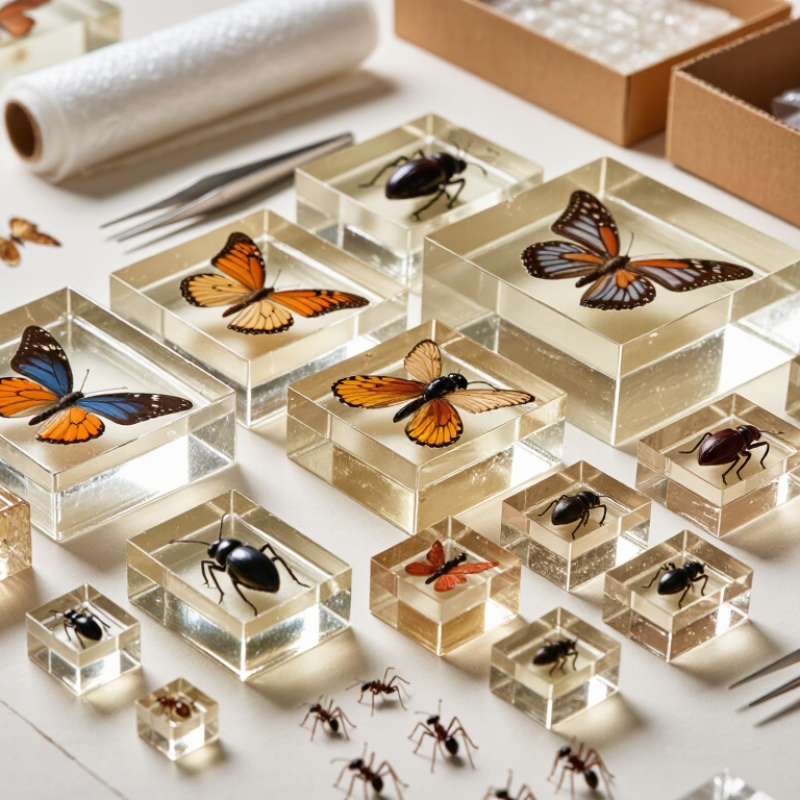
China’s resin insect manufacturing industry serves educational displays, museum projects, home décor, and wholesale gift markets. Production often begins with a detailed master model, followed by silicone mold preparation and controlled resin casting. Skilled workers inspect wing veins, antennae, body texture, and color placement by hand.
Manufacturers commonly use polyurethane or epoxy resin, depending on strength, clarity, and production volume. Vacuum degassing helps reduce bubbles, while measured pigments create consistent shades across large orders. After curing, each piece receives trimming, surface cleaning, and visual inspection. Packaging teams add foam protection because thin legs and wings can break during transport.
Wholesale buyers should request samples before confirming a full order. Compare weight, surface finish, color accuracy, odor, and dimensional tolerance. Ask for material information and production records when projects require dependable documentation. Not every batch is perfect. Small color differences can appear between curing cycles, especially with translucent effects. That detail deserves attention. Better factories record these variations and adjust their process instead of hiding them. Mold wear also affects fine textures over time, so repeat orders need periodic sample approval. A practical supplier communicates clearly about lead times, inspection standards, carton testing, and realistic production limits.
Wholesale buyers can choose from several resin insect types, depending on their market and display purpose. Clear beetles are popular because their shells show strong colors and fine textures. Butterflies and moths add visible wings, delicate patterns, and a lighter appearance. Dragonflies work well in educational displays because their veins remain easy to examine. Small ants, bees, and other compact insects suit keychains, desk ornaments, and sample collections.
Some suppliers offer naturally deceased specimens, while others produce detailed insect replicas. Responsible sourcing matters, especially when buying unusual species. Ask for origin records and confirmation that protected insects are excluded. Resin blocks may be square, rectangular, round, or shaped for jewelry components. A six-centimeter block can show one insect clearly, while larger blocks may contain multiple specimens. However, crowded layouts often reduce visual value.
Professional buyers should inspect resin clarity, insect alignment, surface scratches, and trapped bubbles. Color changes may appear after long exposure to sunlight. Consistent sizing also helps when preparing retail shelves or classroom sets. Packaging should protect corners and prevent movement during shipping. Not every piece looks perfect. A minor wing fold can feel natural, but poor positioning may weaken the product’s appeal. Requesting pre-shipment photos and a physical sample can prevent expensive misunderstandings. Quantity, customization, and packing standards should be confirmed in writing before production.
Chinese Resin Insect Suppliers: How They Produce Their Products
Chinese resin insect suppliers typically begin with a sample review, not mass production. Buyers select the insect type, size, color tone, and display shape. Factories use ethically sourced, documented specimens or detailed synthetic models. Each piece is checked for damage before molding. Workers arrange the insect inside a clear silicone mold. Small tweezers help position wings and legs. It sounds simple. It is not. A slight shift can affect educational value and retail appeal.
The resin is mixed by weight, using a transparent casting formula and controlled hardener ratio. Staff remove bubbles through gentle vibration or a vacuum chamber. Deep-bodied insects need staged pouring, because one thick pour can trap cloudy pockets. The mold then rests in a clean, stable-temperature room. Cure time depends on thickness. Rushing this stage can cause soft edges or later yellowing. Some workshops still rely too much on visual judgment, which needs improvement.
After demolding, workers trim the rim, polish the surface, and inspect every corner under white light. They check clarity, cracks, loose parts, sharp edges, and label accuracy. Clarity matters. Wholesale orders receive batch samples before final packing. Protective sleeves and separated boxes reduce scratches during transport. Reliable suppliers record resin lots, curing times, inspection results, and carton counts. Buyers should request these records and approve a pre-production sample. A low price means little if consistency fails.
Wholesale resin insect buyers need more than attractive samples. They need repeatable quality across every production batch. Each piece should show sharp body details, balanced proportions, and clean resin flow. The insect must remain centered, without trapped dust, large bubbles, or cloudy patches. Small bubbles may occur, but they should not block key features.
A reliable supplier checks resin hardness, surface smoothness, color stability, and edge finishing before packing. Samples should be compared with approved reference pieces under natural and white LED light. Measurements matter too. Length, thickness, hole placement, and weight should stay within agreed tolerances. This prevents display hooks, educational sets, and retail packaging from looking inconsistent.
Traceable sourcing is equally important. Specimens and decorative replicas should come from lawful, documented channels. Product records should identify materials, batch dates, inspection results, and carton quantities. Strong packaging uses individual sleeves, impact-resistant dividers, and moisture protection. Drop testing can reveal weak points before shipment, although it cannot predict every transport problem. No inspection system is perfect. A practical supplier should accept reasonable feedback, investigate defects, and improve the next batch rather than hide small failures. Buyers should request production samples, inspection photos, and replacement terms before placing large wholesale orders.
| Quality Dimension | Wholesale Quality Standard | Common Specification or Range | Recommended Buyer Verification |
|---|---|---|---|
| Resin Material | Clear, fully cured resin with consistent hardness and no excessive tackiness. | Epoxy or polyurethane resin; material selection should match the intended display or educational use. | Request a material specification sheet and inspect sample pieces for curing, odor, and surface consistency. |
| Insect Detail | The insect form should be recognizable, proportionate, and free from major bubbles or distorted legs and wings. | Fine details may include body segments, antennae, wings, legs, and surface texture. | Use an approved reference sample and define acceptable limits for bubbles, missing details, and deformation. |
| Transparency and Clarity | Transparent areas should be visually clear, with no widespread cloudiness, yellowing, or visible contamination. | Clear, tinted, translucent, or opaque finishes can be specified according to the product design. | Check samples under consistent lighting and compare them with the approved color and clarity standard. |
| Surface Finish | The surface should be smooth, properly polished or evenly textured, without sharp resin flash or exposed edges. | Gloss, semi-gloss, matte, or textured finish. | Inspect edges and contact surfaces manually; define tolerances for scratches, pits, and uneven coating. |
| Color Consistency | Color should remain consistent across the production batch and match the approved sample. | Natural insect colors, custom colors, metallic effects, or transparent pigments. | Compare random samples from different cartons against a signed or retained reference sample. |
| Dimensional Accuracy | Dimensions should remain within the tolerance agreed in the purchase specification. | Typical small display pieces: approximately 20–100 mm in the longest dimension; custom sizes may vary. | Measure length, width, and height using calibrated tools and record results by sampling lot. |
| Curing and Durability | Finished pieces should resist normal handling without surface denting, cracking, or sticky residue. | Curing time depends on resin type, mold design, temperature, and product thickness. | Perform visual, touch, and handling checks after the supplier's stated curing period. |
| Bubble Control | No large bubbles should appear in prominent or structural areas; minor internal bubbles should follow the agreed sample standard. | Acceptance limits should be defined by bubble size, quantity, location, and visibility. | Inspect each visible surface under consistent light and photograph nonconforming examples. |
| Safety and Chemical Documentation | Documentation should identify resin components, handling precautions, and applicable market requirements. | Safety Data Sheet (SDS) for resin materials; additional testing may be required for children's products or direct-contact applications. | Request current SDS documents and confirm whether destination-country testing or declarations are required. |
| Packaging Protection | Individual pieces should be protected against scratches, impact, dust, and movement during transport. | Individual sleeves, compartments, foam, molded inserts, or protective wrapping inside export cartons. | Approve a packaging sample and conduct a carton drop or transport simulation when commercially appropriate. |
| Carton Marking | Outer cartons should show product code, quantity, handling marks, and destination information when required. | Carton information should match the packing list and purchase order. | Check carton labels, quantity per carton, gross weight, net weight, and carton dimensions before shipment. |
| Production Lead Time | The supplier should confirm a realistic schedule covering mold preparation, production, inspection, packing, and dispatch. | Often about 15–35 calendar days after sample approval for standard wholesale orders; custom tooling may require additional time. | Obtain a written production schedule and identify approval points for samples and packaging. |
| Inspection Plan | Inspection criteria should be documented before mass production, with clear classifications for critical, major, and minor defects. | Typical checks include appearance, dimensions, color, curing, quantity, packaging, and labeling. | Use pre-production, during-production, and pre-shipment inspections based on order risk and volume. |
| Batch Traceability | Each production batch should be identifiable through production date, product code, quantity, and inspection records. | Batch information may be recorded on cartons, packing lists, or internal quality documents. | Request retained samples and batch records for quality claims or repeat orders. |
Note: Specifications, tolerances, testing requirements, and lead times should be confirmed in writing for each order because they vary by design, material, destination market, and intended use.
Selecting a reliable resin insect supplier in China requires more than comparing catalog prices. Start with a detailed sample request. Check resin clarity, insect positioning, surface bubbles, color consistency, dimensions, and weight. A dependable supplier should explain material specifications and production limits clearly.
Ask for recent production photos, factory videos, and quality-control records. If possible, arrange a video inspection of the workshop and packing area. Confirm whether the supplier produces in-house or uses outside processors. This affects lead times and accountability. Request a written quotation covering molds, packaging, labeling, minimum order quantities, and replacement terms.
Small details matter.
For wholesale orders, test several samples from different batches. Measure them with calipers and inspect edges under bright light. Packaging should prevent scratches, crushed corners, and movement inside cartons. Ask for carton dimensions, drop-test practices, and shipping documents before payment. Clear communication is also evidence of professionalism; delayed replies may become serious problems after ordering.
No sample is perfect. Minor variation can occur because resin cures differently in changing temperatures. However, acceptable variation must be agreed in writing. One practical mistake is approving a beautiful sample without checking mass-production consistency. A stronger process uses a signed specification sheet, staged inspections, and a small trial order. This protects quality, budget, and delivery expectations without relying on promises alone.
This wholesale screening model prioritizes product quality, customization capability, export compliance, production capacity, delivery reliability, communication, and total cost. Buyers can use these criteria to compare suppliers objectively before requesting samples, quotations, and factory audits.