How to Choose the Best Animatronic Dinosaur Ride?
Choosing the best Animatronic Dinosaur Ride means judging more than its size or headline speed. The strongest choice fits the venue, audience, budget, and maintenance capacity. It should also feel convincing from the queue, not only from the seat. A low rumble, moving foliage, and a dinosaur turning toward riders can make a small scene memorable. Poor timing can make the same scene feel mechanical.
The TEA/AECOM 2023 Theme Index reported 242.5 million visits across the world’s top 25 theme parks that year. This figure is a useful sign of the scale of themed entertainment, but it does not prove demand for any single ride. Walt Disney, a theme-park pioneer, offered a relevant design reminder: “You can dream, create, design and build the most wonderful place in the world. But it requires people to make the dream a reality.” The quote concerns execution broadly, not dinosaur ride engineering. That distinction matters.
This guide compares ride capacity, motion systems, dinosaur realism, safety features, service access, and total ownership costs. Ask suppliers how often key parts need inspection and whether replacement components are readily available. Request demonstrations, maintenance records, and references from comparable venues. Listen for uneven movement. Look for cables or joints exposed to guests. Small details count. A dramatic model can still be the wrong purchase if downtime is frequent or staff cannot maintain it. No brochure can settle every question; an on-site trial is better. The aim is not simply the biggest Animatronic Dinosaur Ride, but one that remains engaging, dependable, and practical after opening day.
Define the Ride’s Purpose, Audience, and Operating Environment
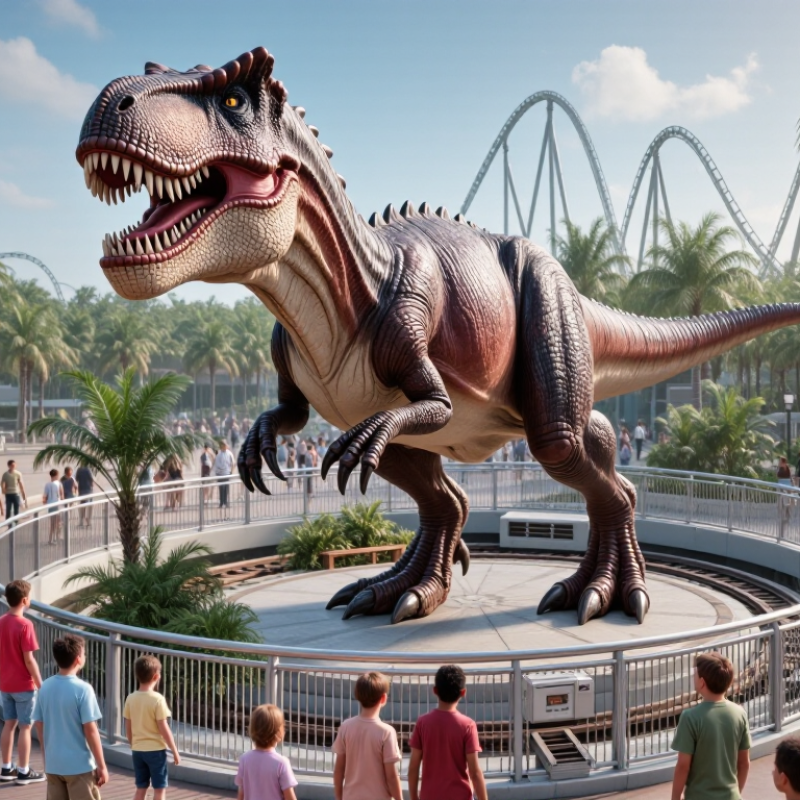
An animatronic dinosaur ride should solve a clear visitor need. Is it a gentle family circuit, a dramatic dark ride, or a moving exhibit between attractions? The answer shapes speed, seating, story length, and dinosaur scale. Define the main age group, including whether young children ride with adults. Check seat access and restraint fit with real visitors, not just drawings. Keep the experience legible. A roaring predator may thrill older children but overwhelm toddlers.
The operating site matters just as much. Measure doorways, turning space, floor capacity, queue area, and access for maintenance. Outdoor rides need plans for rain, heat, dust, and fading finishes; indoor rides need sound control and safe sightlines. TEA and AECOM’s 2023 Theme Index recorded 244.6 million visits across the world’s 25 most-attended theme parks. That was 23% above 2022. This is not a forecast for one ride, but it shows the scale of busy park environments. Model peak queues and hourly capacity before choosing a vehicle. Ask operators to test loading with children and mobility needs in mind. The awkward detail? A beautiful dinosaur can still block a narrow service route. Leave room for repairs, even if the first layout looks less dramatic.
Compare Animatronic Ride Types and Dinosaur Designs
Choosing an animatronic dinosaur ride starts with comparing how guests move. A fixed-base ride can rock or turn while keeping the seat in one place. It needs less floor space and can suit younger visitors who prefer a gentler motion. A guided track ride travels through a themed scene, so it needs a clear route, loading area, and room for safe spacing. It often feels more immersive, but its layout is harder to change later.
Dinosaur design shapes the experience just as much as the ride type. A tall sauropod creates a calm, impressive silhouette, while a crouching predator can feel more intense. Moving jaws, blinking eyes, and a slowly turning neck add detail, but too many sudden motions may unsettle small children. Match the creature’s movement to the ride’s speed and viewing distance. A close-up ride benefits from expressive facial details; a larger track scene needs a strong outline guests can recognize from farther away. That matters.
Check the practical details before choosing. Ask how often moving parts need inspection, whether operators can reach service panels, and how the ride handles different guest heights. A dramatic design may look perfect in a rendering, yet feel cramped once seats and queue barriers are installed. I would leave room for adjustments; plans rarely capture every real-world wrinkle.
Assess Durability, Maintenance, and Supplier Support
When choosing an animatronic dinosaur ride, inspect its frame, joints, skin, and control cabinet—not only its appearance. Ask how the structure handles repeated starts, stops, and passenger loading. TEA and AECOM’s 2023 Theme Index reported 244.6 million visits across the 25 most-attended theme parks worldwide, up 23% from 2022. That figure is not a ride-level usage count, but it highlights why busy attractions need realistic duty-cycle testing.
Look for documented inspection intervals and a maintenance log template. Ask how technicians check actuator wear, loose fasteners, water ingress, and cracked skin around moving joints. Request a list of common replacement parts, their expected service life, and typical delivery times. Small details matter. A delayed sensor can keep an otherwise sound ride out of service. I would also ask for a sample repair report; a polished warranty alone tells little about the repair process.
Supplier support should include clear training, accessible technical drawings, remote troubleshooting, and a named service contact. Confirm what response time means in practice: an acknowledgement, a diagnosis, or an on-site visit. Get exclusions and labor costs in writing. One weakness in my own evaluation is that showroom tests can make maintenance look easier than it is. Ask to see the ride after a full operating day, then check how quickly staff can safely inspect and reset it.
Compare Total Costs and Select the Best-Fit Ride
A useful comparison starts beyond the purchase price. Ask for an itemized quote covering the ride, crating, freight, unloading, installation, and operator training. Then estimate recurring costs: electricity, routine inspections, replacement skins or joints, and seasonal storage. A low-priced unit can become expensive if parts take weeks to arrive. Include staffing and downtime in your calculation. For example, a ride that needs two attendants may not suit a small indoor venue. Small details matter. Compare expected operating hours and guest capacity, not just the advertised maximum. That figure can look impressive on paper.
Match the ride’s footprint and motion to your actual site. Measure doorways, queue space, ceiling height, and turning clearance before ordering. Outdoor installations also need shade, drainage, and a realistic weather plan. Choose a compact motion profile for younger visitors or tight spaces; larger movements may need more clearance and closer supervision. Ask for maintenance schedules, warranty exclusions, spare-part lead times, and a written setup plan. If possible, watch a full operating cycle and listen for noise near the queue. I would keep a contingency allowance, even after comparing quotes. My first budget would probably miss something. A simple spreadsheet helps track purchase, delivery, setup, annual upkeep, staffing, and projected rides per day. Use conservative attendance estimates, since quiet weekdays can change the numbers.
How to Choose the Best Animatronic Dinosaur Ride?
Compare indicative total acquisition-cost bands to shortlist a ride that fits your budget and project scale.
How to use this chart: These broad USD planning estimates are illustrative, not verified market averages or supplier quotes. Actual prices vary with ride capacity, theming, shipping, installation, and site requirements. Compare maintenance, spare parts, warranty, and operating costs before choosing.