
Blog

Why Choose Commercial Coffee Machines for Global Sourcing?

Choosing commercial coffee machines for global sourcing is a practical decision, not merely a price comparison. Buyers must examine capacity, brewing consistency, energy use, maintenance access, and local service support. A busy hotel may need a high-volume automatic system, while a small café may prefer a compact semi-automatic model.

Coffee expert James Hoffmann offers a useful reminder: “The best coffee is the coffee you like.” His point also applies to commercial purchasing. The ideal machine must match the menu, staff skills, customer expectations, and operating environment. A technically advanced machine can still disappoint if employees find its controls confusing. Small details matter, including steam-wand movement, grinder adjustment, water filtration, and cleaning time.

Global sourcing adds further responsibility. Reliable buyers should verify factory records, product testing, warranty terms, spare-parts availability, and applicable regional requirements. They should request sample units before placing large orders. A machine that performs well in a showroom may struggle with hard water, unstable electricity, or continuous service during peak hours.

The lowest quotation is not always the lowest cost. It may conceal shipping delays, difficult repairs, or expensive replacement components. This deserves honest reflection. Even experienced teams can overvalue specifications and undervalue daily usability. Better decisions come from comparing total ownership costs, testing real workflows, and speaking with technicians and operators. When carefully selected, commercial coffee machines can support consistent quality, efficient service, and scalable growth across international markets. Yet sourcing remains a process of verification, not assumption.
Why Choose Commercial Coffee Machines for Global Sourcing?

What Are Commercial Coffee Machines and How Do They Work?

Commercial coffee machines are purpose-built systems for cafés, hotels, offices, and high-volume service areas. Unlike home models, they manage repeated brewing with stronger pumps, larger boilers, and more durable internal parts. Some machines prepare espresso, while others brew filter coffee or automate both grinding and extraction.

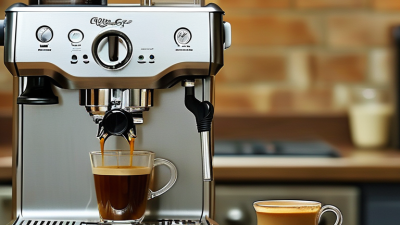
The working process is precise but not mysterious. Fresh water enters through a connected supply or tank. A heating system raises the water to a controlled temperature. The pump then pushes water through compact coffee grounds, often at about nine bars of pressure. Espresso flows into a warmed cup within seconds. A steam wand uses hot vapor to create textured milk for cappuccinos and lattes. In busy cafés, separate heating circuits help brewing and steaming happen together.

Small details matter. A stable group head, accurate dosing, and consistent water flow affect flavor more than appearance alone. I have found that a shiny metal case can hide weak temperature control. That is an easy sourcing mistake. Buyers should examine cleaning access, spare-part availability, voltage, water requirements, and operator training before choosing equipment. Some automatic models save labor, but their software and sensors may require specialized service. Manual machines demand more skill, yet they can offer clearer control during changing workloads. The right choice depends on cup volume, local water quality, available technicians, and the daily habits of the people using it.

Which Features Make Commercial Coffee Machines Suitable for Global Sourcing?

Commercial coffee machines suit global sourcing when their features travel well across markets.

The International Coffee Organization’s Coffee Development Report 2024 estimates global consumption at about 177.9 million 60-kilogram bags in 2023/24. That demand requires equipment built for busy cafés, hotels, offices, and catering sites. Machines with adjustable voltage and frequency reduce regional purchasing barriers. However, voltage conversion is not always simple. Buyers must verify heating capacity, plug design, and local electrical requirements.

Serviceability matters just as much as brewing speed.

Modular pumps, replaceable seals, accessible boilers, and standard fittings can shorten maintenance delays. Stainless-steel contact surfaces support hygiene and withstand repeated cleaning. Programmable dosing improves consistency, while pressure monitoring helps operators identify faults early. The Specialty Coffee Association’s Coffee Skills Program emphasizes extraction control, water quality, and repeatability, making these features commercially relevant rather than decorative. Integrated filtration is useful where water hardness varies between regions. It can also create extra replacement costs. Buyers should assess filter availability before choosing a supplier.

Energy performance deserves closer attention.

The International Energy Agency reported that buildings account for roughly 30% of global final energy consumption, so efficient equipment can support broader facility targets. Insulated boilers, standby modes, and automatic shutoff reduce unnecessary demand. Digital diagnostics may simplify remote support, but connectivity standards differ across countries. A machine can appear globally ready and still fail during installation. Clear manuals, multilingual controls, export-grade packaging, and documented testing therefore remain essential.

How Do Machine Types Match Different Business and Market Needs?

Why Choose Commercial Coffee Machines for Global Sourcing?

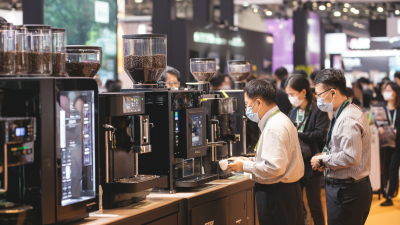
Machine choice should follow the business model, not showroom appearance. Espresso machines suit cafés requiring milk drinks, rapid service, and visible preparation. Batch brewers fit offices, hotels, and restaurants serving larger volumes with fewer trained employees. Superautomatic machines reduce preparation steps, but their software and cleaning systems may require stronger technical support.

The International Coffee Organization estimated global coffee consumption at about 177.9 million 60-kilogram bags in 2023/24. That demand is uneven across markets. In humid regions, reliable drainage and corrosion-resistant materials matter. In areas with unstable power, voltage compatibility and recovery speed deserve careful testing. The International Energy Agency also identifies energy efficiency as a practical priority for commercial equipment, especially where machines operate for many hours daily.

Global sourcing adds another layer. A compact machine may work well in a small urban café, while a high-capacity brewer may better serve a hotel breakfast line. Water hardness is easy to overlook. It can quietly damage boilers and change flavor quality. I would not claim one machine type is universally superior. A lower-cost unit may create higher service expenses later. Buyers should request test brewing, maintenance records, spare-parts availability, and local technician coverage before ordering. Industry reports guide decisions, but actual workflow often reveals the uncomfortable gaps.

What Should Buyers Evaluate When Comparing Global Suppliers?

Choosing commercial coffee machines for global sourcing requires more than comparing catalog prices. Buyers should test extraction consistency, heating recovery, water compatibility, and daily output. The International Coffee Organization’s Coffee Report and Outlook estimated global coffee consumption at 177 million 60-kilogram bags in 2022/23. Demand is broad, but operating conditions differ sharply. A machine designed for stable European voltage may struggle in regions with voltage fluctuation or hard water.

Evaluate suppliers through total cost, not promises. Request laboratory test records, electrical safety certificates, food-contact documentation, and a clear warranty process. Check whether spare pumps, boilers, seals, and control boards are locally stocked. FAOSTAT recorded global coffee production at about 11 million tonnes in 2022, showing the scale of the supply chain. Yet scale does not guarantee reliable after-sales support. A low quotation can become expensive after repeated service delays. Buyers should also compare energy use per brew cycle, packaging quality, lead times, and customs documents. Some suppliers provide impressive samples but weak production controls. That deserves careful questioning.

Tips: Ask for three production references in different countries. Run a 30-day pilot with your own water and coffee. Measure temperature stability, recovery time, cleaning effort, and rejected drinks. Keep the results in writing. A beautiful machine can still be impractical. Also, leave room for uncertainty; freight costs, exchange rates, and local technician availability can change the real purchase price. Supplier audits should include factory capacity, quality records, worker training, and corrective-action evidence, not only a polished showroom.

Why Choose Commercial Coffee Machines for Global Sourcing?

Typical rated beverage output by commercial machine format, helping buyers compare capacity, service requirements, and suitability across global suppliers.

Indicative market ranges based on commonly published commercial equipment specifications. Actual output depends on drink recipe, operator workflow, water supply, maintenance, and local electrical standards.

How Can Businesses Manage Compliance, Installation, and After-Sales Support?

Why Choose Commercial Coffee Machines for Global Sourcing?

Global demand makes commercial coffee machines attractive for cafés, hotels, offices, and catering sites. The International Coffee Organization’s Coffee Development Report 2022 estimates that coffee supports about 125 million livelihoods worldwide. That scale creates pressure for dependable equipment. However, a low purchase price can hide compliance and service risks.

Before ordering, confirm electrical ratings, food-contact materials, safety certificates, and local documentation. Requirements differ across markets. The U.S. FDA Food Code 2022 emphasizes cleanable equipment, safe water contact, and preventive maintenance. Ask suppliers for test reports, installation drawings, spare-parts lists, and translated manuals. Confirm who handles customs, technician training, and warranty decisions. A certificate alone is not enough. Real installations sometimes expose gaps.

Tips:

Create a country-by-country compliance file. Record voltage, water pressure, drainage, ventilation, and local service contacts. Use a pre-shipment inspection and a signed commissioning checklist. Keep critical seals, pumps, and control parts nearby. After-sales support should include response targets, remote troubleshooting, maintenance intervals, and escalation contacts. Service-level agreements sound useful, but vague wording often fails during busy seasons. A practical trial installation can reveal poor counter depth, unstable water flow, or confusing cleaning steps before multiple units arrive.

Now Hiring!