

Blog

How to Find Top Clamshell Manufacturers in China?

Finding reliable clamshell manufacturers in China requires more than comparing prices. Produce Clamshells must protect berries, tomatoes, grapes, and leafy produce during packing, transport, and retail display. A strong supplier should understand ventilation, stack strength, hinge durability, and moisture control. Small design choices matter. For example, uneven air holes can accelerate condensation and spoilage inside the pack.

“Do not choose a manufacturer from photos alone; test the package with real produce,” says Lena Wu, a produce-packaging sourcing consultant. Her advice reflects a common purchasing mistake. Buyers often inspect glossy samples but overlook factory controls. Ask for material specifications, food-contact documentation, tooling details, production capacity, and quality inspection records. Confirm whether the supplier produces clamshells directly or outsources critical steps. That difference can affect consistency and delivery reliability.

Request samples made from the same material and mold planned for mass production. Fill them with actual produce, then check cracking, lid alignment, airflow, labeling space, and pallet stability. Ask how the factory handles color variation, rejected units, and urgent replacements. A video call is useful, but an independent factory audit provides stronger evidence. Still, no supplier is perfect. Even careful buyers can miss hidden costs, delayed tooling, or unclear ownership of molds. A practical shortlist should balance experience, technical knowledge, communication, certifications, and after-sales support. The cheapest quote may become expensive after damaged berries, missed shipping windows, or repeated mold adjustments. Careful verification takes time. It also prevents avoidable surprises.
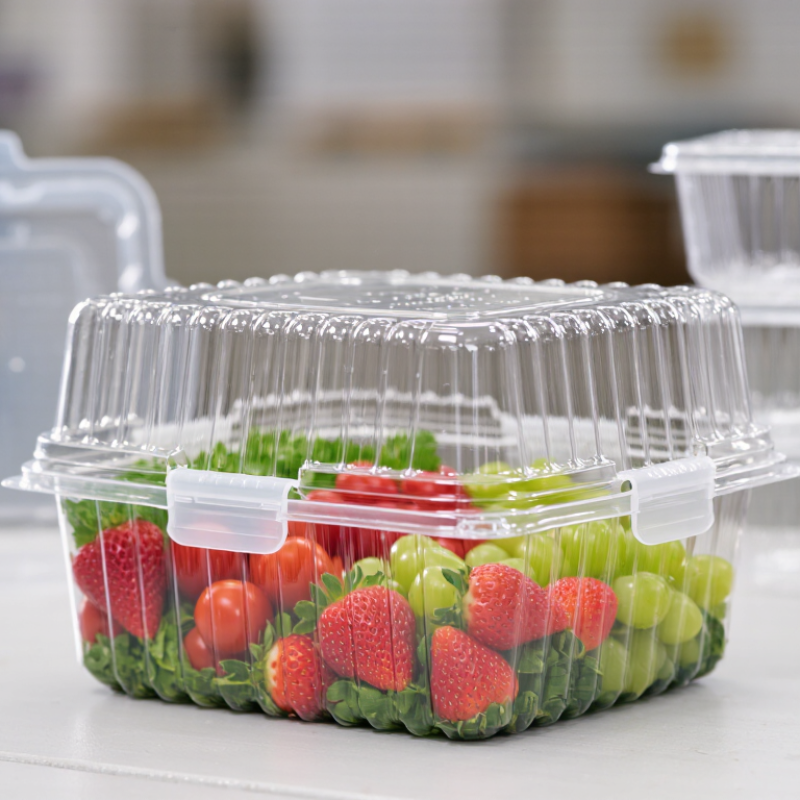
How to Find Top Clamshell Manufacturers in China?

Define Your Clamshell Product Requirements and Quality Standards

Before searching for top clamshell manufacturers in China, define your product requirements clearly. Specify the package length, width, depth, wall thickness, and target weight. Include the material type, transparency level, hinge design, and closure strength. Also state whether the package needs recycled content, printing, or custom tooling.

Keep the end use in mind. A bakery container needs different performance than an electronics package. For food-contact applications, request applicable safety documentation and recent laboratory reports. Quality standards should be measurable. Set acceptable dimensional tolerances, surface defect limits, odor requirements, and sealing performance. Add practical tests, such as drop resistance, stacking pressure, and repeated opening cycles. Vague terms like “premium quality” create disputes later.

A reliable manufacturer should provide technical drawings, material specifications, samples, and inspection records. During sample evaluation, use calipers to check key dimensions. Open and close the hinge repeatedly. Check whether the lid stays aligned after several cycles. Place filled packages in cartons to observe deformation. A perfect sample can still hide production weaknesses. Ask how the factory controls mold wear, temperature, and material thickness. Some requirements may need revision after testing. That is not failure; it is useful evidence before mass production. Supplier communication should be documented, including approved samples and inspection criteria.

Search for Qualified Clamshell Manufacturers in China

Finding qualified clamshell manufacturers in China starts with a clear product brief. Define the package size, material, wall thickness, closure style, and expected order volume. Include drawings, product photos, and packing requirements. Qualified manufacturers should answer technical questions directly. They should also explain mold fees, sampling time, production capacity, and quality controls.

Do not rely on a polished website alone. Request business credentials, factory photos, recent production records, and relevant material test reports. A video factory tour can reveal injection machines, clean work areas, inspection stations, and storage conditions. Always order samples before signing a large contract. Check hinge strength, transparency, edge finishing, fit, and resistance to cracking. Ask how the factory controls dimensions during mass production. Fast replies are useful, but they do not prove reliable quality. That assumption can be costly.

Tips: Compare at least three qualified suppliers. Ask for a sample inspection report. Confirm who owns the mold. Request a written defect standard. Keep communication in clear, recorded documents. Evaluate the actual sample, not only the sales presentation. If a manufacturer avoids specific answers, pause the process. Small details matter.

How to Find Top Clamshell Manufacturers in China? - Search for Qualified Clamshell Manufacturers in China

Evaluation Dimension Recommended Benchmark Information to Request How to Verify a Qualified Manufacturer Buyer Importance
Product Type Hinged, two-piece, or heat-sealed clamshells matched to the product and retail channel. Product drawings, sample range, closure style, hanging-hole options, and sealing requirements. Compare samples with the required product dimensions, opening force, closure security, and shelf-display requirements. High
Material Options PET, rPET, or PP selected according to clarity, rigidity, impact resistance, temperature, and recycling requirements. Material grade, thickness range, recycled-content percentage, food-contact status where applicable, and technical data sheets. Check resin documentation, incoming-material records, and independent material or migration test reports when required. High
Thermoforming Capability Stable control of forming temperature, wall thickness, trimming accuracy, and part consistency. Machine list, maximum forming area, material thickness range, production photos, and process-control records. Review a live or recorded production run and measure sample dimensions from different production batches. High
Tooling and Mold Development In-house or tightly controlled mold design, prototyping, modification, and maintenance. Mold material, tooling ownership terms, design files, prototype schedule, modification policy, and spare-part plan. Confirm who owns the mold, approve a pre-production sample, and document dimensional tolerances before mass production. High
Customization and Decoration Support for clear, tinted, printed, labeled, embossed, or tamper-evident designs. Artwork specifications, print area, color-control method, label materials, and approved decoration samples. Approve a physical color sample and inspect adhesion, scuff resistance, registration, and barcode readability. Medium–High
Quality Management Documented incoming, in-process, and final inspection procedures with traceable corrective actions. Quality manual, inspection checklist, control plan, nonconformance procedure, and recent audit records. Conduct a factory audit or use an independent inspection company before approving production. High
Testing and Performance Consistent dimensions, closure function, impact resistance, transparency, and sealing performance. Test methods, acceptance limits, dimensional reports, drop-test results, seal-strength data, and inspection frequency. Use a mutually approved specification and test production samples from multiple cartons or batches. High
Compliance Documentation Documentation appropriate to the destination market, product category, and packaging-contact application. Business registration, factory address, material declarations, safety documents, audit reports, and applicable test certificates. Validate documents with the issuing body or testing laboratory and ensure the legal entity matches the sales contract. High
Production Capacity Capacity that covers forecast demand while preserving quality, tooling availability, and delivery flexibility. Number of forming lines, shifts, monthly output by product type, utilization rate, and peak-season plan. Compare declared capacity with equipment, staffing, production records, and current order loading during an audit. Medium–High
Minimum Order Quantity MOQ aligned with tooling cost, material purchasing, printing requirements, and the buyer’s sales forecast. MOQ by size and decoration method, sample-order policy, setup charges, and mixed-SKU conditions. Request a written quotation showing tooling, setup, sampling, unit, packaging, and re-order costs separately. Medium–High
Lead Time Control Clear milestones for design approval, tooling, sampling, material preparation, production, and shipment. Sample lead time, tooling lead time, standard production lead time, shipping terms, and delay-management procedure. Use a purchase agreement with milestone dates, approved samples, packaging specifications, and remedies for nonconformity. High
Packaging and Export Readiness Protective packing that prevents deformation, scratches, contamination, and moisture damage during transport. Carton dimensions, quantity per carton, pallet pattern, gross weight, container loading plan, and export documents. Perform a carton drop or handling review and confirm shipping marks, packing lists, and commercial invoice details. Medium–High
Sustainability Practices Material reduction, recyclable design, recycled-content options, production scrap control, and transparent environmental claims. Recycled-content evidence, scrap-recycling process, energy data, environmental policy, and end-of-life guidance. Check supporting records and ensure sustainability claims are specific, documented, and suitable for the destination market. Medium–High
Screening note: Use this table as a supplier-qualification framework. Confirm all commercial, technical, compliance, and delivery information directly through samples, documentation, factory audits, and pre-shipment inspections.

Evaluate Manufacturing Capabilities, Materials, and Certifications

Finding a capable clamshell manufacturer in China requires more than comparing catalog photos. Inspect thermoforming lines, mold accuracy, trimming quality, and hourly output. Ask for trial samples using your actual product dimensions. A clean hinge, even wall thickness, and consistent locking force reveal practical experience. One attractive sample proves little.

Material selection should match product protection, shelf life, and disposal conditions. PET offers strong clarity, while recycled PET can support lower virgin-plastic use. However, recycled content may affect color, stiffness, and forming stability. The OECD Global Plastics Outlook reports that packaging created about 142 million tonnes of plastic waste in 2019, representing roughly 40% of global plastic waste. This makes material traceability increasingly important. Request resin specifications, recycled-content evidence, and migration-test records where food contact applies.

Certifications need careful verification. ISO 9001 can indicate a controlled quality system, but it does not guarantee perfect clamshells. Check certificate scope, issuing body, expiry date, and factory address. ISO 14001 may support environmental management, while documented supplier audits can reveal energy, waste, and wastewater practices. The ISO Survey reports millions of valid management-system certificates worldwide, so certification alone is not a strong differentiator. I would also review defect records, corrective-action reports, and packaging-drop tests. Some factories resist sharing these details. That hesitation deserves attention. A realistic supplier should explain limitations, not promise zero defects.

Compare Samples, Pricing, Minimum Orders, and Production Lead Times

Finding top clamshell manufacturers in China requires more than comparing online quotations. UNIDO’s International Yearbook of Industrial Statistics 2023 places China at about 31% of global manufacturing value added in 2022. That scale creates options, but also uneven quality. Request identical samples from three to five factories. Check hinge strength, edge sharpness, closure fit, transparency, and barcode readability. Test samples after stacking them for 24 hours.

Compare pricing on the same specification sheet. Include resin type, thickness, mold charges, printing, packaging, and shipping terms. Smithers’ packaging outlook identifies cost, recyclability, and supply resilience as major purchasing factors. A cheaper quote may hide thinner walls or expensive tooling. My first comparison was too simple. I compared unit prices before checking material weight, which distorted the result. Record every cost in a spreadsheet.

Minimum orders often vary by material, mold size, and production method. Ask whether the quoted MOQ applies per design, color, or total order. For lead times, separate mold development, sample approval, mass production, and inspection. A practical schedule may include 7–15 days for tooling, 5–10 days for samples, and 15–30 days for production. Confirm these figures in writing. The China Council for the Promotion of International Trade reports that supply-chain reliability remains a key export concern. Add a buffer for revisions, holiday closures, and port delays. Real schedules are rarely perfect.

Verify Suppliers and Establish a Reliable Partnership

How to Find Top Clamshell Manufacturers in China?

Finding a capable clamshell manufacturer requires more than comparing online prices. Start by checking the supplier’s legal registration, factory address, production equipment, and export experience. Request recent factory photographs, but do not rely on photographs alone. A video tour or independent factory audit offers stronger evidence. Ask about material grades, thickness tolerance, sealing performance, and production capacity. Professional suppliers should explain these details clearly.

Tips: Request samples from at least three manufacturers. Inspect the hinge, edges, clarity, and opening force. Test the package with your actual product. A sample may look perfect but fail during transport. That happened in one trial I reviewed. The plastic was strong, yet the hinge cracked after repeated opening. Small details matter.

A reliable partnership develops through transparent communication and written quality standards. Confirm mold ownership, sample approval, lead times, packaging methods, inspection procedures, and replacement responsibilities. Use a clear purchase agreement with measurable requirements. Independent pre-shipment inspections can reduce unpleasant surprises. Ask how the factory handles material shortages or delayed components. Their response reveals operational maturity. Keep communication records and review performance after every shipment. Do not choose the cheapest offer automatically. Low pricing sometimes hides weaker controls, unstable materials, or poor after-sales support. Even experienced buyers can miss a production risk. Regular review remains necessary.

Now Hiring!