

Blog

How to Source Freeze Dried Fruits Powder Globally?

Global sourcing of Freeze Dried Fruits Powder is expanding, but purchasing decisions require more than attractive price lists. Grand View Research reports continued growth in the global freeze-dried fruits market, supported by demand for clean-label snacks, beverage mixes, and functional ingredients. Meanwhile, FAO estimates that 13.2% of food is lost between harvest and retail worldwide. This gap creates opportunity, but also exposes weak supply chains.

Quality starts in the field.

Dr. Michael J. Pikal, a recognized lyophilization researcher, described the process objective as producing “a dry product with acceptable quality.” That principle matters when comparing suppliers from different regions. Buyers should inspect fruit origin, harvest timing, drying temperature, residual moisture, water activity, particle size, and microbiological results. A supplier’s certificate of analysis should match the tested production lot, not merely a standard template.

A practical sourcing review may include mango powder in a sealed foil bag, with a visible lot code and moisture-control packaging. Ask for allergen statements, pesticide-testing records, heavy-metal results, and traceability documents. Confirm whether the quoted price includes laboratory testing, export packaging, insurance, and delivery terms. Incoterms can quietly change the final cost.

Industry forecasts are not perfectly consistent. Some reports measure retail products, while others include ingredients. That limitation deserves attention. A low price may reflect smaller particle size, weaker packaging, or incomplete testing. Global sourcing works best when samples, audits, documentation, and commercial terms are evaluated together—not separately.
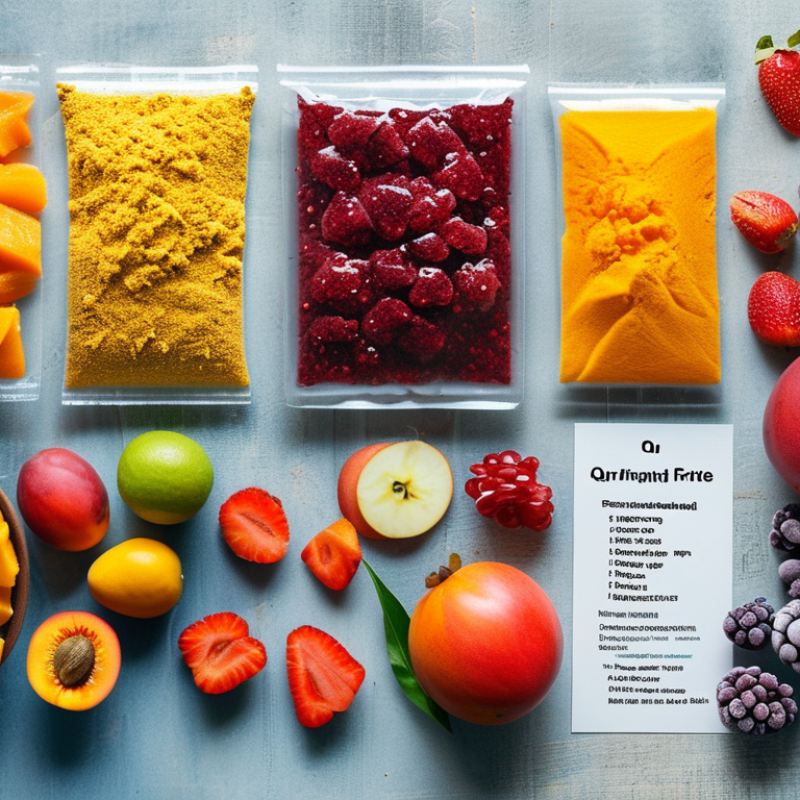
How to Source Freeze Dried Fruits Powder Globally?

Define Product Specifications for Freeze-Dried Fruit Powder

How to Source Freeze Dried Fruits Powder Globally?

Define Product Specifications for Freeze-Dried Fruit Powder

A reliable specification starts with the fruit, not the supplier’s catalogue. State the exact species, variety, origin preference, harvest year, and permitted processing aids. Define moisture, water activity, colour, flavour, particle size, bulk density, and solubility. Freeze-dried powder should usually show low moisture, but moisture alone is not enough. Water activity controls microbial stability more directly.

Grand View Research valued the global freeze-dried food market at approximately USD 2.3 billion in 2023. This growth increases supplier choice, but also creates inconsistent terminology. One supplier’s “fine powder” may pass through a 60-mesh screen; another may use 100 mesh. Write measurable limits instead. For example, request 95% through an agreed sieve, with no visible hard lumps.

Microbiological limits need equal attention. Specify total plate count, yeast and mould, coliforms, Salmonella, and relevant pathogen testing. Align the testing plan with Codex General Principles of Food Hygiene and the destination market’s rules. A complete certificate of analysis should identify methods, batch number, production date, and laboratory accreditation.

Be careful with colour claims. Natural pigments can fade during storage. Ask for retained samples after accelerated stability testing. I have seen specifications focus heavily on sweetness while ignoring hygroscopicity. That is a costly gap. Packaging should state oxygen protection, desiccant use, seal integrity, and recommended storage conditions. The final document should also define acceptable variation, because a perfect colour match is rarely realistic across harvests.

Identify Reliable Global Suppliers and Producing Regions

How to Source Freeze Dried Fruits Powder Globally?

Reliable sourcing starts with the producing region, not only the supplier’s price. Poland, Serbia, Turkey, Chile, China, and the United States offer different fruit varieties, harvest seasons, and processing strengths. Tropical powders may come from Thailand, Vietnam, or the Philippines. Regional climate affects sweetness, color, and crop consistency.

Ask suppliers for harvest records, processing addresses, and product-specific certificates. Confirm moisture, water activity, particle size, microbiological limits, pesticide screening, and heavy metal testing. A current certificate should match the exact batch, not a generic product sheet. Request samples in sealed packaging, then compare color, aroma, solubility, and flavor after rehydration. Small details matter.

Supplier audits can reveal practical issues. Check freeze-drying capacity, cold storage, allergen controls, cleaning procedures, and traceability from farm to finished powder. Review export experience and packaging performance during long transit. A low quotation may hide seasonal shortages or weak quality control. Supplier questionnaires are useful, but they are not proof. Independent laboratory testing remains worthwhile. The process is rarely perfect. Regional weather can change supply unexpectedly, and even experienced buyers may misjudge demand. Build a second qualified source before an urgent shortage forces a poor decision. Supplier reliability grows through transparent records, responsive communication, and repeatable batch performance.

Evaluate Supplier Quality, Certifications, and Processing Standards

Sourcing freeze-dried fruit powder globally starts with inspecting the supplier’s quality system, not comparing prices. Ask for the fruit’s country of origin, harvest date, and processing location. A reliable supplier should provide batch-level traceability, clear specifications, and a recent certificate of analysis.

Check moisture, water activity, particle size, microbial counts, heavy metals, pesticides, and allergen controls. One missing result can create unnecessary risk.

Certifications deserve careful review. HACCP and ISO 22000 can show structured food safety management, while organic certification applies only when the certificate covers the specific product and facility. Verify certificate numbers directly with the issuing organization.

Request audit summaries, corrective-action records, and calibration documents for laboratory equipment. During a factory video inspection, look for sealed packaging, clean grinding areas, hair restraints, and separate raw-material storage. Small details matter.

Processing standards also affect flavor and stability. Ask whether the fruit is frozen quickly, freeze-dried under controlled pressure, and milled in a low-humidity room. Confirm packaging includes moisture and oxygen barriers.

A supplier may claim “natural color,” yet storage tests could reveal fading after several weeks. That gap deserves questions.

I once treated a polished specification sheet as strong evidence; it was not enough. Independent testing remains wise, especially for the first shipment. No checklist is perfect. Suppliers should explain failures honestly, rather than hide them behind impressive certificates.

Compare Pricing, Packaging, Shipping, and Import Requirements

How to Source Freeze Dried Fruits Powder Globally?

Price comparisons should begin with yield, not the quoted kilogram rate. Fresh fruit may require several kilograms to produce one kilogram of powder. Grand View Research estimated the global freeze-dried food market at about USD 2.97 billion in 2023, with continued growth through 2030. However, fruit variety, seasonal supply, particle size, and testing can change the final cost sharply. Request prices under the same Incoterm, minimum order quantity, moisture limit, and certificate requirements. A low quote can be misleading.

Packaging affects both quality and freight cost. Choose high-barrier bags with oxygen and moisture protection, ideally inside sealed cartons or drums. Nitrogen flushing may extend shelf stability, but it also increases handling requirements. Smaller retail packs cost more per kilogram. Larger industrial bags reduce packaging waste, though they need stronger warehouse controls. The packaging decision is easy to underestimate.

Shipping comparisons should include air, ocean, insurance, customs clearance, and destination charges. The 2023 UNCTAD Review of Maritime Transport reported continued volatility in container shipping costs, so old freight quotations quickly lose value. Importers should verify the correct HS classification, country-of-origin rules, food registration, labeling language, pesticide limits, and microbiological documentation. Requirements differ by destination. The 2023 World Bank Logistics Performance Index also shows major gaps in customs efficiency between markets. I would not trust one supplier’s paperwork alone. A second document review is worth the delay.

How to Source Freeze-Dried Fruit Powder Globally?

Indicative sourcing comparison by origin: typical FOB price and ocean transit time for bulk freeze-dried fruit powder.

Planning benchmark only: prices are shown in USD per kilogram for bulk orders of approximately 500–1,000 kg, while transit time represents typical port-to-port ocean freight ranges. Final landed cost depends on fruit type, particle size, organic certification, order volume, packaging format, freight season, customs duty, and destination-country taxes.

Import preparation commonly requires a commercial invoice, packing list, bill of lading, certificate of origin, ingredient specification, microbiological and pesticide test reports, and destination-specific food-label compliance.

Manage Samples, Contracts, Inspections, and Long-Term Supply

How to Source Freeze Dried Fruits Powder Globally?

Global sourcing starts with a controlled sample process, not a low quotation. Request samples from at least three qualified suppliers. Compare color, aroma, particle size, solubility, moisture, and water activity. Ask for harvest origin, processing date, allergen controls, and a recent certificate of analysis. Moisture alone is not enough. I have seen bright powder fail during beverage testing because its flavor disappeared after rehydration.

Contracts should define specifications, permitted crop origins, packaging layers, shelf life, delivery terms, and remedies for nonconformity. Include testing methods and sample-retention rules. FAO reported that 13.2% of food was lost between harvest and retail in 2021. Poor storage and unclear responsibilities can quietly increase that risk. Keep approved samples with the contract.

Inspections need a risk-based plan. Check the production line, metal detection, sanitation records, traceability, and warehouse humidity. Independent testing should cover microbiological quality, pesticide residues, heavy metals, and undeclared allergens, according to the product’s risk profile. No checklist catches everything. UNCTAD’s Review of Maritime Transport reports that over 80% of global merchandise trade by volume moves by sea, so temperature, moisture barriers, and transit delays deserve written controls. Use quarterly scorecards for defect rates, response time, fill rate, and documentation accuracy. Review the supplier annually. A long-term agreement should still allow corrective action, price review, and requalification when crops or processing conditions change. Oversight must remain active.

How to Source Freeze Dried Fruits Powder Globally? - Manage Samples, Contracts, Inspections, and Long-Term Supply
Global sourcing comparison using practical procurement benchmarks for sample approval, commercial terms, quality inspections, logistics, and supply continuity.
Origin Region Typical Fruit Powder Types Common Product Form Typical MOQ Indicative Sample Lead Time Commercial Lead Time Recommended Contract Term Key Contract Points Pre-Shipment Inspection Critical Quality Tests Typical Packaging Storage Requirement Supply Continuity Assessment Buyer Action
East Asia Strawberry, blueberry, raspberry, mango, banana 100% fruit powder; carrier-free or with approved carrier 100–300 kg per SKU 7–14 days 30–60 days 12 months with quarterly forecasts Define fruit percentage, carrier limits, moisture target, foreign-material controls, documentation, and price-review rules. Recommended
Review batch records, packaging integrity, lot coding, and container loading photos.
Moisture, water activity, microbiology, pesticide residues, heavy metals, sulfites where applicable, and identity testing. Food-grade foil-lined bags inside cartons or fiber drums; commonly 5–20 kg per inner bag. Cool, dry, odor-free warehouse; protect from humidity and direct sunlight. High
Broad processing capacity and multiple fruit options.
Approve two qualified production sources and maintain a rolling three-month forecast.
Central and Eastern Europe Apple, sour cherry, strawberry, raspberry, blackcurrant Single-fruit powder and blended fruit systems 50–200 kg per SKU 10–18 days 25–50 days 12 months with seasonal price adjustment Specify harvest year, origin statement, allergen controls, organic status if required, and minimum remaining shelf life. Recommended
Verify supplier batch release, pallet condition, seals, and traceability records.
Moisture, water activity, microbiology, pesticide residues, mycotoxins where relevant, and sensory appearance. Barrier bags in cartons, often palletized with stretch wrap and moisture protection. Below ambient heat and humidity limits stated in the product specification. High
Strong traceability and access to seasonal berry supply.
Reserve capacity before the harvest season and agree on an approved substitute specification.
Mediterranean Region Strawberry, fig, grape, apricot, pomegranate, citrus Fruit powder, juice powder, and seed-containing specialty powders 100–250 kg per SKU 10–21 days 35–70 days 12 months with harvest-based planning Control fruit maturity, seed content, color range, acidity, origin documentation, and seasonal availability. Required
Inspect moisture barrier, product color, sieve size, and lot segregation.
Moisture, water activity, microbiology, pesticide residues, heavy metals, and acidity where applicable. Multi-layer bags in cartons or drums; use desiccant only when permitted by the food-contact specification. Dry, cool, and well-ventilated storage with strict first-expiry-first-out control. Medium–High
Good fruit diversity but greater seasonality for some crops.
Lock seasonal volumes early and include an approved crop-year variance range.
South Asia Mango, banana, pineapple, papaya, guava Fruit powder with or without a declared processing carrier 100–500 kg per SKU 10–21 days 35–75 days 12 months with monthly demand updates State carrier type and maximum percentage, pesticide requirements, microbiological limits, and rejected-lot procedures. Enhanced
Use independent sampling for high-risk products and verify container cleanliness.
Moisture, water activity, Salmonella, yeast and mold, pesticide residues, heavy metals, and adulteration screening. Foil-lined bags or high-barrier sacks inside cartons; use sealed pallets for ocean transport. Humidity-controlled storage is preferred; prevent temperature cycling and condensation. Medium
Strong tropical fruit availability with higher humidity-control needs.
Qualify a backup source in another region and use tighter release testing during the first three shipments.
South America Strawberry, blueberry, acerola, blackberry, mango Single-fruit powder and antioxidant-focused fruit ingredients 50–200 kg per SKU 14–24 days 40–80 days 12–18 months with annual volume commitment Define active-compound claims, analytical methods, origin documents, forecast tolerance, and shipment split options. Recommended
Confirm test results against the retained sample and inspect export documentation.
Moisture, water activity, microbiology, pesticide residues, heavy metals, and active-compound content when claimed. High-barrier bags in cartons or drums with pallet-level moisture protection. Store in a dry warehouse below the supplier’s stated temperature limit. Medium–High
Competitive specialty fruit supply with longer transit planning.
Use safety stock equal to one additional transit cycle for ocean shipments.
North America Blueberry, cranberry, strawberry, apple, tart cherry Premium single-fruit powder and clean-label formulations 25–150 kg per SKU 7–14 days 20–45 days 6–12 months with service-level commitments Include allergen policy, recall procedure, lot traceability, certificate timing, and agreed delivery-performance targets. Recommended
Review certificate of analysis, lot traceability, and finished-pack inspection records.
Moisture, water activity, microbiology, pesticide residues, heavy metals, and nutritional or identity claims. High-barrier inner bags in cartons or drums; smaller packs are commonly available. Dry, cool storage with clear lot rotation and sealed packaging after opening. High
Shorter replenishment cycles and strong documentation practices.
Use as a rapid-replenishment or backup source for high-value SKUs.
Multi-Region Program Top-selling berry, tropical, and orchard fruit powders Dual-source specification with identical release criteria Combined annual volume; 2–4 approved sources per category 7–21 days 25–80 days depending on origin 24 months with annual commercial review Use one master specification, change-control approval, supplier scorecards, audit rights, force-majeure terms, and continuity commitments. Mandatory
Risk-based audits, pre-shipment checks, retained samples, and periodic independent laboratory testing.
Moisture, water activity, microbiology, pesticide residues, heavy metals, allergens, identity, and claim verification. Standardize food-contact packaging, pallet configuration, labeling, and lot-code format. Maintain dry storage, documented temperature and humidity monitoring, and FEFO rotation. Very High
Best protection against crop failure, logistics disruption, and capacity shortages.
Split volume between primary and secondary sources and hold safety stock based on demand volatility.
Note: MOQ, lead time, testing frequency, and contract conditions are procurement reference ranges. Final requirements should be confirmed against the destination market, product specification, risk assessment, and applicable food regulations.
Now Hiring!