

Blog

Best Plastic Packaging Materials Suppliers in China?

Choosing a supplier for Plastic Packaging Materials in China involves more than comparing prices. A clear assessment starts with the product itself: film thickness, pouch dimensions, sealing method, barrier needs, and intended storage conditions. These details affect performance. A sample that looks sturdy on a desk may behave differently on a fast packing line.

Reliable suppliers should explain their production capabilities and provide clear specifications for the materials they offer. Ask how they control thickness, print color, seal strength, and batch consistency. Request recent samples and compare them under realistic conditions, such as filling, transport, and storage. Keep written records of approved samples and agreed tolerances. Small details count.

Supplier checks also matter. Review factory information, quality procedures, communication practices, and the supplier’s experience with similar packaging formats. When relevant, request supporting test reports and confirm what each report covers; a certificate alone may not answer every question. Independent inspections can help verify production quality before shipment, especially for large or repeat orders.

No single supplier suits every buyer. Some excel at custom printing, while others may offer faster sampling or stronger technical support. Lead times, minimum order quantities, and response quality deserve attention alongside cost. There can be surprises. Even a careful review has limits, so confirm critical requirements directly and test the final specification before committing to routine production. This guide examines how to compare Chinese suppliers with practical criteria, verify claims, and make a more informed sourcing decision.
Best Plastic Packaging Materials Suppliers in China?

What Plastic Packaging Materials Suppliers in China Offer

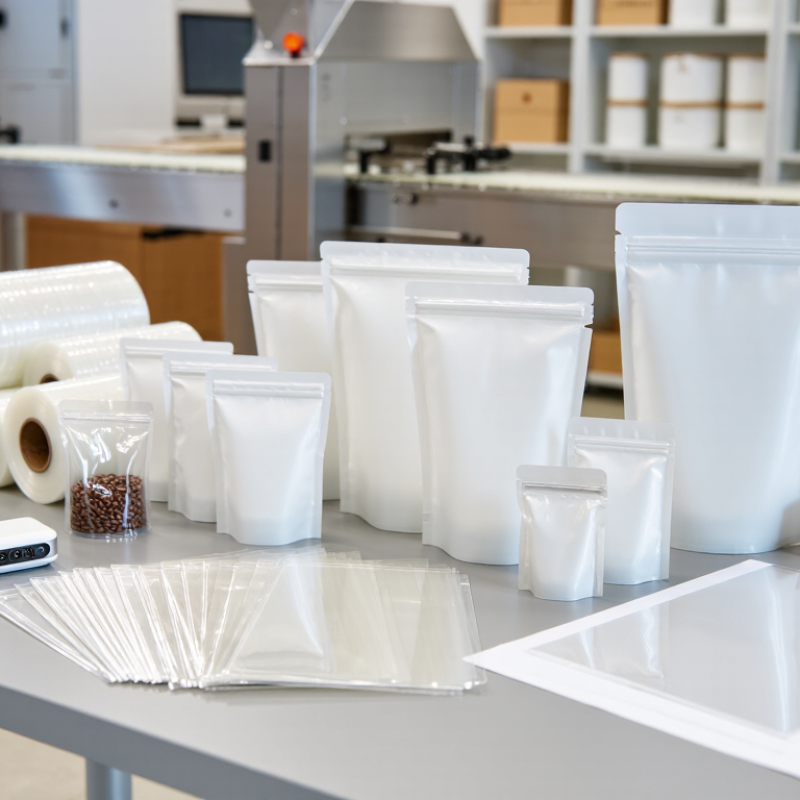
Plastic packaging materials suppliers in China commonly offer flexible films, bags, pouches, sheets, and rigid containers. Typical polymers include polyethylene (PE), polypropylene (PP), and polyethylene terephthalate (PET), each suited to different handling and barrier needs. PE films can wrap bundles or form mailer bags; PP is often used for clear sleeves and woven sacks. PET sheets are common in trays and transparent lids. Details matter.

Many suppliers can adjust thickness, dimensions, color, surface finish, and printing. Some also make laminated structures or custom die-cut shapes. Buyers can request specification sheets, samples, and test data for seal strength, drop resistance, or moisture transmission. For food or personal-care packaging, check whether the grade and manufacturing controls fit the intended use. A broad “food-grade” label is not enough. Samples help.

Some factories offer recycled-content or recyclable-design options, but availability and performance depend on the exact structure. A pouch that looks simple may combine layers that are difficult to separate. Check minimum order quantities, lead times, tolerances, and inspection procedures before approving production. Compare sample results with the written specification, not just product photos. That step is easy to skip.

Main Plastic Packaging Materials and Their Applications

Plastic packaging starts with matching a material to the product, filling process, and route to market. Polyethylene (PE) is widely used for films, liners, pouches, and squeeze bottles. Low-density PE bends easily and seals well, while high-density PE makes stiffer bottles and containers for household liquids. Both resist moisture, though thin films can puncture or stretch during rough handling. Flexible, not invincible.

Polyethylene terephthalate (PET) is common in clear drink bottles, trays, and jars. It offers good transparency and useful gas resistance, helping protect products while showing their contents. Polypropylene (PP) suits food tubs, caps, and some hot-fill or microwaveable containers, depending on the grade and design. Its heat tolerance helps, but a poorly matched lid can still leak. Small details matter.

For suppliers in China, ask for the resin type, wall or film thickness, sealing performance, and sample testing under actual filling conditions. A pouch that looks sturdy on a desk may fail after vibration in transit. Multilayer structures can combine barrier and sealing properties, but they are harder to recycle than single-material packs. I would not choose by price alone; that shortcut can become expensive. Check odor, fit, and consistency across production samples.

Best Plastic Packaging Materials Suppliers in China? — Main Plastic Packaging Materials and Their Applications

Typical packaging applications: PET — beverage bottles and food trays; HDPE — milk bottles and containers; LDPE — films and bags; PP — food tubs and caps; PVC — films and blister packs; PS — cups and protective packaging.

Density values are typical approximate figures in g/cm³; actual values vary by grade and formulation. Material selection also depends on product compatibility, barrier needs, processing, and local recycling options.

How to Evaluate Chinese Packaging Material Suppliers

Choosing a plastic packaging materials supplier in China takes more than comparing prices. Start with the material specification: resin type, thickness, width, color, and any barrier or sealing requirements. Ask for a current technical data sheet and a batch-level certificate of analysis. Check whether reported values match your product needs, not just a supplier’s standard brochure. Small print matters.

Request samples made on the same production line and with the same process planned for your order. Inspect seal strength, print adhesion, odor, and thickness variation. Run a trial with your own filling or packing equipment. A sample can look excellent and still fail at higher line speeds. That gap is easy to miss. Ask how the supplier controls defects, handles rejected batches, and records corrective actions. Specific answers are more useful than promises.

Assess production capacity, lead times, minimum order quantities, and communication before committing. Ask for recent inspection records or arrange a qualified third-party factory audit when appropriate. Confirm which quality documents and product-compliance records are available for your intended market and application. Keep agreed specifications, tolerances, and change-control terms in writing. I would not treat a low quote as proof of poor quality, either; sometimes the comparison simply leaves out testing, packaging, or freight. Supplier evaluation is rarely perfect, so verify the details that could disrupt your production.

Supplier Types and Sourcing Channels in China

Best Plastic Packaging Materials Suppliers in China?

Supplier Types and Sourcing Channels in China

China’s suppliers range from film extruders and sheet makers to converters that print, laminate, or cut packaging to size. Injection-molding factories suit rigid containers, while flexible-packaging specialists handle rolls, pouches, and protective films. Trading companies can coordinate several processes, but buyers may have less direct visibility into production. Match the supplier type to the material, structure, and order volume you need.

Useful sourcing channels include manufacturing directories, trade fairs, referrals, and regional industry clusters. Treat online listings as leads, not proof. Request recent samples, material specifications, and details about production capacity and quality checks. Ask who makes each component; outsourced printing or lamination can affect lead times. A sample may look right but behave differently on your filling line, so test it under realistic conditions. Check tolerances, sealing performance, and consistency across more than one batch where possible. Keep written records of agreed specifications and sample approvals.

This takes time. I would still avoid choosing on price alone: unclear specifications can make two quotes seem comparable when they are not.

How to Verify Quality, Compliance, and Reliability

Choosing a plastic packaging supplier in China requires evidence, not polished product photos. Request a current specification sheet showing resin type, thickness, tolerances, and intended use. Check whether test results match the exact material and production site you plan to buy from. Small differences matter. A sample is not a shipment.

The OECD’s Global Plastics Outlook (2022) reports that global plastic waste reached 353 million tonnes in 2019, while only 9% was recycled. This is not a scorecard for any factory, but it shows why recycled-content claims need traceable documentation. Ask for batch-specific certificates, test methods, and change-control records. For food-contact packaging, confirm that testing covers the relevant requirements in your destination market. A generic certificate may not be enough.

Reliability takes more than passing tests. Review production records, audit findings, complaint handling, and written lead-time commitments. Check that the supplier can trace a finished roll or pouch back to its material batch. Run a pilot order and compare thickness, seals, odor, and print consistency across cartons. One detail is easy to overlook: ask what happens when a resin grade or subcontractor changes. Then verify the answer in writing.

Best Plastic Packaging Materials Suppliers in China? - How to Verify Quality, Compliance, and Reliability
Verification stage Dimension What to verify Useful evidence or checks Practical decision signal
Before quotation Legal identity and business scope Confirm the contracting entity is registered and its stated business activities are consistent with the proposed supply. Check the Chinese business licence and Unified Social Credit Code; cross-check the record in China’s National Enterprise Credit Information Publicity System. Treat mismatched entity names, unverifiable registration details, or unexplained payment to a different entity as items requiring resolution.
Before sampling Material and product specification Define polymer type, grade, color, dimensions, thickness or weight, tolerances, intended use, and any recycled-content requirement. Request a dated technical data sheet and written specification; ensure the sample and production order refer to the same revision. Approve a documented specification and reference sample before setting acceptance criteria or placing a production order.
Before order confirmation Food-contact compliance, where applicable Check compliance against the rules for the destination market, food type, contact conditions, and intended use. Requirements differ by jurisdiction and material. For China, assess applicability of GB 4806.7-2023 for plastic materials and articles in contact with food. For the EU or US, request evidence addressing applicable EU food-contact rules or relevant FDA requirements, respectively. Review the exact material, formulation, use conditions, and test scope; a general declaration or certificate alone may not establish suitability for every use.
Before order confirmation Test reports and laboratory competence Check that reports cover the actual product or material, relevant hazards or migration requirements, and the intended market and use conditions. Review sample description, test methods, dates, results, and report scope. Where relevant, verify the laboratory’s ISO/IEC 17025 accreditation and the applicable test within its accreditation scope. Ask for clarification if the report covers a different formulation, color, construction, or use condition from the product being purchased.
During qualification Quality management and production controls Assess how incoming materials, production parameters, inspection, nonconforming product, and corrective actions are controlled. Review relevant procedures and sample records; verify any ISO 9001 certificate with its issuer and confirm its site and scope. ISO 9001 relates to a quality management system; it does not by itself certify that a particular packaging product meets your specification.
During qualification Factory capability and traceability Confirm the production site, equipment and process are suitable for the required product and order volume, and that batches can be traced. Conduct a site or remote audit; request a sample batch record, raw-material lot identification, inspection record, and a traceability demonstration. A clear route from finished goods to production and input-material records supports investigation and recall readiness.
Before shipment Inspection and acceptance criteria Agree measurable checks for dimensions, weight or thickness, appearance, sealing or performance requirements, and packaging condition. Use a written inspection plan, defined sampling approach, calibrated measurement equipment, and retained inspection records. Set limits in the purchase specification; there is no single tolerance or acceptance level suitable for every plastic packaging product.
Before shipment Change control and consistency Establish how changes to resin, additives, colorants, manufacturing site, process, or product design are communicated and approved. Include written notification and approval requirements in the quality agreement or purchase terms; compare production samples with the approved reference. Require reassessment when a change could affect product performance, regulatory status, or test results.
Ongoing monitoring Environmental and chemical requirements Identify requirements that apply to the product and destination market, including restricted substances, recyclability, or recycled-content claims where relevant. Request product-specific declarations and supporting records. For EU REACH SVHC communication, assess applicable obligations and the current Candidate List rather than relying on a generic statement. Confirm the claim’s scope, evidence, and date; environmental or chemical compliance is not established by a supplier’s broad, unsupported claim.
Ongoing monitoring Delivery reliability and corrective action Track on-time delivery, order completeness, defect rates, complaint response, and closure of corrective actions. Review shipment and quality records periodically; document agreed response times, responsibilities, and corrective-action follow-up. Use repeated performance records and issue-resolution effectiveness—not a single successful sample—to assess reliability.

Note: Regulatory obligations depend on the product, its intended use, and the destination market. Confirm current requirements with qualified regulatory or testing professionals before commercial release.

Now Hiring!