
Blog
What Are the Top Coffee Equipment Types in 2026?
What Are the Top Coffee Equipment Types in 2026? This question matters because better coffee rarely comes from one expensive machine. It comes from a balanced setup, consistent technique, and equipment that fits real daily habits.
Scott Rao, a respected coffee consultant and author, has said, “The goal of brewing is to extract the desirable flavors from coffee, not all flavors.” That principle still guides modern coffee equipment choices. A precise grinder can improve extraction more than a decorative espresso machine. A temperature-controlled brewer can reveal floral notes in a light roast. A reliable scale can expose small mistakes that taste surprisingly large.
This guide will examine the leading equipment categories shaping home and professional coffee in 2026. These include single-dose grinders, automatic espresso machines, manual brewers, smart scales, water filtration systems, and compact commercial tools. Energy efficiency and repairability also deserve attention. They are not exciting features, but they affect long-term value.
In practical comparisons, convenience often wins. Taste does not always follow.
Some automation helps. Too much can remove useful control. I have also seen coffee drinkers overvalue pressure ratings while ignoring grinder alignment and water quality. That is an imperfect way to judge performance. Price can mislead, too.
The strongest coffee equipment is not always the newest model. It is the tool that produces repeatable results, supports learning, and suits the user’s space. By comparing function, durability, maintenance, and brewing impact, this overview aims to make the 2026 market easier to understand.
Define Coffee Equipment Rankings with SCA’s 92–96°C Brewing Range
What Are the Top Coffee Equipment Types in 2026?
Define Coffee Equipment Rankings with SCA’s 92–96°C Brewing Range
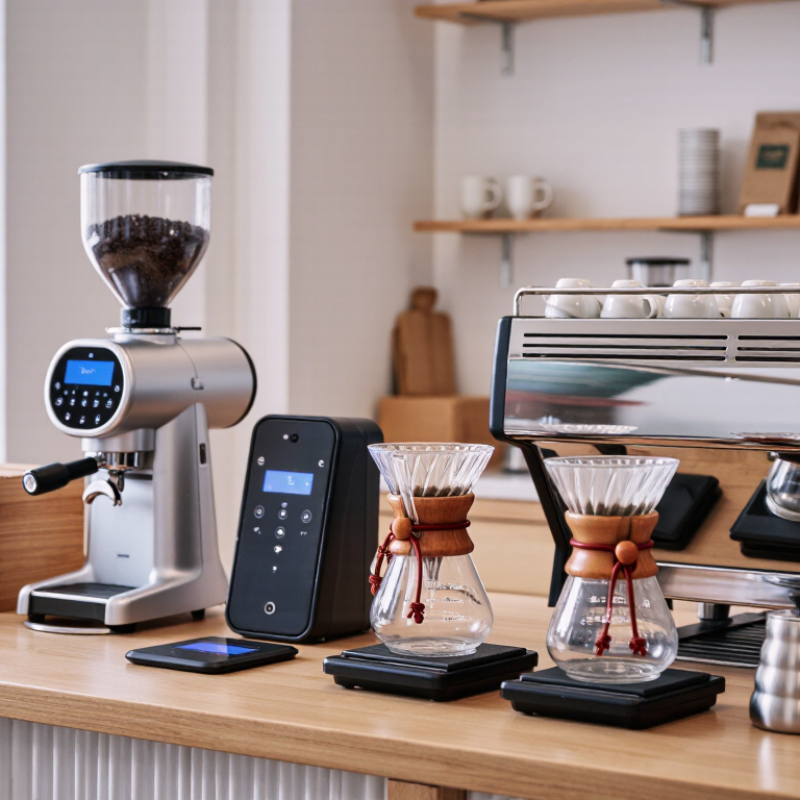
Coffee equipment rankings should begin with brewing control, not appearance or price. The Specialty Coffee Association’s 92–96°C range offers a practical reference for many filter brews. A stable kettle helps maintain this range from the first pour to the final pulse. A precise grinder also matters because uneven particles can create both sharp and dull flavors. I rank these tools highly because daily brewing exposes their weaknesses quickly.
A scale improves repeatability, while a thermometer confirms what the kettle display may miss. Some brewers retain heat well, but others cool rapidly on a cold countertop. Preheating the vessel can reduce that drop. I have sometimes trusted automatic settings too much, then tasted a flat cup. That mistake reminded me to measure the water, not assume it.
Tips: Use 92–96°C water for a balanced starting point. Adjust lower for delicate, lightly roasted coffee. Try a higher setting when the cup tastes thin. Record dose, water weight, grind size, and brewing time. Small notes reveal patterns. Do not chase perfect numbers blindly; the coffee’s taste remains the final test.
| Rank | Equipment Type | Primary Brewing Method | Typical Water or Brew Temperature | SCA 92–96°C Compatibility | Temperature Control | Recommended Grind | Typical Capacity | Repeatability | Best Use Case |
|---|---|---|---|---|---|---|---|---|---|
| 1 | Automatic Filter Brewer | Gravity filtration through a paper or reusable filter | Approximately 92–96°C during brewing | Excellent fit | High when a digital temperature setting is available | Medium to medium-fine | 0.6–1.8 L per brew | Very high | Consistent multi-cup brewing at home, in offices, and in hospitality settings |
| 2 | Pour-Over Dripper | Manual gravity filtration with controlled pouring | Approximately 90–96°C; 92–96°C is commonly used for light to medium roasts | Excellent fit | High with a temperature-controlled kettle; otherwise manual | Medium-fine | 0.25–0.75 L per brew | Medium to high, depending on technique | Brewing clarity, recipe experimentation, and single-cup preparation |
| 3 | Batch Brew System | Automated showerhead or spray-arm filtration | Approximately 92–96°C at the coffee bed | Excellent fit | High on systems with calibrated heating and flow control | Medium | 1.5–4.0 L per batch in commercial applications | Very high | High-volume service requiring stable flavor and workflow efficiency |
| 4 | Immersion Brewer | Ground coffee steeped in water, followed by separation | Approximately 90–96°C; 92–96°C is suitable for many filter-style recipes | Very good fit | High with a controlled kettle; brew time is also critical | Medium to coarse | 0.3–1.0 L per brew | High | Forgiving preparation, fuller body, and easy recipe control |
| 5 | Espresso Machine | Pressurized water forced through a compact coffee puck | Typically about 90–96°C at the brew group | Partial overlap | High on machines with electronic temperature regulation | Fine | Approximately 20–60 mL beverage per shot | High when dose, grind, pressure, and temperature are controlled | Concentrated coffee and milk-based beverages |
| 6 | Coffee Grinder | Uniform particle-size reduction before brewing | Not a brewing device; temperature is not applicable | Supports the range | Not applicable; grind-size adjustment is the key control | Adjustable from fine to coarse | Typically 20–250 g per grinding cycle | High with calibrated burrs and repeatable dosing | Improving extraction consistency across all brewing methods |
| 7 | Stovetop Pressure Brewer | Steam pressure pushes water through finely ground coffee | Water is generally below boiling; brewing conditions vary by design and heat level | Limited fit | Low to medium; mainly controlled through heat management | Medium-fine, coarser than espresso | 0.06–0.30 L per brew | Medium | Strong, concentrated coffee without an electric pump |
| 8 | Cold-Brew Brewer | Extended immersion using cool or room-temperature water | Approximately 4–25°C during extraction | Not applicable | Low temperature control; time and ratio are the main variables | Coarse | 0.5–2.0 L per batch | High when steeping time and ratio are measured | Low-acidity concentrate and chilled coffee beverages |
Ranking basis: suitability for controlled brewing, repeatability, versatility, and alignment with the Specialty Coffee Association’s commonly referenced 92–96°C brewing range. Actual results vary with coffee freshness, roast level, dose, grind size, water quality, contact time, and equipment calibration.
Related Posts
-
How to Choose the Best Equipment for Coffee Brewing?
-
Top 10 Coffee Equipment Suppliers in China for Global Buyers?
-
Unlocking the Secrets: How Commercial Coffee Machines Transform Your Café Experience
-
Exploring the Coffee Machines Market Trends at the 138th China Import and Export Fair in 2025
-
What is a Commercial Coffee Machine and How to Choose the Right One
-

15 Best Coffee Bean Machines You Can't Live Without in 2023