

Blog

Top 10 Explosion Proof Robots for Global Buyers

Industrial facilities are adopting robots to reduce human exposure near flammable gases, vapors, and combustible dust. The International Federation of Robotics reported 541,302 industrial robot installations worldwide in 2023. That figure shows automation is expanding, but ordinary robots cannot safely enter every hazardous area.

An Explosion-Proof Robot must match the site’s actual risk classification. Buyers should examine IECEx or ATEX certification, protection methods, temperature class, ingress protection, and permitted gas or dust groups. North American projects may also require compliance with NEC Class I, II, or III requirements. IEC 60079 standards provide a technical foundation for equipment used in explosive atmospheres. Certification is not a marketing detail. It can determine whether a robot is suitable for a refinery inspection, chemical storage area, paint booth, or grain-handling facility.

Industry research from MarketsandMarkets and Grand View Research indicates continued growth in industrial robotics, mobile robotics, and inspection automation. However, public market reports rarely separate explosion-protected systems from broader robot categories. That limitation matters. A larger robot market does not automatically mean more certified hazardous-area robots. This guide compares ten solutions using practical criteria, including certification evidence, payload, navigation, sensor integration, battery design, communications, maintenance access, and documented field use. Buyers should verify every certificate with the manufacturer and the relevant certification body. Product pages can be incomplete. Real operating conditions are less tidy than brochures suggest. A robot that performs well in a clean test facility may struggle with heat, dust, poor visibility, or weak wireless signals. The final choice should follow a site-specific risk assessment, not a simple ranking.
Top 10 Explosion Proof Robots for Global Buyers

Explosion-Proof Robots: Definition, Standards, and Core Safety Features

Explosion-proof robots are engineered for hazardous atmospheres, not merely fitted with a sealed shell. They limit ignition sources from sparks, hot surfaces, static discharge, and electrical faults. The application may involve flammable gases, vapors, or combustible dust. In 2023, 541,302 industrial robots were installed worldwide, according to the International Federation of Robotics’ World Robotics 2024 report. As deployment grows, hazardous-area verification becomes less optional.

A compliant system must match its certification to the site classification. IEC 60079 addresses explosive atmospheres, while ATEX 2014/34/EU governs equipment placed on relevant European markets. North American projects commonly reference NFPA 70 and applicable hazardous-location rules. Zones 0, 1, and 2 cover gas risks; Zones 20, 21, and 22 cover dust. The label should identify the protection method, gas or dust group, and temperature class. Small mismatch, serious consequence.

Core features include flameproof joints, controlled surface temperatures, bonding, sealed cable entries, and intrinsically safe circuits. Purge systems can remove hazardous gas from selected enclosures, but they need monitored pressure and reliable shutdown logic. Remote operation reduces human exposure, while thermal sensors and emergency stops support practical field control. Certification applies to a defined configuration, not automatically to every accessory or software change. That detail is often underestimated. I would require documented inspection, maintenance, and site acceptance testing before operation. A robot can pass a laboratory test and still fail a careless installation.

Top 10 Explosion-Proof Robots for Global Buyers — Definition, Standards, and Core Safety Features

IEC 60079 temperature classes define the maximum external surface temperature permitted for equipment used in explosive gas atmospheres. T1 allows up to 450°C, while T6 limits the maximum surface temperature to 85°C. Robot buyers should select equipment whose temperature class is equal to or below the ignition temperature of the site-specific gas or vapor.

How to Evaluate Explosion-Proof Robots for Different Industrial Hazards

Top 10 Explosion Proof Robots for Global Buyers

How to Evaluate Explosion-Proof Robots for Different Industrial Hazards

The ILO reported nearly 3 million work-related deaths in 2023, with about 395 million non-fatal injuries. These figures make robotic inspection more than a productivity project. Buyers should match each robot to the actual hazard, not to impressive specifications. For flammable gases, verify the gas group, temperature class, zone rating, and IEC 60079 certification. For combustible dust, check dust-zone suitability, enclosure protection, surface temperature, and cleaning requirements.

Field evaluations often expose weaknesses hidden in brochures. A robot may cross a smooth plant floor but fail near cable trays, grating, or spilled powder. Test traction, turning radius, payload, lighting, camera clarity, and emergency stopping under realistic conditions. Battery heating matters in confined spaces. So does communication loss. A fail-safe response should be documented and physically tested.

Certification must match the destination market. IECEx evidence may support international procurement, while ATEX and local electrical codes can require additional review. NFPA guidance also distinguishes hazardous gas and dust environments. The ILO data reminds us that a small design error can carry serious consequences. A ranking can mislead. I would not approve any of the top ten without reviewing its technical file, maintenance plan, spare-part access, and operator training. Human oversight remains necessary, especially when conditions change unexpectedly. Safety is never automatic.

Top 10 Explosion-Proof Robots by Design, Capability, and Application

Top 10 Explosion Proof Robots for Global Buyers

Top 10 Explosion-Proof Robots by Design, Capability, and Application

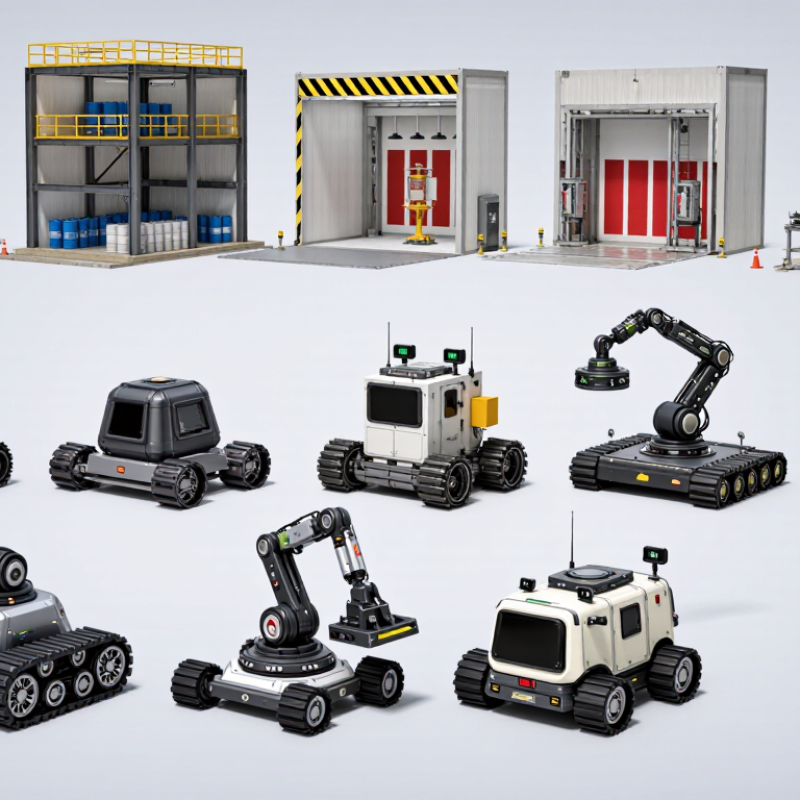
Explosion-proof robots differ by enclosure, mobility, sensing, and task design. The right choice depends on the hazard classification, floor condition, and inspection routine.

1. Tracked inspection robots provide stable movement across gravel, ramps, and wet floors.

2. Wheeled robots cover long warehouse aisles quickly.

3. Legged robots handle steps and uneven platforms.

4. Compact crawler robots enter narrow pipes and ducts.

5. Robotic arms support valve turning and confined maintenance.

6. Aerial robots inspect tall tanks, roofs, and storage structures.

7. Thermal-imaging robots identify abnormal heat around equipment.

8. Gas-detection robots monitor leaks without sending workers into uncertain areas.

9. Magnetic robots examine steel walls and vertical vessels.

10. Remote-controlled utility robots carry lights, cameras, and sampling tools.

Design details matter. Sealed housings should protect sensitive electronics from dust and moisture. Certified electrical protection must match the intended hazardous environment. Buyers should verify temperature limits, communication methods, charging procedures, and emergency shutdown functions. A strong camera is useful, but poor lighting can still hide corrosion. Small details decide performance.

In field evaluations, traction often matters more than speed. Battery endurance is also frequently overstated. Test the robot with its full sensor load, not an empty platform. Operators need clear video, low-latency control, and simple recovery procedures. No robot fits every site. A promising prototype may still struggle with mud, radio shadows, or narrow turns. Practical trials should expose those weaknesses before purchase.

Global Compliance, Certification, and Regional Purchasing Requirements

Selecting the top 10 explosion-proof robots requires more than checking payload and battery life. The IFR World Robotics 2024 report recorded 541,302 industrial robot installations in 2023. This growth increases demand for machines that operate safely near flammable gases, vapors, or dust.

Global buyers should match certification to the site classification. European projects may require ATEX compliance and suitable equipment categories. International tenders often request IECEx certification under the IEC 60079 series. North American facilities commonly specify Class I, Division 1 or 2, and may require approval from a recognized testing laboratory. These labels are not interchangeable. A robot certified for dust atmospheres may not suit a gas processing area. Procurement teams should verify the complete unit, including batteries, cameras, chargers, radios, and replacement parts. A certificate alone is not enough. Documentation can still be incomplete.

Tips: Request the certificate number, protection concept, temperature class, gas or dust group, and permitted ambient range. Ask for field maintenance records, not only laboratory results. Confirm whether local authorities accept the stated certification. Small details matter, especially during customs clearance and site approval. Regional rules change, and some supplier documents may age badly. A careful buyer should recheck every document before signing.

Cost, Maintenance, Integration, and Long-Term Value for Buyers

Top 10 Explosion Proof Robots for Global Buyers

Selecting the top ten explosion-proof robots requires more than comparing purchase prices. Buyers should examine certification scope, payload, operating temperature, battery design, and service availability. A robot may meet hazardous-area requirements but still fail during continuous inspection work. Ask for test records, maintenance intervals, and clear warranty conditions. Real operating data matters.

Cost continues after installation. Replacement batteries, sealed connectors, specialized sensors, and technician travel can raise annual expenses. Choose modular parts when possible. Small failures should not require factory returns. In remote facilities, remote diagnostics can reduce downtime, but only if network access remains reliable. It often does not.

Integration needs careful planning. The robot should connect with existing cameras, alarms, mapping software, and control systems without major redesign. Operators need practical training, not only a technical manual. A short trial in dusty, wet, and low-light areas can reveal hidden weaknesses. This step costs time, yet it may prevent expensive changes later.

Long-term value depends on useful working hours, not impressive specifications. A lower-priced unit may consume more labor through frequent cleaning or calibration. A powerful platform can also become wasteful if its payload exceeds the real task. Buyers should review performance every six months and record failures honestly. My own evaluation would leave room for doubt: field conditions change, and laboratory claims rarely show the whole picture. Availability of spare parts, software updates, and qualified regional support may decide the final ranking.

Now Hiring!