

Blog
What Are China Top Photographic Gelatin Suppliers?
China remains an important sourcing market for photographic-grade gelatin, but supplier selection requires more than comparing prices. Photographic Gelatin must support emulsion formation, coating stability, image sharpness, and long-term film performance. Small variations can affect a laboratory batch. That matters.
David J. Eastoe, a recognized gelatin researcher, wrote, “The properties of gelatin depend on the method of manufacture.” This principle remains practical when evaluating Chinese suppliers. Raw-material origin, collagen treatment, extraction temperature, filtration, drying, and storage conditions can influence bloom strength, viscosity, ash content, and microbiological stability. A credible supplier should provide recent technical data, batch records, safety documentation, and traceability from raw material to finished powder. Factory audits and retained samples add useful evidence. Website claims alone are insufficient.
This article examines China’s leading Photographic Gelatin suppliers through product consistency, technical support, production capacity, export experience, and quality-control systems. It also considers whether a supplier understands photographic applications rather than merely selling general-purpose gelatin. Some companies publish impressive specifications, yet their data may not explain testing methods or acceptable variation. That gap deserves attention. Buyers should request emulsion trials, certificate verification, and storage guidance before making a long-term decision. The best supplier is not always the largest factory. It is the partner that communicates clearly, reproduces performance, and responds responsibly when results are imperfect. Even this comparison has limits, because supplier capabilities and certifications can change over time.
What Is Photographic Gelatin and Why Is It Important?
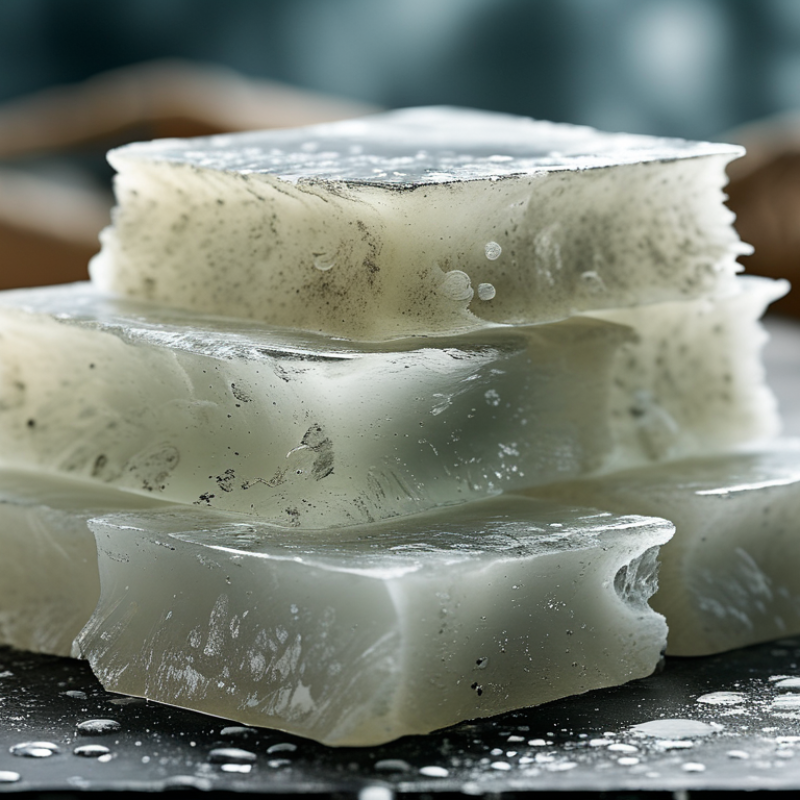
Photographic gelatin is a purified collagen protein used in light-sensitive materials. It commonly comes from carefully processed animal skin or bone. In photographic film and paper, gelatin holds silver halide crystals in a thin, even layer. This layer must swell during processing, allowing chemicals to reach the crystals and wash away unwanted residues.
Its quality directly affects image sharpness, coating strength, and processing speed. Important measurements include gel strength, viscosity, pH, ash content, clarity, and microbiological cleanliness. A practical coating trial often reveals differences that laboratory numbers miss. The gelatin may spread unevenly, dry too slowly, or soften in warm processing solutions. Small variations matter.
China has a broad manufacturing base for industrial and photographic gelatin. Reliable suppliers should provide traceable raw materials, stable batch records, technical data, and samples for testing. They should also explain storage conditions and production controls clearly. No specification sheet tells the whole story. Buyers need pilot trials under real coating and processing conditions. A lower price can become expensive when coating defects appear. This is where professional testing matters, although even experienced teams can overlook long-term aging performance.
| Evaluation Dimension | Relevant Data or Specification | Why It Matters in Photography | Recommended Buyer Verification |
|---|---|---|---|
| Material Definition | Photographic gelatin is purified collagen-derived protein, generally produced from selected animal hides or bones and processed into a controlled photographic-grade binder. | It binds silver-halide crystals and other image-forming components to a support layer such as film, paper, or glass. | Request the raw-material declaration, manufacturing process description, and photographic-grade specification sheet. |
| Primary Photographic Function | Acts as a transparent, water-permeable, film-forming binder for silver halide emulsions. | Allows processing chemicals to reach the emulsion while maintaining a stable image layer during coating, exposure, and development. | Confirm that the product has been tested in an actual photographic emulsion rather than only in food, pharmaceutical, or industrial applications. |
| Gel Strength | Common commercial gelatin grades are often specified by Bloom strength; photographic formulations may require a controlled range selected for the coating process. | Influences layer firmness, coating behavior, drying performance, and mechanical stability. | Check the tested Bloom value, test method, lot-to-lot variation, and acceptance range agreed with the buyer. |
| Viscosity | Usually reported as a measured viscosity under a defined concentration, temperature, and test method; the correct value depends on the emulsion and coating equipment. | Affects solution flow, coating uniformity, layer thickness, and the ability to produce defect-free photographic layers. | Require the test temperature, concentration, instrument method, and viscosity results for several production lots. |
| Purity and Insoluble Matter | Photographic-grade material should have low insoluble particles, low ash, and consistent solution clarity after preparation. | Particles or excessive residues can create coating defects, pinholes, haze, or image contamination. | Review insoluble-matter, ash, clarity, filtration, and solution-residue test results. |
| Optical Properties | Suitable gelatin should form a clear or sufficiently low-haze layer and should not introduce visible coloration that interferes with the intended product. | Transparency and low haze are important for image sharpness, light transmission, and consistent photographic appearance. | Request haze, color, and transparency data using a defined test procedure and sample thickness. |
| Chemical Compatibility | Photographic gelatin must be compatible with silver nitrate, halide salts, sensitizers, hardeners, dyes, and photographic processing chemicals. | Unwanted chemical impurities can alter crystal growth, sensitivity, contrast, fog level, or storage stability. | Conduct laboratory emulsion trials and request information about reactive impurities, preservatives, and processing aids. |
| Microbiological Control | Manufacturers generally control microbial load through hygienic production, validated processing, moisture control, and suitable packaging. | Microbial contamination can degrade gelatin solutions and cause odor, viscosity changes, or coating failures. | Check microbiological limits, testing frequency, sanitation procedures, and certificate-of-analysis records. |
| Moisture Content | Gelatin is commonly supplied as a dry product with moisture controlled within the supplier’s documented specification. | Moisture affects storage stability, weighing accuracy, dissolution behavior, and effective formulation concentration. | Compare the declared moisture range with test results from current production lots and verify the test method. |
| Particle Form | Typical forms include granules, flakes, powder, or small particles designed for controlled dissolution and handling. | Particle size influences dust generation, dissolution time, hydration efficiency, and automated dosing performance. | Confirm particle-size distribution, dissolution instructions, dust-control measures, and packaging suitability. |
| Dissolution Performance | Photographic gelatin should hydrate and dissolve consistently under the customer’s specified temperature and mixing conditions. | Incomplete dissolution can create gels, particles, streaks, or unstable coating solutions. | Request a recommended hydration and dissolution procedure and test it with a retained production sample. |
| Hardening Response | Gelatin layers can be chemically or physically hardened to improve resistance to water, abrasion, and photographic processing. | Controlled hardening helps photographic films and papers retain dimensional and mechanical integrity during wet processing. | Evaluate compatibility with the buyer’s selected hardener and measure wet-scratch resistance, swelling, and processing durability. |
| Packaging | Moisture-resistant inner packaging and protective outer cartons or bags are commonly used for dry gelatin products. | Proper packaging reduces moisture uptake, contamination, caking, and changes in viscosity or dissolution behavior. | Confirm packaging material, net weight, sealing method, palletization, labeling, and transport protection. |
| Storage Conditions | Dry gelatin is generally stored in a cool, dry, clean, and well-ventilated area away from heat, moisture, and strong odors. | Stable storage helps preserve viscosity, gel strength, microbiological quality, and dissolution performance. | Request the supplier’s recommended temperature, humidity, shelf-life period, and first-in-first-out requirements. |
| Quality Documentation | A professional supplier should provide a product specification, certificate of analysis, safety data sheet, batch number, and traceability information. | Documented quality data supports incoming inspection, process control, regulatory review, and root-cause analysis. | Verify that documents are batch-specific, signed or electronically controlled, and consistent with the supplied material. |
| Production Capability | Relevant capability indicators include controlled gelatin extraction, purification, drying, milling, laboratory testing, and batch traceability. | Stable production and testing systems are essential because photographic emulsions are sensitive to small changes in raw-material quality. | Assess production capacity, quality-control equipment, process controls, maintenance records, and supplier-audit results. |
| Application Testing | Performance should be confirmed through emulsion trials, coating trials, and photographic testing under the buyer’s actual formulation and process conditions. | Standard gelatin parameters alone cannot fully predict photographic sensitivity, fog, contrast, coating quality, or long-term stability. | Use a representative sample and compare photographic results against an approved reference material. |
| Supply and Commercial Terms | Important purchasing factors include minimum order quantity, lead time, sample availability, production consistency, export packaging, and technical support. | Reliable supply reduces production interruptions and makes long-term photographic formulation control easier. | Obtain written terms for sample quantities, commercial-scale validation, lead times, payment, claims handling, and change notification. |
| Supplier Selection Principle | The most suitable supplier is not necessarily the one offering the lowest price; selection should balance photographic performance, consistency, technical support, compliance, and total delivered cost. | Photographic gelatin directly affects image quality and manufacturing yield, so a small raw-material difference can have a significant production impact. | Use a weighted scorecard covering technical results, quality systems, supply reliability, documentation, and commercial risk. |