

Blog

Where to Buy China Top 4x3 Thermal Labels?

Finding reliable 4x3 Thermal Labels in China requires more than comparing the lowest quotation. These labels support shipping desks, warehouse shelves, retail counters, and daily inventory tasks. A poor roll can produce faded barcodes, weak adhesive, or uneven feeding. That small failure can slow an entire packing line.

Buyers usually compare manufacturers, trading companies, online marketplaces, and direct factory websites. Each option offers different advantages. Factories may provide better customization and production visibility. Marketplaces can simplify communication and sample ordering. Trading companies may help with language, inspection, and logistics. However, their product knowledge can vary. That matters.

A practical sourcing process starts with clear specifications. Confirm the 4x3 inch size, core diameter, roll length, adhesive type, paper quality, and printer compatibility. Ask for samples before placing a large order. Test them on the exact printers used in your facility. Check barcode clarity, label removal, moisture resistance, and adhesive performance on cardboard or plastic. Real testing reveals problems that product photos hide.

Reliable suppliers should explain their materials, quality controls, packaging, and lead times clearly. Request factory details, recent product images, sample reports, and relevant business credentials. Independent inspections can add confidence, especially for larger shipments. Still, no supplier is perfect. I would not rely only on polished catalogs or fast replies. A careful comparison of samples, communication, and after-sales support gives a more balanced decision. The best place to buy depends on your volume, application, budget, and tolerance for production risk.
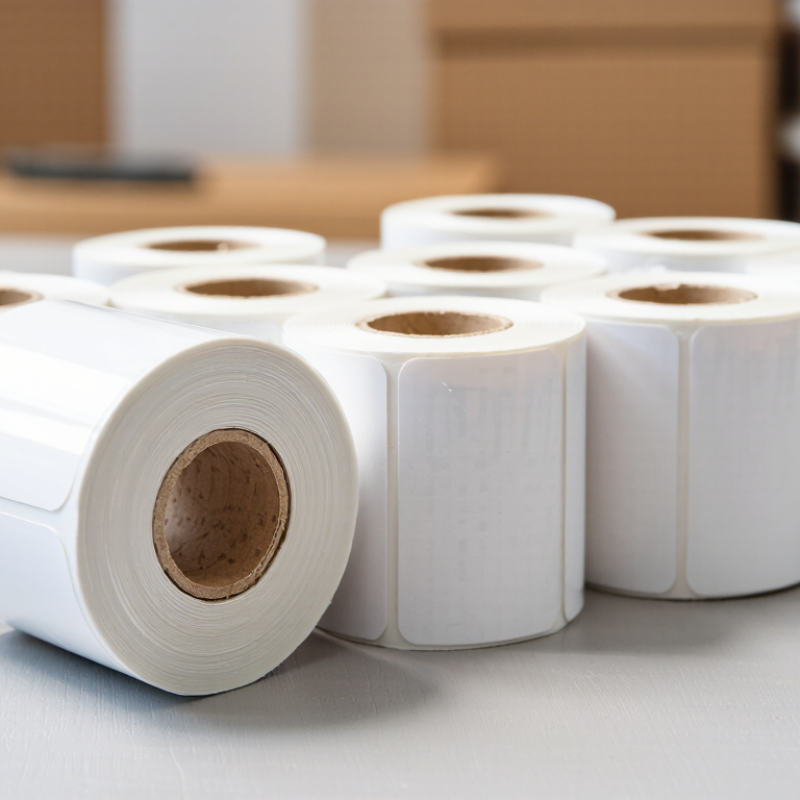
Where to Buy China Top 4x3 Thermal Labels?

Understanding China 4x3 Thermal Label Specifications

When comparing where to buy China top 4x3 thermal labels, begin with the specification sheet. A 4x3 label normally measures 101.6 by 76.2 millimeters. Confirm the finished size, not only the advertised size. Small differences can affect alignment.

Direct thermal labels need no ribbon, but their coating quality matters. Check thermal sensitivity, print contrast, surface smoothness, and resistance to heat, moisture, and friction. Adhesive choice is equally important. Permanent adhesive suits cartons, while removable adhesive may suit temporary storage. Ask about roll length, core diameter, outer roll diameter, perforation, and liner thickness. These details determine printer compatibility and loading stability. In practical testing, I would print dense barcodes and small text, then rub and expose samples to normal warehouse conditions. A specification sheet can still miss real-world weaknesses.

Tips: Request samples before ordering large quantities. Measure the core and roll diameter with a ruler. Test labels inside your actual printer. Store unopened rolls in a cool, dry room. Avoid direct sunlight. Also, check whether the supplier provides batch inspection records and clear tolerances. “Top quality” sounds useful, but it is not a measurable specification. I would compare several samples, record failures, and accept that one label may not suit every application.

Identifying Reliable Chinese Thermal Label Manufacturers

Buying 4x3 thermal labels in China requires more than comparing quotations. Reliable sourcing starts with the manufacturer, not a trading profile. A capable factory should explain face stock, thermal coating, adhesive, liner, and core size clearly. Ask whether 4x3 means inches and confirm the actual roll dimensions. Small measurement errors can disrupt printers, cartons, and warehouse workflows. Request recent production photos, sample rolls, and a written specification sheet. Keep records.

During evaluation, check coating uniformity with a barcode scanner or direct thermal printer. Print dense black bars, small text, and long batches. Watch for fading, dust, curling, or adhesive transfer. A trustworthy supplier should share test methods, batch records, and realistic lead times. It should also identify roll counts, carton protection, and moisture control. Ask for material safety and conformity documents required in the destination market. Factory visits or independent inspections provide useful evidence, although they increase costs. Quick samples can hide problems. Extended testing reveals them.

Communication is another quality signal. Technical answers should be specific, not politely vague. Confirm artwork control, tolerance limits, replacement terms, and production approval steps before ordering. Ask how rejected rolls are isolated and how corrective actions are documented. Verify whether the same coating and adhesive will be used during mass production. A manufacturer may appear highly organized, yet still miss a small detail. That detail can become expensive.

Comparing Wholesale Platforms and Direct Suppliers

Where to Buy China Top 4x3 Thermal Labels?

Wholesale platforms offer broad access to China-made 4x3 thermal labels. Buyers can compare roll counts, core sizes, coating types, and quoted prices quickly. Grand View Research estimated the global thermal labels market at about USD 4.4 billion in 2023. Demand continues to rise with parcel shipping and warehouse automation.

Price is not the only measurement.

A wholesale platform suits trial orders and multi-supplier comparisons. It may also provide buyer reviews, transaction records, and basic supplier verification. However, product descriptions can hide differences in adhesive strength and face-stock thickness. Request samples before approving a large shipment. Test labels on cold cartons, plastic mailers, and dusty surfaces.

Direct suppliers usually offer better control over material and production details. Ask for the adhesive temperature range, thermal image durability, roll winding direction, and core tolerance. A reliable supplier should provide a current specification sheet and batch sample. ISO 9001 certification can support process confidence, but it does not guarantee label performance. That assumption fails sometimes.

Smithers’ 2024 packaging research identifies e-commerce and logistics as important growth drivers for pressure-sensitive labels. Meanwhile, the Pitney Bowes Parcel Shipping Index reported more than 160 billion parcels globally in a recent measured year. These figures support steady label demand, yet forecasts differ by research method. Compare landed cost, defect rate, lead time, and replacement risk—not only the unit quote.

Where to Buy China Top 4x3 Thermal Labels? - Comparing Wholesale Platforms and Direct Suppliers

Comparison Dimension Wholesale Platform Direct Supplier Practical Buying Consideration
Typical product specification 4 × 3 in (approximately 101.6 × 76.2 mm) direct thermal labels; common roll and fanfold formats are available. The same standard size, with greater control over adhesive, coating, roll winding, core size, and packaging. Confirm the actual finished size, corner shape, gap, core diameter, and winding direction before placing an order.
Common minimum order quantity Often 1–10 cases, depending on the listing and stock status. Commonly about 10–100 cases for customized production; stock items may require less. Platforms are generally better for trial orders, while direct purchasing is more suitable for recurring volume.
Indicative unit pricing Approximately US$0.012–US$0.050 per label for standard stock, before freight and taxes. Approximately US$0.008–US$0.035 per label for larger repeat orders, depending on material and packaging. Compare the delivered cost rather than the unit price alone; freight, duties, and payment fees can change the result.
Available label materials Usually standard direct thermal paper in white, with limited choices of top coating and adhesive. More options for standard, premium-coated, moisture-resistant, freezer-grade, and synthetic direct thermal materials. Select material according to exposure to moisture, abrasion, sunlight, cold storage, and handling conditions.
Adhesive choices Most listings use general-purpose permanent adhesive. Permanent, removable, freezer, high-tack, and low-temperature adhesive options may be available. Request adhesion testing on the exact carton, plastic, glass, or shipping surface being used.
Roll configuration Commonly 250–1,000 labels per roll, subject to printer capacity and roll diameter. Roll count, outer diameter, core size, and winding direction can usually be made to specification. Check printer compatibility, especially maximum roll diameter and core size.
Sample availability Usually easy to purchase small sample quantities from available stock. Samples may be free or charged, and customized samples can require several days. Test print clarity, liner release, adhesive performance, barcode readability, and roll fit before bulk production.
Typical production lead time About 3–10 working days for in-stock products; made-to-order items may take longer. About 7–20 working days for standard production; customized materials or packaging may add time. Ask for the production schedule separately from the shipping transit time.
Customization capability Usually limited to size, quantity, packaging, and selected stock options. Better suited to custom dimensions, perforations, pre-printing, special adhesives, and private packaging. Direct sourcing is normally more efficient when the specification differs from a standard 4 × 3 in label.
Quality documentation Product descriptions, photos, and basic material information are commonly provided. May provide technical data sheets, batch records, adhesive information, and pre-shipment inspection documents upon request. Request measurable specifications for basis weight, caliper, adhesive performance, and print sensitivity.
Payment and buyer protection Platform-based payment, order records, and dispute procedures are commonly available. Payment terms may include deposit and balance, documentary payment, or approved credit after a trading history is established. Use written specifications, approved samples, and inspection terms for larger direct orders.
Shipping suitability Convenient for small parcels and mixed products; express shipping is often available. More economical for consolidated cartons, pallets, or repeat ocean and air freight shipments. Choose the channel according to order volume, required delivery date, and total landed cost.
Storage and service life Direct thermal labels commonly perform best when stored in a cool, dry, dark environment. Storage recommendations and coating performance can be specified more precisely for the intended application. Avoid excessive heat, humidity, sunlight, plasticizer contact, and chemical exposure; confirm the required retention period.

Note: Price, minimum order quantity, lead time, and material availability are indicative market ranges and should be confirmed with the selected seller or manufacturer before purchase.

Checking Quality, Certifications, Pricing, and Minimum Orders

When buying China-made 4x3 thermal labels, inspect quality beyond a clean product photo. Grand View Research reports that the global thermal labels market is expected to grow steadily through 2030, driven by logistics, retail, and healthcare tracking. That growth increases supplier choices, but also quality differences.

Ask for samples with actual printers and scanners. Check roll width, core diameter, winding direction, adhesive strength, and print darkness. A label that curls after refrigeration is not a successful bargain.

Certifications deserve careful checking.
Request an ISO 9001 certificate and verify its scope and validity. For export applications, ask for material compliance documents covering RoHS and REACH requirements. Food-contact use needs separate evidence, not a general “eco-friendly” statement.

Pricing usually depends on paper grade, adhesive, coating, roll length, packaging, and shipping terms. Compare the delivered cost per 1,000 labels, rather than only the quoted carton price.

Minimum orders often begin around 10,000 to 50,000 labels, although custom cores or packaging may raise them. These figures vary widely. I would not trust a low MOQ without a written production specification.

Tips:

Request three samples from different batches. Test barcode readability after rubbing, stacking, and heat exposure. Confirm the sample matches mass production. Ask for a pre-shipment inspection report. Keep payment terms linked to measurable quality points. One imperfect detail matters: a supplier may provide excellent face stock but inconsistent adhesive. That weakness can stop an entire packing line.

Choosing Shipping, Customization, and Payment Options

Where to Buy China Top 4x3 Thermal Labels?

When sourcing 4x3 thermal labels from China, shipping terms deserve close attention. Ask whether the quote includes air freight, sea freight, or delivery to your warehouse. A low unit price can become expensive after freight, customs handling, and local delivery charges. Request carton dimensions, gross weight, roll quantity, and a realistic production schedule. Samples should arrive before a large order. They reveal curling, weak adhesive, uneven coating, and poor winding. Small details matter.

Customization affects both performance and cost. Confirm the label material, adhesive strength, core size, roll direction, and labels per roll. For outdoor parcels, moisture resistance may be essential. For indoor storage, a standard coating may be enough. Send a clear artwork file and approve a digital proof before production. A physical sample is better when color or barcode readability matters. I would not trust a quotation based only on a product photo. That shortcut is tempting, but often careless.

Payment should match the supplier’s credibility and order size. Common options include bank transfer, card payment, or a protected business payment service. Check the legal company name, invoice details, factory address, and refund terms before paying. A staged payment can reduce exposure: part at order confirmation, the balance after inspection. Independent inspection adds cost, yet it may prevent a larger loss. Even experienced buyers sometimes overlook payment fees and exchange-rate changes. Leave room for those imperfections.

Now Hiring!