

Blog

Why Choose Quartzite for Your Next Building Project?

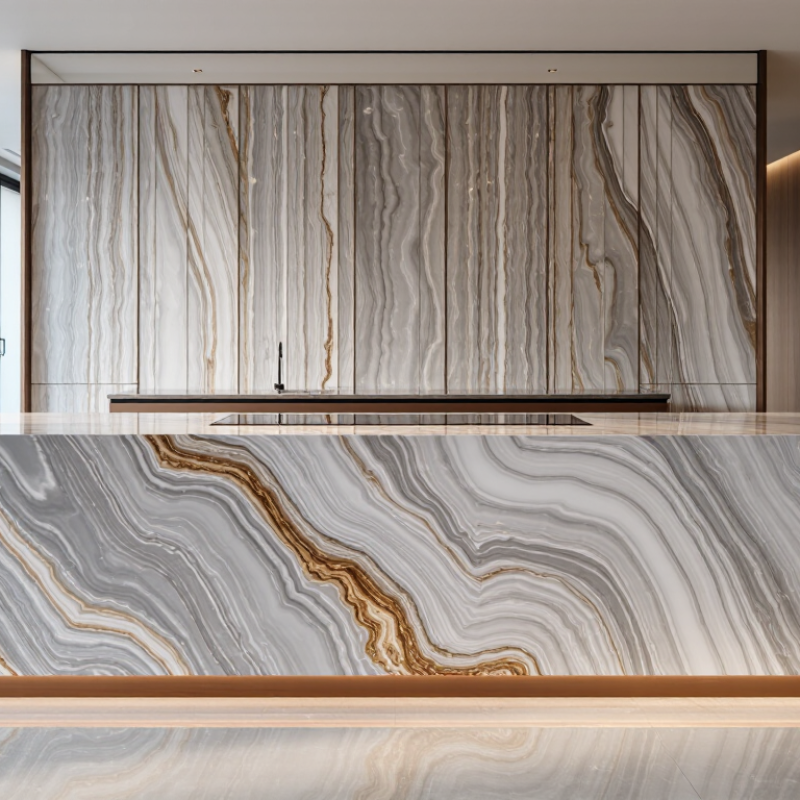
quartzite deserves serious attention when a building project needs natural beauty, structural confidence, and long-term value. Formed under intense heat and pressure, this natural stone often combines striking veining with impressive hardness. Its surface can resemble marble, yet many varieties offer greater resistance to scratching and everyday wear. That difference matters on a busy kitchen island, hotel reception desk, or exterior wall exposed to rain.

The material is not maintenance-free. It still requires careful sealing, suitable cleaners, and professional installation. Experienced fabricators inspect each slab before cutting, checking for fissures, mineral movement, and thickness variations. A veined piece may look perfect under showroom lights but reveal fragile areas near sinks or narrow edges. Site conditions matter too. Subfloor movement, poor support, and rushed handling can damage even a high-quality slab.

Good decisions begin with verified information. Request the stone’s technical data, origin, finish specifications, and recommended maintenance schedule. Ask whether the supplier has tested the selected variety for water absorption, abrasion, and freeze-thaw exposure. A qualified architect or stone specialist can match the slab to the project’s climate and intended use. Color consistency may also vary between batches. That is easy to underestimate. Quartzite can elevate a design, but its cost, fabrication demands, and natural imperfections deserve honest consideration. When selected carefully, it can provide a durable surface with a distinctive geological character that manufactured materials cannot fully reproduce.
Why Choose Quartzite for Your Next Building Project?

Quartzite Defined: A Metamorphic Stone Containing Typically Over 90% Quartz

Why Choose Quartzite for Your Next Building Project?

Quartzite is a metamorphic stone containing typically over 90% quartz. It forms when quartz-rich sandstone experiences intense heat and pressure underground. This process creates a dense, crystalline structure with strong visual depth. The U.S. Geological Survey’s 2024 Mineral Commodity Summaries estimated U.S. industrial sand and gravel production at nearly 100 million metric tons in 2023. That figure concerns silica resources, not quartzite slabs, but it shows the scale of quartz-based materials. Quartzite itself remains a quarry-specific product.

On site, quartzite can suit kitchen islands, stair treads, ventilated façades, and high-traffic floors. Its hardness can resist scratching, while its natural veining adds warmth to large surfaces. However, “over 90% quartz” does not guarantee identical performance. Mineral impurities, microcracks, water absorption, and finish quality still matter. ASTM C616/C616M classifies quartz-based dimension stone and supports performance-based evaluation. A fabricator should also review test results from the actual quarry lot. Names can mislead.

Tips: Request petrographic analysis and absorption data. Ask for flexural strength and freeze-thaw results when using exterior stone. Inspect a full slab under wet and dry light. Check edge samples before approving a countertop. Sealers may reduce staining, but they cannot repair weak stone. A small mock-up often reveals problems that a polished sample hides. Reflect on maintenance, too; even durable quartzite needs careful cleaning and properly detailed joints.

Hardness and Strength: Mohs 7 Rating and ASTM C880 Flexural Testing

Quartzite is often selected for demanding building projects because it combines visual depth with impressive physical strength. Its typical Mohs 7 rating places it above many common stones in scratch resistance. Grit under a tool or rough site traffic is less likely to leave visible marks. Still, hardness is not the whole story. It does not make every quartzite slab indestructible.

ASTM C880 flexural testing adds a more practical measure of performance. The test bends a prepared stone sample until failure. It helps determine how well the material resists tension across its span. This matters for stair treads, wall panels, countertops, and other applications where support may be limited. A high flexural result can support confident design decisions. However, one test result should not represent every block from a quarry. Natural variation exists.

Careful project reviews examine the complete test report, including sample direction, thickness, moisture condition, and failure pattern. Installation details matter too. Narrow supports, rushed handling, or poorly placed anchors can weaken an otherwise strong installation. I would not specify quartzite from its Mohs rating alone. Petrographic review and qualified engineering advice remain valuable, especially for exterior work and large panels. The stone may look flawless under showroom lighting. On site, small differences can matter. That is an easy detail to underestimate.

Why Choose Quartzite for Your Next Building Project?

Hardness and Strength: Quartzite typically measures approximately 7 on the Mohs hardness scale, indicating strong resistance to scratching. The chart compares quartzite with standard Mohs reference minerals.

Quartzite’s Mohs 7 rating is higher than calcite, fluorite, apatite, and feldspar. Flexural performance is evaluated separately through ASTM C880, the standard test method for determining the flexural strength of dimension stone under center-point loading. ASTM C880 results depend on the specific stone, specimen condition, orientation, and test conditions, so they should be obtained from project-specific testing.

Water and Weather Resistance: ASTM C97 Absorption and Freeze–Thaw Data

Why Choose Quartzite for Your Next Building Project?

Water resistance starts with measured evidence, not appearance. ASTM C97/C97M determines absorption and bulk specific gravity for dimension stone. Under ASTM C616, quartz-based dimension stone has a commonly referenced maximum absorption of 0.40%. Dense quartzite can meet this benchmark, but every quarry and extraction layer behaves differently. Some foliated pieces absorb more water.

That distinction matters outdoors. A polished sample may look flawless beside a rain-soaked entrance, yet its internal seams can hold moisture. During freezing, trapped water expands and may create hairline cracks, edge loss, or surface spalling. Laboratories often adapt ASTM C666/C666M freeze–thaw cycling procedures for stone evaluation. Results should report mass change, visible damage, and strength retention after repeated cycles. There is no universal pass/fail value for every quartzite application.

The Natural Stone Institute’s Dimension Stone Design Manual recommends project-specific testing and installation review. Ask for recent ASTM C97 results from the proposed quarry lot. Request freeze–thaw data using saturated specimens, not convenient dry samples. A 0.20% absorption result is encouraging. It is not magic. Drainage, joint design, flashing, and winter maintenance still influence performance.

I would also question unusually perfect data. Test variation can reflect bedding direction, specimen size, or surface finish. For a cold, wet facade, one extra test may cost less than replacing cracked panels.

Why Choose Quartzite for Your Next Building Project? – Water and Weather Resistance: ASTM C97 Absorption and Freeze–Thaw Data

Performance Dimension Test Method / Reference Representative Quartzite Range What the Result Indicates
Water absorption by weight ASTM C97/C97M, Absorption and Bulk Specific Gravity of Dimension Stone 0.05%–0.40% Low absorption generally means less water enters the stone’s pore structure, helping reduce moisture-related staining and deterioration.
ASTM C616 quartz-based stone benchmark ASTM C616/C616M, Standard Specification for Quartz-Based Dimension Stone Maximum absorption: 0.40% A quartzite product tested at or below this value meets the absorption criterion for the applicable quartz-based dimension-stone category.
Bulk density ASTM C97/C97M Approximately 2.60–2.75 g/cm³
162–172 lb/ft³
Higher density is commonly associated with a relatively compact mineral structure; actual values vary by quarry and specimen.
Freeze–thaw conditioning ASTM C666/C666M, Resistance of Concrete to Rapid Freezing and Thawing; project specifications may require a modified natural-stone procedure Commonly evaluated over 300 cycles Repeated freezing and thawing reveals whether absorbed moisture causes cracking, scaling, warping, or other visible damage.
Freeze–thaw mass change Calculated from specimen mass before and after freeze–thaw exposure Preferred outcome: minimal measurable loss
Example acceptance target: ≤1.0% mass loss, where specified
A low mass loss suggests good resistance to particle loss and surface breakdown; acceptance limits must come from the project specification.
Visual damage after cycling Visual inspection after freeze–thaw exposure; document cracking, scaling, spalling, and edge breakdown No visible cracking, spalling, or delamination preferred Appearance and dimensional stability are especially important for exterior cladding, paving, stairs, and hardscape applications.
Moisture and weathering considerations ASTM C97/C97M results combined with site exposure assessment Low absorption is advantageous, but not sufficient alone Performance also depends on mineral composition, natural fissures, finish, thickness, installation details, drainage, de-icing salts, and local climate.
Technical note: The ranges above are representative industry values for natural quartzite and are not a certification for any specific stone. ASTM C97/C97M provides the test procedures; it does not establish one universal absorption limit for every application. Always request project-specific laboratory reports using representative samples and confirm the required freeze–thaw acceptance criteria before specification.

Surface Durability: ASTM C241 Abrasion Testing for High-Traffic Applications

Why Choose Quartzite for Your Next Building Project?

Surface durability matters when entrances face thousands of footsteps, grit, and rolling loads. Quartzite is often selected for this reason. Its quartz-rich composition can resist surface wear better than many softer decorative stones. Still, visual hardness is not proof.

ASTM C241/C241M, Standard Test Method for Abrasion Resistance of Stone Subjected to Foot Traffic, provides a practical comparison. The laboratory rotates stone specimens against an abrasive charge and reports resistance using the Ha value. Higher values generally indicate better resistance to wear. ASTM does not create one universal pass-or-fail number. The project specification must define the required performance.

That detail is important.

The Natural Stone Institute’s Dimension Stone Design Manual recommends reviewing abrasion results alongside the intended traffic level, finish, and installation conditions. In a busy lobby, test samples should represent the actual quarry lot and finished surface. Ask for the reported Ha value, specimen thickness, finish, and test laboratory. A polished sample may perform differently after repeated grit exposure. This is where many selections become too optimistic.

In practice, quartzite can suit hotel entrances, transit interiors, and retail floors, but maintenance still matters. Door mats, routine dust removal, and prompt grit removal reduce abrasive contact. ASTM C241 measures laboratory wear, not every failure caused by poor detailing, moisture, or neglected cleaning. A strong specification should acknowledge that limitation.

Project Selection: Compare Grade, Finish, Thickness, and Lifecycle Cost

Why Choose Quartzite for Your Next Building Project?

Quartzite can bring strong visual character and durable performance to a building project. However, selection should begin with evidence, not appearance. Compare the stone’s grade, source documentation, and intended use. Higher grades usually offer more consistent color, fewer visible defects, and better predictability. Natural variation still exists. A showroom sample can mislead.

Finish affects both performance and maintenance. A polished surface reflects light and suits walls, counters, and formal interiors. Honed or textured finishes may provide better visual softness and improved traction in selected areas. Thickness changes more than appearance. It affects weight, edge details, support requirements, transport, and installation labor. Confirm the substrate capacity before approval. I have seen attractive selections require costly redesigns because thickness was considered too late.

Tips:Request full-size samples when possible, not only small chips. Ask for test results, care guidance, and batch consistency records. Compare lifecycle cost, including cutting waste, sealing, cleaning, repairs, and possible replacement. A cheaper slab may become expensive after installation. Allow for realistic waste. It is easy to underestimate. Also review lighting conditions, wet-area exposure, and expected traffic with a qualified stone professional. The best choice balances grade, finish, thickness, and long-term service—not just the initial quotation.

Article Source:

Now Hiring!