Why Choose Sheet Stock Stained Glass for Your Project?
Choosing Sheet Stock Stained Glass can shape both the appearance and reliability of a finished project. Its flat, consistent form helps makers plan panels, lamps, cabinet inserts, and decorative windows with greater control. A sheet can be measured beside a paper pattern, marked with a glass cutter, and broken along a deliberate score. The process feels practical.
Stained-glass historian William Warmus has written, “Color is the heart of stained glass.” This idea reflects why sheet stock remains valuable. Different textures scatter daylight across a room. Cathedral glass creates clearer color, while opalescent glass produces softer, denser effects. A blue sheet near a kitchen window may look cool in the morning and surprisingly gray at dusk. Sampling matters.
Professional results also depend on more than color. Makers should inspect each sheet for bubbles, stress lines, uneven thickness, and edge damage. Experienced fabricators consider cutting direction, heat movement, and compatibility before assembly. Matching compatible glass is especially important for kiln-fired or copper-foil work. A beautiful combination can still fail if the materials respond differently.
There is no perfect sheet.
That limitation deserves attention. Some stock glass costs more than expected, and larger pieces can produce waste when patterns are poorly planned. Yet careful templates, small test cuts, and proper protective equipment reduce avoidable mistakes. Sheet Stock Stained Glass offers a balance of creative freedom, repeatable handling, and visible craftsmanship. For a project that needs controlled color, tactile texture, and dependable fabrication, it is often a sensible starting point—not an automatic answer.
What Is Sheet Stock Stained Glass?
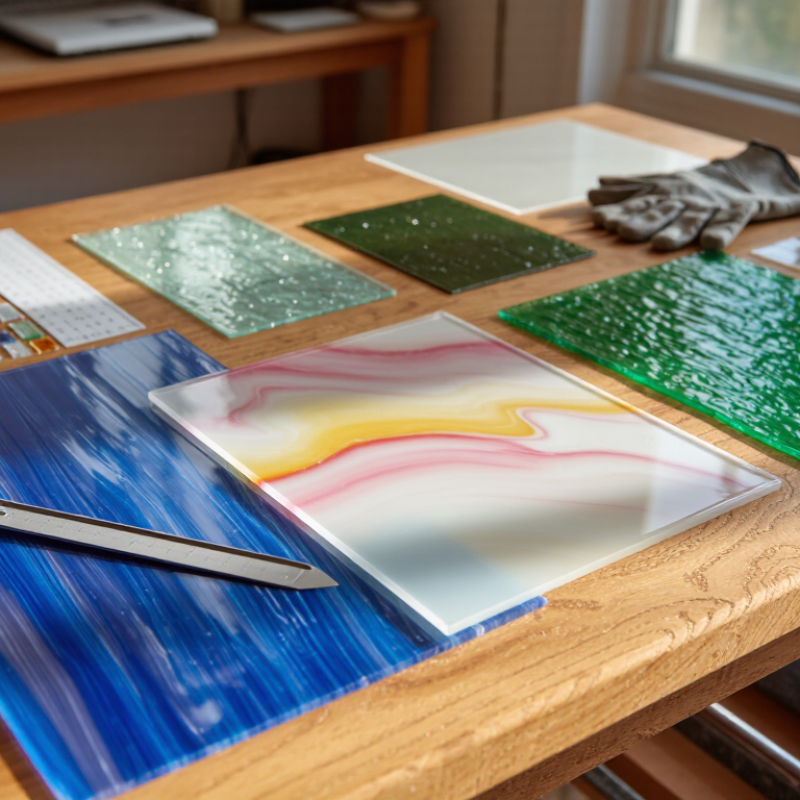
Sheet stock stained glass is not a finished window. It is flat glass manufactured in individual sheets, then selected, cut, shaped, and assembled into a design. Sheets may be transparent, opalescent, textured, or richly colored. Some show subtle ripples, bubbles, or uneven color. Those details create character, but they can also complicate precise cutting.
In workshop practice, makers usually combine sheet glass with copper foil or lead came. They inspect each sheet for thickness, edge damage, and surface stress before cutting. Glass intended for fusing needs compatible expansion properties, often identified by its COE rating. Do not assume every attractive sheet is suitable for every technique. That shortcut fails.
The U.S. Environmental Protection Agency’s 2020 Facts and Figures report lists glass as 4.2% of municipal solid waste generation by weight. Careful layout matters, because small offcuts quickly become waste. The U.S. Department of Energy also notes that windows can represent roughly 25% to 30% of residential heating and cooling energy use. Decorative sheet stock may not provide modern insulating performance. For exterior installations, designers should consider a protective glazing system and applicable building requirements. A common mistake is choosing color before studying light, thickness, and maintenance. The better choice may look less dramatic on the workbench. It can perform better in daylight.
How Sheet Stock Stained Glass Is Made
Why Choose Sheet Stock Stained Glass for Your Project?
Sheet stock stained glass begins with carefully measured minerals, colorants, and recycled glass. Makers blend these materials before placing them into a high-temperature furnace. The mixture melts into a glowing, thick liquid. Its final color depends on chemistry, heat, and cooling speed.
The molten glass is formed into sheets using rollers or a flat casting surface. Workers control the thickness while the material remains hot and flexible. Some sheets receive a textured surface during this stage. Others are rolled smooth for cleaner cutting and stronger light transmission. The glass then enters an annealing kiln, where it cools slowly and evenly. This step reduces internal stress and helps prevent unexpected cracking.
Quality checks follow cooling. Inspectors examine the edges, surface, color consistency, and visible inclusions. Small bubbles or slight ripples may remain. They are not always defects. In many projects, these details create depth and movement under daylight. Still, a careless inspection can cause problems later. Uneven thickness may affect cutting, fitting, or lead came alignment.
For practical use, choose sheets with a consistent structure and clear handling information. A skilled maker also studies how light changes the glass throughout the day. The sample may look perfect indoors. It may appear entirely different beside a sunny window.
Why Choose Sheet Stock Stained Glass?
Sheet stock stained glass begins as a soda-lime-silicate glass mixture. The batch is melted at high temperature, formed into a continuous sheet by rolling or other forming methods, then annealed to reduce internal stress. Its consistent flat shape makes it practical for measuring, cutting, foiling, leading, and assembling decorative panels. The chart shows representative midpoint values for common soda-lime glass composition ranges; actual stained-glass formulas vary by color and finish.
Key Benefits for Stained Glass Projects
Why Choose Sheet Stock Stained Glass for Your Project?
Key Benefits for Stained Glass Projects
Sheet stock stained glass gives many projects a stable and predictable starting point. In my workshop, I can compare colors, textures, and transparency before cutting. Consistent thickness helps scoring tools follow a planned line. That matters. It also makes fitting pieces into a copper foil or leaded design more manageable.
Color and texture strongly influence the finished panel. A transparent amber sheet can warm sunlight across a room. A textured blue sheet can soften reflections and hide small visual distractions. These choices are not merely decorative. They control how light moves through the design. With a clear pattern, sheet stock also reduces guesswork during layout. I still misjudge color combinations sometimes. That mistake teaches me to test small samples first.
Sheet stock can support efficient material use. One full sheet may provide several related pieces, especially when the pattern uses repeated shapes. This can reduce unnecessary joins and simplify visual balance. However, efficiency depends on careful planning. Not every offcut deserves to be saved. Some pieces contain flaws, sharp edges, or an unsuitable texture. Reliable results come from checking each sheet for cracks, thickness changes, and surface damage before cutting. Eye protection, cut-resistant gloves, and a clean work surface remain essential. Careful preparation takes time, but rushed cutting usually costs more.