
Blog

Best Coffee Maker Machine Manufacturers in China

Choosing a coffee maker machine manufacturer in China takes more than comparing product photos and quoted prices. Buyers need to examine engineering capability, production consistency, testing records, and after-sales support. The International Coffee Organization’s Coffee Market Report, published in March 2024, estimated global coffee consumption at 177 million 60-kilogram bags for coffee year 2023/24, up 2.2% from the previous year. That signals a large, active market. It does not, however, measure coffee machine sales or prove demand for any particular design.

For importers, retailers, and hospitality brands, useful comparisons begin with verifiable details: temperature stability, pump performance, materials, safety testing, and the availability of replacement parts. Ask whether a supplier can show inspection procedures and sample test results, not just a polished catalogue. Details matter. A compact home brewer and a high-volume commercial unit have very different requirements. Factory visits, independent audits, and product trials can help validate claims, though each has limits. No single manufacturer fits every brief. Even an impressive sample may not reflect routine production, so buyers should check how quality is monitored across full orders. This guide introduces notable Chinese manufacturers and practical criteria for assessing them, while separating documented capabilities from marketing claims.
Best Coffee Maker Machine Manufacturers in China

What Defines a Coffee Maker Machine Manufacturer in China

Best Coffee Maker Machine Manufacturers in China

What Defines a Coffee Maker Machine Manufacturer in China

A capable manufacturer does more than assemble parts. Its engineers should control product design, sourcing, assembly, and testing, with records linking components to production batches. For an espresso machine, ask how technicians check brew temperature, pump pressure, leakage, and repeatability. A polished showroom is not proof of stable output. That distinction is easy to miss.

Industry data helps explain the opportunity, but it does not certify any factory. Grand View Research estimated the global coffee machine market at USD 6.9 billion in 2023, forecasting a 5.3% compound annual growth rate through 2030. The International Coffee Organization reported world coffee consumption of 177.0 million 60-kilogram bags in coffee year 2023/24. These figures suggest sustained demand, not guaranteed quality. A serious supplier should share production capacity, inspection criteria, and pilot-batch results. Check whether those records match the machine you will actually receive.

How China’s Coffee Maker Manufacturing Industry Is Structured

Best Coffee Maker Machine Manufacturers in China

How China’s Coffee Maker Manufacturing Industry Is Structured

China’s coffee maker industry is a network, not a single factory model. Some manufacturers design products and manage assembly, while others focus on specific parts. These may include heating elements, pumps, control boards, plastic housings, and stainless-steel carafes. A finished machine can therefore involve several suppliers before it reaches the assembly line.

At the center are OEM and ODM manufacturers. OEM factories build to a buyer’s specifications; ODM firms may offer existing designs that buyers can adapt. Their capabilities vary. One plant may handle injection molding and assembly in-house, while another relies on outside partners. Ask who makes critical components, how design changes are documented, and whether production samples match the final order.

Quality checks happen at different stages. Teams may inspect incoming parts, test water flow and heating, then check finished units for leaks or damaged finishes. Packaging also matters: a secure carton should protect glass carafes during transport. Supplier descriptions can sound similar. The boundary between a trading company and a manufacturer is not always obvious, so verify facilities, records, and sample consistency. Even a polished sample tells only part of the story. Production runs can differ.

Coffee maker manufacturing commonly follows these stages, from product design through final packing. The bar heights show workflow order only—not market share, production volume, or the size of any manufacturer. Processes vary by product and factory.

Key Types of Coffee Maker Machines Made by Chinese Manufacturers

Best Coffee Maker Machine Manufacturers in China

Key Types of Coffee Maker Machines Made by Chinese Manufacturers

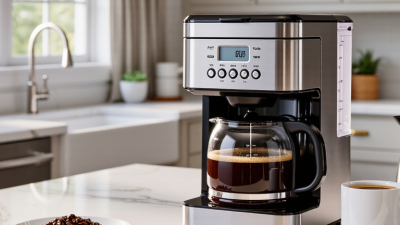
Chinese manufacturers produce several coffee maker types for home, office, and food-service use. Drip machines suit people who brew several cups at once. Water passes through ground coffee and a paper or reusable filter, collecting in a glass carafe. Look for a stable hot plate and an easy-to-remove filter basket. Small details matter.

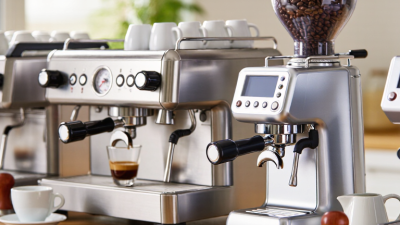
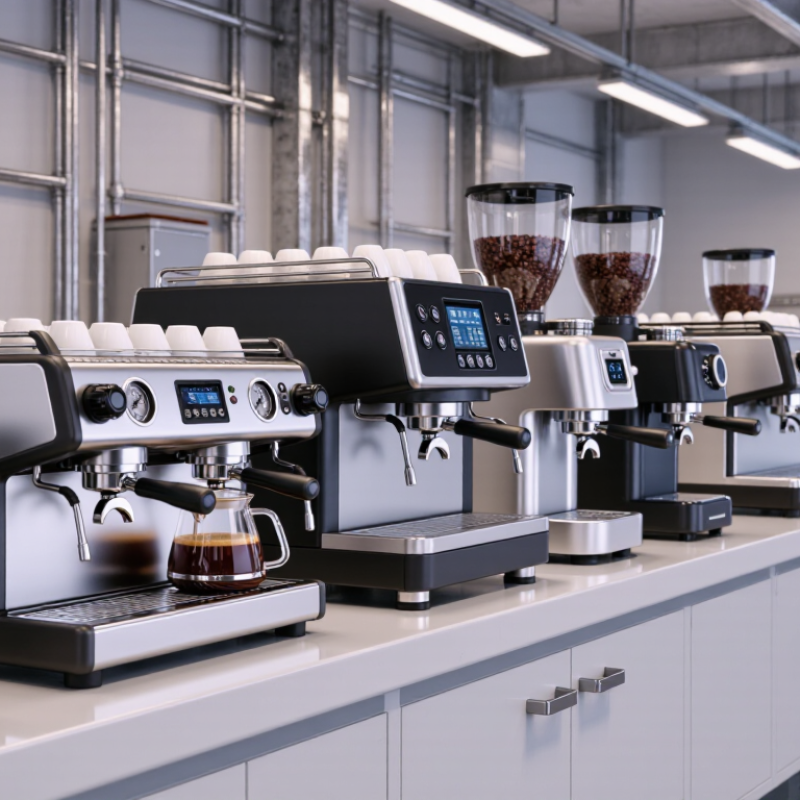
Espresso machines use pressure to push hot water through finely ground coffee. Models range from compact units with manual controls to automatic machines with built-in grinders. Some manufacturers also make capsule machines, which offer quick preparation and simple cleanup. Bean-to-cup models grind beans for each drink, but their extra parts may need more frequent cleaning. Commercial machines often have larger boilers and stronger pumps for repeated use. Specifications vary, so compare brewing capacity, pressure, materials, and service support rather than relying on appearance alone.

Tips: Ask for a sample and test brew temperature, extraction consistency, and noise. Check how easily the water tank, drip tray, and filter can be removed. A polished product photo cannot reveal every maintenance issue.

How to Evaluate Leading Coffee Maker Machine Manufacturers in China

Best Coffee Maker Machine Manufacturers in China

How to Evaluate Leading Coffee Maker Machine Manufacturers in China

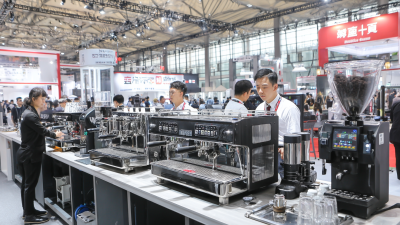
Evaluating a coffee maker manufacturer in China takes more than comparing unit prices. Ask who handles product engineering, tooling, and final inspection, and whether those teams work under one roof. Request a factory walkthrough, or a live video tour if travel is not practical. Look for clear work instructions, calibrated test equipment, and records tied to production batches. Small details matter.

Review a working sample, not just a polished display model. Test brew temperature, water flow, leakage, and repeated use; record results under the same conditions. Then compare the approved sample with units from a pilot run. Differences in plastic fit or button response can reveal weak process controls. A single good sample proves little.

Ask for material specifications, component traceability, quality procedures, and applicable safety-test reports. Check that documents match the exact model and configuration under discussion. Response quality is evidence too: capable teams explain failures and corrective actions with dates and records. A showroom can look convincing, yet leave unanswered questions. I would also compare lead-time promises with the factory’s actual capacity; this is easy to overlook, and estimates can still change. No checklist removes risk, but documented answers make it easier to judge a supplier fairly.

Factors to Consider When Choosing a Chinese Coffee Maker Supplier

When evaluating Chinese coffee maker machine manufacturers, look beyond catalog photos and unit price. A capable supplier should explain its production process, inspection points, and handling of defects. Ask how each machine is tested before packing. Request sample records for brew temperature, water leakage, and repeated operating cycles. Details matter. A short video can help, but it cannot replace testing a sample yourself with your usual grind and water volume.

Check whether the supplier can provide relevant food-contact material information and electrical safety documentation for your target market. Requirements vary by destination, so verify documents with a qualified testing partner rather than accepting a certificate at face value. Also compare minimum order quantities, production lead times, spare-part availability, and warranty terms in writing. Ask for photos of replacement components, such as seals and filter baskets. Small parts can cause big delays.

Communication deserves its own assessment. Send a technical question and note whether the answer is specific, timely, and consistent across contacts. A polished factory tour is useful, but it does not prove stable quality across a full order. If possible, inspect production or hire an independent auditor. One detail buyers sometimes miss is packaging: test whether the machine stays protected after a realistic drop or vibration test. No supplier is flawless; unresolved questions are a reason to pause, not to assume everything will work out.

Now Hiring!